Beirut Bombing’s Deadly Legacy: A 43-Year Shadow
Forty-three years ago, a suicide truck bombing at the U.S. Embassy in Beirut killed 63 people, becoming the deadliest attack on an American diplomatic post. The Iran-backed Islamic Jihad, later known as Hezbollah, claimed responsibility. Six months later, the same group attacked U.S. Marines, killing 241. These events led to major security overhauls.

Beirut Bombing’s Deadly Legacy: A 43-Year Shadow
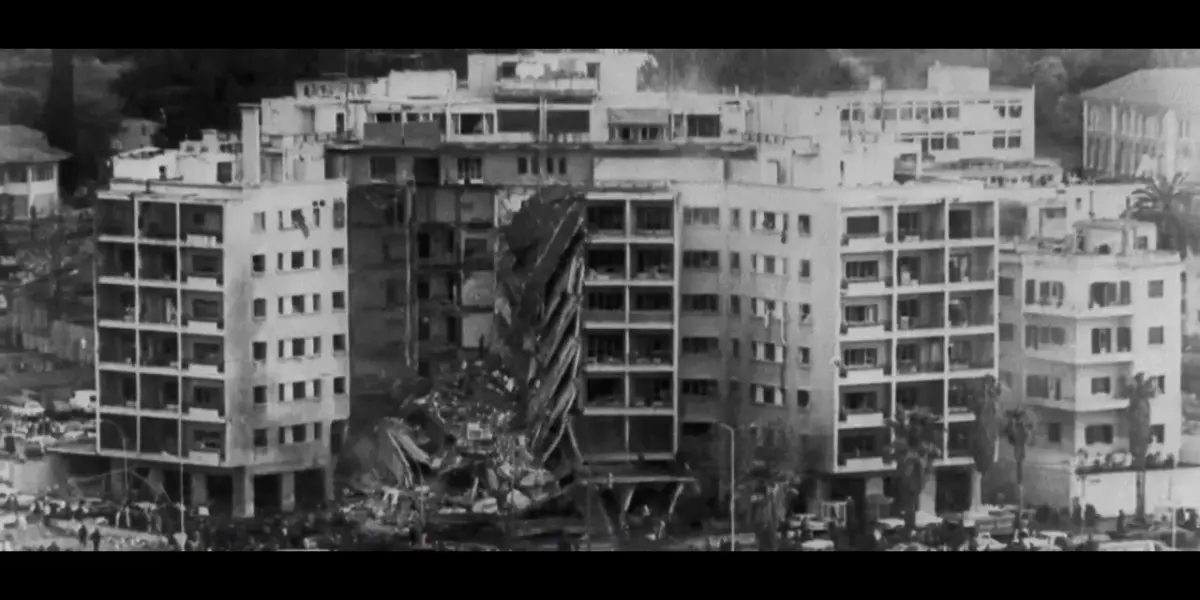
Forty-three years ago, a horrific act of violence struck the U.S. Embassy in Beirut, Lebanon. On April 18, 1983, a suicide bomber drove a truck packed with 2,000 pounds of explosives into the embassy.
The massive explosion caused part of the building to collapse, killing 63 people. Seventeen of those killed were Americans, and over 100 others were injured.
This attack became the deadliest act of terrorism against an American diplomatic post in history. President Ronald Reagan and his wife were seen honoring the victims in the sad aftermath.
The bombing sent shockwaves through the United States and highlighted a growing threat from extremist groups. It was a clear sign that U.S. interests abroad were vulnerable.
Responsibility and the Rise of Hezbollah
Soon after the bombing, the Iran-backed Islamic Jihad terrorist group took responsibility. This group would later become known as Hezbollah in Lebanon.
Their willingness to use suicide bombers marked a disturbing escalation in tactics. It showed a new level of commitment to causing mass casualties.
A special agent from the Diplomatic Security Service, who responded to the scene, shared important details. He explained that the suicide attacker drove into an exit area of the embassy compound.
Crucially, he stated there was no prior intelligence suggesting the U.S. Embassy was a specific target. This lack of warning made the attack even more devastating.
CIA and a Conference Under Threat
The attack had a particularly heavy impact on the CIA. The largest group of Americans killed that day were CIA officers.
They were attending a conference at the embassy, reportedly with Middle Eastern contacts. This detail suggests the attackers may have had specific intelligence about who was inside.
The U.S. State Department noted that security measures failed because no one expected such a radical approach. The idea of a driver willingly sacrificing themselves to carry out an attack was not fully anticipated. This was a blind spot in security planning that had tragic consequences.
A Deadly Pattern Emerges
Tragically, the Beirut bombing was not an isolated incident. Just six months later, on October 23, 1983, another devastating attack occurred in the same city. This time, a suicide bomber drove an explosives-laden truck through the gates of the U.S. Marine headquarters in Beirut.
The resulting explosion killed 241 U.S. service members and 58 French paratroopers. The Islamic Jihad terrorist organization, the same group that would become Hezbollah, also claimed responsibility for this attack. This second, even deadlier bombing cemented the understanding that U.S. personnel in Lebanon were under severe threat.
Iran’s Role and the Training Connection
Both the 1983 embassy bombing and the Marine barracks bombing were carried out by the same group, which received training and funding from Iran. This connection to Iran is a critical piece of the historical context. It highlights the geopolitical tensions of the time and Iran’s role in supporting militant groups.
The actions of these groups and their state sponsors had long-lasting effects. They influenced U.S. foreign policy and security strategies in the Middle East for decades. The memory of these attacks continues to shape how security is approached at diplomatic facilities worldwide.
Why This Matters
The 1983 Beirut embassy bombing was a wake-up call for the United States. It demonstrated that diplomatic missions were not safe havens. The attack forced a serious re-evaluation of security protocols for embassies and other U.S. facilities abroad.
The fact that the attackers were willing to use suicide tactics, something previously uncommon in attacks on U.S. targets, was a major shock. This shift in tactics required intelligence agencies and security forces to adapt quickly. They had to develop new ways to detect and prevent such devastating assaults.
Implications and Future Outlook
The events in Beirut led to significant changes in how U.S. embassies are protected. Security measures were drastically increased, including stronger physical barriers, better intelligence gathering, and more rigorous vetting of personnel and visitors. The attacks also contributed to a more cautious U.S. approach to military and diplomatic engagement in unstable regions.
The rise of groups like Hezbollah, with support from Iran, also signaled a new era of asymmetric warfare. This involves non-state actors using unconventional tactics to challenge powerful nations. Understanding this historical context is crucial for analyzing current global security challenges.
Historical Context
The early 1980s in Lebanon were marked by civil war and foreign intervention. Various factions, including Palestinian groups and Syrian forces, were active.
The U.S. had deployed Marines as part of a multinational peacekeeping force. This presence made U.S. targets, like the embassy and the Marine barracks, more visible and vulnerable.
The attack on the embassy occurred during a period of heightened tension between the U.S. and Iran. Iran, following its 1979 revolution, was actively seeking to export its ideology and challenge Western influence in the region. Supporting groups like Islamic Jihad was part of this strategy.
Lessons Learned
The deadliest attack on a U.S. embassy in history is a clear reminder of the persistent threats faced by diplomats and service members. It highlights the importance of constant vigilance and adaptability in security. The willingness of some groups to inflict mass casualties demands a proactive and informed defense posture.
The legacy of the 1983 Beirut bombings continues to influence security policies today. Security at U.S. embassies worldwide is now far more robust than it was before these tragic events. The memory of those lost on April 18, 1983, remains a somber marker in the history of American foreign relations and security.
Source: 43rd Anniversary of Attack on US Embassy in Beirut (YouTube)

Related Articles


Israel’s North: Ceasefire Hopes Meet Deep Skepticism
Residents in northern Israel are reacting to the recent ceasefire with a mix of hope and deep skepticism. Many feel disappointed, believing the truce might only be a temporary pause in the conflict. There are strong calls for Israel to act from a position of strength, not weakness, to ensure lasting security.


Beirut Suburbs Breathe Easier After Ceasefire, But Damage Lingers
Residents of Beirut's southern suburbs are cautiously returning home following a ceasefire, but many face destroyed homes and lingering insecurity. Despite a fragile calm, the Lebanese Armed Forces reported ceasefire violations and urged caution. The community faces immense challenges as they begin the difficult process of rebuilding and seeking normalcy.
Israel-Hezbollah Ceasefire Holds Tensely Amid Regional Uncertainty
A tense ceasefire between Israel and Hezbollah is in effect, but significant questions remain about its long-term viability and the broader regional implications. Developments concerning the Strait of Hormuz and conflicting diplomatic narratives highlight the fragility of the current situation. Upcoming U.S.-Iran talks will be crucial in determining the next steps.