Rogan’s White House Visit Sparks Debate on Trump’s Political Standing
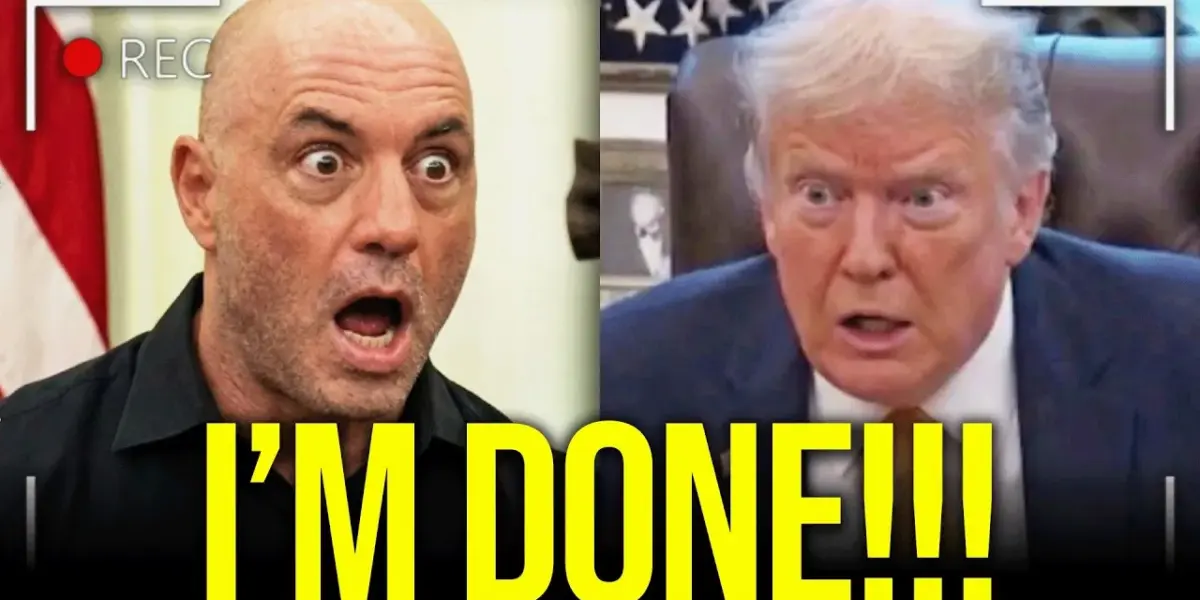
Joe Rogan's appearance at a White House event signing an executive order with Donald Trump sparks debate. Despite Rogan's past criticisms of Trump's administration, his presence suggests a complex political maneuver. The analysis explores Trump's declining poll numbers, his perceived cognitive state, and the broader implications for the Republican party.

Rogan’s White House Visit Sparks Debate on Trump’s Political Standing
Joe Rogan, the host of the world’s most-watched podcast, recently appeared at a White House event where President Donald Trump signed an executive order. This appearance is notable because Rogan has been critical of the Trump administration, particularly regarding immigration policies and the conflict with Iran. His presence at the event, therefore, raises questions about political strategy and public perception.
The video transcript points out that Rogan has voiced strong opinions against the administration, calling current immigration practices “terrible” and expressing confusion over the war with Iran. Given this history, his attendance at a presidential event seems contradictory. It also suggests a political move by the White House, possibly an attempt to appeal to a broader audience or to counter negative narratives surrounding the administration.
Context of Criticism and Political Fallout
The analysis highlights that Rogan and his podcast guests have frequently discussed and criticized the current administration. This has even led to public figures associated with the administration, like J.D.
Vance, being questioned about Rogan’s remarks. For instance, Vance was asked about Rogan’s comment that “MAGA was full of a bunch of dorks,” to which Vance responded by suggesting the far left has more “dorks” than the MAGA movement.
Further illustrating the critical stance, Theo Von, another podcast host who previously interviewed Trump, was also mentioned. Von expressed concerns about societal fear and suggested that major events, like the conflict with Iran, could be used to distract from domestic issues or maintain power. The transcript notes that polling indicated a significant portion of Americans believed the Iran situation might have been linked to diverting attention from other conversations, such as the Epstein case.
Deteriorating Poll Numbers and Public Opinion
A key point made in the transcript is Donald Trump’s declining poll numbers. The analysis suggests that Trump has rapidly lost political capital over the past year, with a significant drop in support across various demographics. This decline is attributed to issues like immigration, the economy, and alienating younger voters and men, who were previously strong supporters.
The transcript also references a controversial social media post by Trump featuring Jesus imagery, which was later deleted. New polling showed that a majority of Americans disliked the image. The overall message is that Trump’s public standing is at a low point, making it difficult for him to recover, especially with upcoming elections.
The Executive Order and Rogan’s Involvement
The specific executive order signed at the event involved FDA approval for a medicine. The transcript implies that Joe Rogan played a role in advocating for this approval. It suggests Rogan sent data to Trump, who then promised to expedite the FDA approval process.
This interaction is framed as concerning, as neither Rogan nor Trump are medical professionals, and the approval process involved individuals with questionable backgrounds in health and medicine, such as Robert F. Kennedy Jr. (though he is described as an environmental lawyer, not a doctor).
The author expresses personal discomfort with the idea of FDA approval for certain medicines under the Trump administration, given their view of hyper-politicization of agencies like the FDA, CDC, and FBI, suggesting they take “marching orders” from Trump. The concern is that these agencies may be filled with loyalists rather than objective experts.
Political Strategy and Narcissism
From a political standpoint, the transcript analyzes Trump’s reaction to criticism. It suggests that Trump, described as a “raging narcissist,” typically reacts strongly to negative comments by attacking those who speak poorly of him. However, inviting Rogan, who has had guests critical of Trump and has himself made critical remarks, to a prominent event is seen as unusual behavior for him.
This unusual invitation could indicate political panic. With Republican midterm elections looking unfavorable, the White House might be seeking ways to regain public favor. The transcript posits that Trump might not fully grasp the political danger, while others around him recognize the need for support, even from someone like Rogan, to counter the American public’s apparent dissatisfaction with Trump.
Cognitive Decline and Misinformation
The analysis touches upon potential cognitive decline in Donald Trump, referencing his public statements and physical appearance. The transcript points to instances where Trump’s responses to questions about gas prices or foreign policy seemed detached from reality or contradicted widely available information. For example, his assertion that $4 per gallon for gas is not high is contrasted with the average price and public perception.
The transcript criticizes Trump’s tendency to make up numbers, such as claims about ending wars. The author argues that Trump lies more consistently and outrageously than almost any figure in American history. This is presented as a reason for the political struggles of the Republican party, as Trump’s behavior and policies, including tariffs that are seen as causing inflation and slowing the economy, create a difficult environment for his party.
The Role of Loyalty and Misinformation
The transcript suggests that loyalty to Trump in the Oval Office means telling him everything is great, regardless of the facts. This environment, combined with what is described as Trump’s own cognitive decline and narcissism, is creating “political hell” for himself and the Republican party. The author implies that Trump’s policies and his own unaddressed issues are hurting the American people and hindering political progress.
The transcript also briefly mentions Trump’s claims about signing documents and compares his abilities to Joe Biden’s. It includes a story about a wealthy, neurotic friend who experienced extreme price differences for medication, leading Trump to acknowledge the high drug prices in the U.S. This is framed as another instance of Trump’s inconsistent public statements and a potential sign of his detachment from the reality of economic hardship for many Americans.
AI and Foreign Policy Uncertainty
Towards the end, the transcript touches on foreign policy issues, including ongoing negotiations with Iran and the blockade. Trump’s responses are characterized as vague and uncertain, showing a lack of clear direction. The transcript also brings up a report about the AI company Anthropic and the White House seeking access to its powerful platform.
Trump’s response to questions about Anthropic is a dismissive “I have no idea,” which the author finds absurd, especially given his position as president. This, along with his other confused or fabricated statements, reinforces the narrative that Trump is “losing his mind” and is increasingly out of touch. The appearance of figures like Rogan and Erica Kirk of Turning Point USA at White House events is presented as part of a broader strategy to navigate these political challenges.
Why This Matters
This event and the subsequent analysis are important because they highlight the complex and often contradictory nature of political figures and their public engagement. Joe Rogan’s presence at a Trump event, despite his critical stance, raises questions about influence, media power, and the blurring lines between entertainment and politics. It shows how political figures attempt to reach different audiences and manage their public image, even when facing declining popularity.
The discussion also highlights the impact of personality and perceived cognitive ability on political leadership. The transcript suggests that Trump’s actions and statements, driven by narcissism and potential cognitive issues, are not only affecting his own political future but also creating significant challenges for the Republican party and the country’s political stability. The focus on misinformation and the politicization of government agencies also points to broader concerns about trust in institutions.
Implications and Future Outlook
The future outlook for Donald Trump and the Republican party appears uncertain, according to the transcript. Trump’s consistently poor polling suggests a difficult path ahead, particularly in upcoming elections. The strategy of inviting figures like Rogan might be a sign of desperation or a calculated attempt to shore up support, but its effectiveness remains to be seen.
The trend of public figures using platforms like podcasts to influence political discourse is likely to continue. The transcript suggests that the public’s perception of leaders’ mental acuity and their ability to communicate honestly will play an increasingly significant role in political outcomes. The upcoming midterms will be a key indicator of whether these strategies and Trump’s current standing translate into electoral success or failure for the Republican party.
The transcript ends by urging viewers to register to vote, emphasizing the importance of civic participation in shaping the political landscape. The need for informed decision-making is paramount, especially when leaders’ public statements and actions are so heavily scrutinized and debated.
Source: Joe Rogan Humiliates Trump at his OWN GAME! (YouTube)

Related Articles
Pope’s ‘Flame War’ Ignites Debate: Faith vs. Politics
A recent "flame war" between the Pope and President Trump has sparked debate on religious leaders' political involvement. While some see the Pope's words as a spiritual call, others view his follow-up tweets as direct political attacks. This raises questions about faith, politics, and the boundaries of religious authority.
GOP’s Trump Loyalty Now Fuels Their Own Election Woes
Republicans' decision to back Donald Trump on a controversial war has backfired, hurting their own election chances. Their fear of Trump leads them to sacrifice their independence and electoral prospects. This strategy risks alienating voters who are experiencing real economic pain and moral concerns.
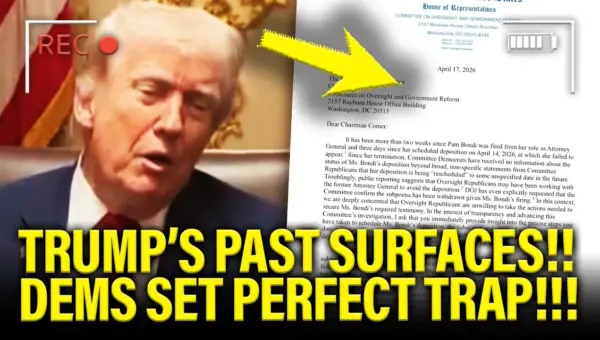
Trump’s Epstein Ties Face New Scrutiny: Will Bondi Testify?
Democrats are intensifying their efforts to uncover the truth about alleged cover-ups related to Jeffrey Epstein's files. A key focus is securing testimony from former DOJ official Pam Bondi, who has so far avoided a subpoena. The investigation raises questions about accountability and transparency.