Artemis II Launch: Crew Aims for Moon Orbit
NASA's Artemis II mission has launched from Kennedy Space Center, sending four astronauts on a ten-day journey around the Moon. This historic flight tests critical systems of the Orion spacecraft and marks a significant step toward returning humans to the lunar surface. The mission is a vital precursor to future landings and potential Mars missions.

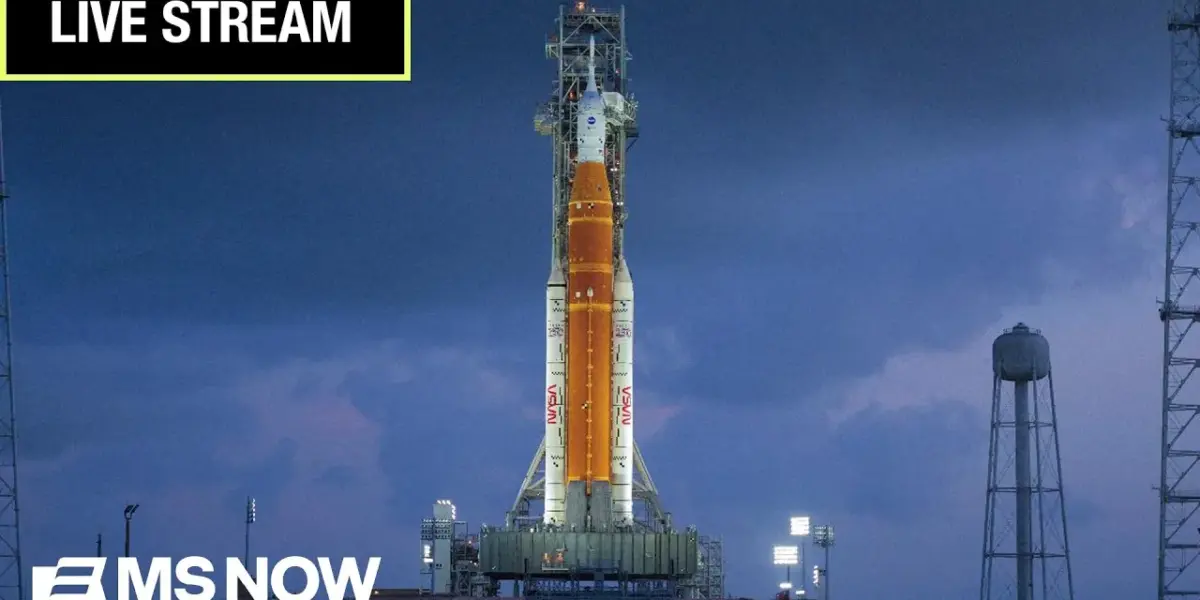
Artemis II Blasts Off for Historic Lunar Flyby
NASA’s Artemis II mission, carrying four astronauts, has successfully launched from Kennedy Space Center in Florida, marking a major step in humanity’s return to the Moon. The ten-day journey will send the crew on a path around the Moon and back to Earth, testing critical systems for future lunar exploration.
Meet the Artemis II Crew
The crew of Artemis II includes Commander Reid Wiseman, Pilot Victor Glover, and Mission Specialists Christina Koch and Jeremy Hansen. This diverse team represents a new generation of space explorers. They will be the first humans to travel beyond low-Earth orbit since the Apollo program ended decades ago.
Mission Objectives and Significance
Artemis II is not designed to land on the Moon but to perform a lunar flyby, orbiting the Moon before returning to Earth. This mission is crucial for testing the Orion spacecraft’s life support systems, navigation, and communication capabilities with astronauts aboard. It is a vital precursor to Artemis III, which aims to land astronauts on the lunar surface.
The mission’s success will validate the technologies and procedures needed for longer-duration spaceflights and future missions to Mars. It represents a significant investment in space exploration and a renewed commitment to pushing the boundaries of human discovery. The Artemis program aims to establish a sustainable human presence on the Moon.
The Orion Spacecraft: A New Era of Exploration
The Orion spacecraft, built by Lockheed Martin, is the centerpiece of the Artemis program. It is designed to carry astronauts safely to deep space and back. For Artemis II, Orion will be propelled by the powerful Space Launch System (SLS) rocket, the most powerful rocket ever built by NASA.
Inside Orion, the astronauts will experience conditions far beyond those on the International Space Station. They will test the spacecraft’s ability to withstand the harsh environment of deep space, including radiation and extreme temperatures. The data collected will be essential for refining the spacecraft’s design and operational procedures.
Kennedy Space Center: A Hub of Innovation
Kennedy Space Center in Florida has long been the launchpad for America’s space endeavors. For Artemis II, the historic Launch Complex 39B is once again the site of a monumental liftoff. The center employs thousands of engineers, technicians, and support staff dedicated to making these complex missions a reality.
The launch site itself is a marvel of engineering, designed to support the massive SLS rocket. Years of planning, construction, and testing have gone into preparing the infrastructure for the Artemis missions. The successful launch is proof of the hard work and dedication of the entire NASA team and its commercial partners.
Looking Ahead: The Future of Lunar Exploration
Artemis II is just the beginning of NASA’s ambitious plans for lunar exploration. Following this mission, Artemis III will aim to land the first woman and the first person of color on the Moon. Future missions envision establishing a long-term lunar base, enabling scientific research and the development of new technologies.
The program’s ultimate goal is to use the Moon as a stepping stone for human missions to Mars. By learning to live and work on the Moon, NASA hopes to prepare for the even greater challenges of sending humans to the Red Planet. The success of Artemis II paves the way for this exciting future.
Source: LIVE: Artemis II prepares for lift off from Kennedy Space Center to fly around moon (YouTube)

Related Articles


Artemis II Crew Blasts Off: A Giant Leap for Mars Dreams
The Artemis II mission has launched, sending four astronauts on a 10-day journey around the Moon. This historic flight is a critical test for future Mars exploration and aims to establish a long-term lunar presence. The crew, including the first African American and Canadian to orbit the Moon, faces challenges like extreme re-entry temperatures. Success here paves the way for landing humans on the Moon and eventually reaching Mars.


Artemis II Launch Delayed, Moon Landing Shifts to 2028
NASA's Artemis II mission, intended to send astronauts around the Moon, has been delayed to September 2025 due to technical issues with the SLS rocket. The program's first lunar landing, Artemis III, has been redefined as an Earth-orbit test, pushing the actual Moon landing to no earlier than 2026. Future missions targeting the lunar South Pole are now set for 2028.


Artemis II Astronauts Train for Risky Lunar Mission
The Artemis II crew is undergoing intensive training for their upcoming lunar fly-around mission. Astronauts are preparing for every possible scenario in space, a dangerous environment where system failures can occur. Ground crews will provide constant support, monitoring the spacecraft and communicating with the crew throughout the historic journey.