Artemis II Astronauts Train for Risky Lunar Mission
The Artemis II crew is undergoing intensive training for their upcoming lunar fly-around mission. Astronauts are preparing for every possible scenario in space, a dangerous environment where system failures can occur. Ground crews will provide constant support, monitoring the spacecraft and communicating with the crew throughout the historic journey.


Artemis II Crew Prepares for Historic Lunar Fly-Around
Four astronauts are set to embark on a groundbreaking mission around the Moon, marking a significant step in humanity’s return to deep space. The Artemis II crew has undergone extensive training to prepare for the challenges of this historic lunar fly-around. This mission aims to test critical systems and astronaut performance in the lunar environment before future crewed landings.
NASA officials recently highlighted the rigorous preparation involved. The astronauts have trained for every possible scenario they might face during their journey. Space is an inherently dangerous environment, and the success of the mission relies heavily on complex systems functioning perfectly.
Extensive Training for the Unknown
The crew’s training focuses on preparing for unexpected events, often referred to as contingencies. While mission planners hope for a smooth flight, the unforgiving nature of space means that problems can arise. Astronauts must be ready to handle any situation that deviates from the planned mission profile.
This preparation includes simulating countless “off-normal” operations. The goal is to ensure that if something goes wrong, the astronauts can react instantly and effectively. They need to know exactly what to do without hesitation, as quick responses are crucial for safety and mission success.
Learning from Past Missions
The training echoes the lessons learned from previous space missions, particularly the near-disaster of Apollo 13. While the Artemis II crew hopes to avoid any similar critical incidents, their training includes scenarios designed to prepare them for such extreme challenges. This ensures they are mentally and technically equipped for the highest-stakes situations.
“The crew really has to train for every possible contingency,” a NASA representative explained. “You know, you hope everything goes according to plan and there are no issues, but nature is really against you on this whole flight.” This highlights the proactive approach taken to ensure crew safety and mission resilience.
Ground Crew Support is Vital
The astronauts are not alone in their preparation or during the mission itself. Ground crews play an equally vital role, constantly monitoring the spacecraft and its systems. These teams provide crucial real-time information and support to the astronauts throughout the flight.
“It goes also for the ground crews that are monitoring the rocket and and and informing the crew every step of the way how that vehicle is performing,” a NASA source confirmed. This constant communication loop between the crew and ground control is essential for managing the mission and responding to any developing issues.
What’s Next for Artemis?
Artemis II is scheduled to launch in late 2024, sending four astronauts on a 10-day mission around the Moon. This flight will be the first crewed mission beyond low-Earth orbit since the Apollo program ended over 50 years ago. It is a critical test flight for the Space Launch System (SLS) rocket and the Orion spacecraft.
Following Artemis II, NASA plans to conduct Artemis III, which aims to land the first woman and the first person of color on the lunar surface. The success of Artemis II is a prerequisite for these future, more ambitious goals. The insights gained from this lunar fly-around will inform subsequent missions and the development of technologies needed for long-term human presence on the Moon and beyond.
Source: ARTEMIS II: Four astronauts embark on lunar fly-around (YouTube)

Related Articles

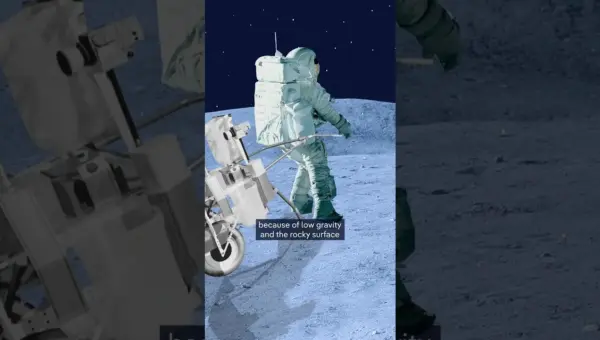
Apollo 14 Astronauts Miss Moon Target by 20 Meters
Apollo 14 astronauts Alan Shepard and Edgar Mitchell narrowly missed their main mission target, Cone Crater, turning back just 20 meters away due to challenging terrain and low oxygen. High-resolution images from the Lunar Reconnaissance Orbiter later revealed how close they were to collecting vital lunar samples from the crater's rim.


NASA’s Mega Rocket Aims for Deep Space Milestone
NASA's new Space Launch System (SLS) rocket is set to send astronauts farther into space than ever before. Standing taller than the Statue of Liberty, the SLS can lift 7 million pounds, carrying the Orion capsule and its four-person crew. The mission aims to reach 280,000 miles from Earth, setting a new human distance record and paving the way for future lunar bases.


NASA Builds Moon Base, Ignites UAP Speculation
NASA is planning a $20 billion lunar base at the south pole, replacing the Gateway orbital station. While this move is seen as practical for resource utilization, especially water ice, it has also reignited speculation about UAPs and hidden anomalies on the Moon.