NASA’s Orion Spaceship Heads to Moon After Engine Burn
NASA's Orion spacecraft is now en route to the Moon after a successful trans-lunar injection burn. The four astronauts aboard are undertaking a 4-day journey, covering 234,000 miles at high speed. This follows a widely celebrated Artemis launch, though a minor water storage precaution was issued for the crew.

Orion Engages Engines, Sets Course for Lunar Orbit
NASA’s Orion spacecraft is officially on its way to the Moon. Mission control gave the green light, ordering the four astronauts aboard to begin their journey.
The command was clear: ‘We are go for TLI,’ marking the start of the trans-lunar injection burn. This crucial engine firing lasted for 5 minutes and 49 seconds, pushing Orion out of Earth’s orbit and towards its lunar destination.
The astronauts expressed their excitement, sharing that they ‘love those words’ and are ‘loving the view.’ Their 4-day trip will cover approximately 234,000 miles at a blistering speed of 24,000 miles per hour. This significant milestone follows the successful Artemis launch earlier in the week, which has captured public attention worldwide.
Global Fascination with Artemis Mission
The Artemis launch has sparked widespread interest, with images and videos going viral across social media. People from all walks of life are sharing their enthusiasm for the mission.
From beaches in Florida to college softball games, the excitement is palpable. Even high-flying passengers on commercial flights are catching glimpses of the spacecraft against the night sky.
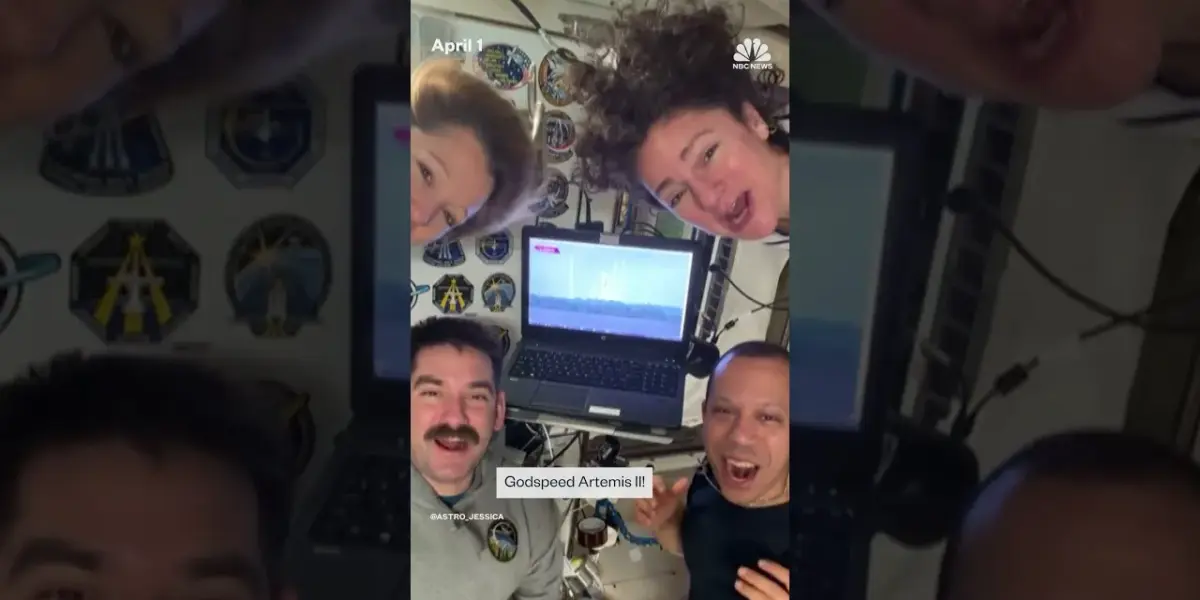
The awe extends beyond Earth’s surface. Astronauts currently aboard the International Space Station sent their well wishes, broadcasting ‘GOD SPEED ARTEMIS 2.’ This broad appeal shows a shared human fascination with space exploration and the ambitious goals of the Artemis program.
Astronauts Practice, Face Minor Water Concern
Inside the Orion spacecraft, named ‘Integrity,’ the crew has been busy preparing for their lunar voyage. They successfully practiced manually flying and docking their ship, a critical skill for future missions. Mission control confirmed the ship’s good condition, noting the impressive American flag displayed on board.
After two 4-hour sleep cycles, the astronauts were woken by John Legend’s song ‘Green Light,’ a personalized wake-up call from Houston. However, a minor issue arose as mission control instructed the crew to begin storing water in plastic bags. This precaution was put in place due to a potential problem with the ship’s water system that had appeared earlier.
NASA Addresses Water System Issue
NASA officials believe they have resolved the water system issue, but they are taking extra precautions. Storing water in bags ensures the crew will have a supply even if the primary system were to malfunction during the long journey. This is a critical safety measure for a mission far from Earth’s immediate support.
The crew is currently about 17,000 miles above Earth, a distance that highlights the vastness of space they are about to traverse. Their destination, the Moon, lies a full 234,000 miles away. This proactive approach to potential problems underscores NASA’s commitment to astronaut safety on this historic mission.
Looking Ahead: Lunar Orbit and Beyond
The Orion spacecraft is now on its trajectory, embarking on a journey that will take it around the Moon. The success of the trans-lunar injection burn is a major step forward for the Artemis program. Future updates will track Orion’s progress as it enters lunar orbit and continues its exploration.
The mission aims to test critical systems and gather valuable data for future crewed lunar missions. The crew’s performance and the spacecraft’s capabilities will be closely monitored. The next major phase will involve Orion’s arrival and operations in lunar orbit.
Source: NASA’s Orion sets course for the moon (YouTube)

Related Articles


Aspiring Astronaut Shares Awe of Artemis II Launch Moment
Aspiring astronaut Adrian described the Artemis II launch as an incredible sight, emphasizing the human emotion witnessed. The mission represents a significant step in NASA's program to return humans to the Moon and inspire future generations of explorers.

Artemis Rocket Achieves Space, Crew Begins Journey to Moon
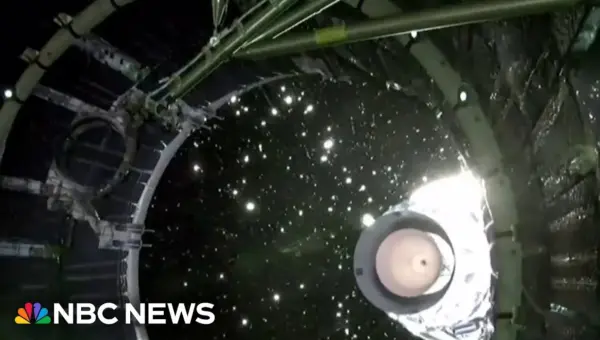
NASA's Artemis mission has successfully launched, sending the Orion capsule and its crew toward the Moon after a clean separation of the rocket's core stage. The mission marks a significant step in humanity's return to deep space exploration. The Orion capsule will now orbit Earth to test its systems before heading to lunar orbit.
Artemis II Launches: Crew Heads to Moon on Historic Voyage
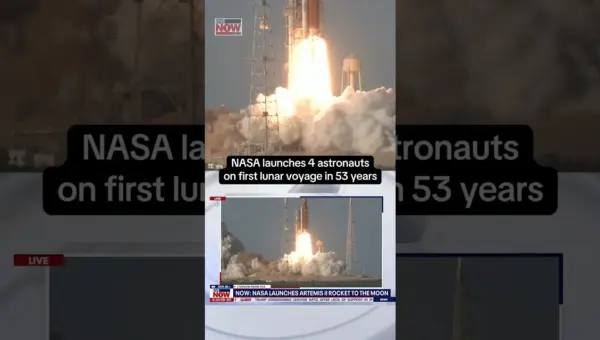
NASA's Artemis II mission has successfully launched, sending four astronauts on a groundbreaking voyage around the Moon. The powerful Space Launch System rocket ignited its engines precisely at liftoff, carrying the Orion spacecraft and its crew into space. This historic launch marks humanity's first crewed journey beyond Earth's orbit in over fifty years, signaling a new era of lunar exploration.