Surgeon General Nominee’s Controversial Hearing Fuels Debate
Dr. Jane Casey Means's nomination hearing for Surgeon General became a heated debate over her qualifications and views on birth control and vaccines. Practicing physicians raised concerns about her lack of residency completion and active medical license, contrasting it with her questioning of established medical science. The controversy highlights broader issues of misinformation and the politicization of public health.


Surgeon General Nominee’s Controversial Hearing Fuels Debate
The confirmation hearing for Dr. Jane Casey Means as the next Surgeon General of the United States became a flashpoint this week, igniting fierce debate over her qualifications, past statements on reproductive health, and her approach to established medical science. The proceedings, characterized by sharp exchanges and impassioned defenses of scientific consensus, have raised critical questions about the future of public health leadership and the integrity of evidence-based medicine in America.
Questioning Qualifications and Scientific Stance
A central point of contention revolved around Dr. Means’s qualifications and her views on widely accepted medical practices. Critics, including practicing physicians Dr. Ida Brown and Dr. Sonia Sloan, voiced strong objections, highlighting that Dr. Means has not completed her residency and does not hold an active medical license in her state of practice. This lack of traditional training and licensure, they argued, is a fundamental departure from the expected standards for a role as significant as the nation’s top doctor.
“The surgeon general of the United States for those that don’t understand this is the nation’s doctor,” stated Dr. Sloan, highlighting the gravity of the position. “This is who everyone looks up to, but they have some basic expectations like, let’s make sure you’ve completed medical school.
Hm, finishing residency would be ideal, which she has not. Maintaining an active medical license so you could actually write prescriptions and, what, see patients, which she doesn’t, neither.”
The Birth Control Controversy
Dr. Means’s past remarks regarding birth control pills also drew significant scrutiny. She was quoted as calling them “a disrespect of life” and stating that “Americans use birth control pills like candy.” she claimed, contrary to established scientific consensus, that hormonal birth control carries “horrifying health risks for women.”
During the hearing, Senator Patty Murray challenged Dr. Means on these statements, contrasting them with decades of evidence supporting the safety and efficacy of FDA-approved contraceptive methods. Dr. Means attempted to contextualize her remarks, suggesting they were made in the context of ensuring “informed consent” for women with specific medical histories. However, the distinction between cautioning about individual risks and broadly questioning the safety and utility of birth control proved to be a significant point of divergence.
Dr. Brown and Dr. Sloan pushed back forcefully against the characterization of birth control as being used “like candy” or posing “horrifying health risks.” They presented data from organizations like the ACOG and CDC, which quantify the risks associated with hormonal contraceptives. They explained that while oral contraceptives do carry a slightly increased risk of blood clots compared to non-users, this risk is significantly lower than that associated with pregnancy itself. “Pregnancy is not just a discussion about blood clots.
Come on. This is a mortality discussion right now,” Dr. Sloan asserted, pointing to the stark reality of maternal mortality rates in the U.S.
Maternal Mortality and Health Disparities
The discussion on birth control quickly broadened to encompass the critical issue of maternal mortality, particularly its disproportionate impact on Black women. The transcript highlighted that the U.S. Has the highest maternal mortality rate among developed nations, with Black women facing a risk of death from pregnancy-related causes that is two to three times higher than that of white women.
“Black women in the United States are statistically far more dangerous than taking birth control,” Dr. Sloan stated, framing access to contraception as a vital component of public health. The speakers drew a connection between restrictive abortion bans in many states and higher maternal mortality rates, suggesting that a comprehensive approach to reproductive health, including access to contraception, is essential for reducing these risks.
They argued that undermining access to contraceptives, restricting abortion, and maintaining fragile maternal health systems collectively increase risks for women, especially those in marginalized communities. “When you put that in context, Dr. Brown, that is public health. That’s what a surgeon general talks about,” Dr. Sloan emphasized.
Vaccines and the “Settled Science” Debate
The hearing also touched upon Dr. Means’s views on vaccines, specifically her response to a question about whether vaccines contribute to autism. While acknowledging that “science has never settled” and stating that the medical community does not know what causes autism, she indicated a willingness to explore all potential contributing factors. This stance was met with dismay by the physicians, who emphasized the overwhelming scientific consensus on vaccine safety and efficacy.
“The original 1998 study that suggests autism is linked to vaccines was retracted for fraud. The author of that study lost his medical license,” Dr. Brown pointed out, drawing a parallel to Dr. Means’s own lack of a license. She further elaborated that “multiple large cohort studies involving hundreds and thousands of children show no causal association between vaccines and autism.” The physicians warned that equivocating on such issues creates confusion, which “costs lives.”
They stressed that decades of evidence show vaccines like the MMR are highly effective in preventing diseases such as measles, which has seen a 99% decline in deaths since its vaccine was introduced. The influenza vaccine, they added, reduces pediatric ICU admissions and mortality risk.
Selective Skepticism and Conflicts of Interest
A significant concern raised was Dr. Means’s perceived “selective doubt” or “principal skepticism.” The physicians pointed out that while she questioned extensively studied and FDA-regulated interventions like vaccines and oral contraceptives, she has financial ties to supplement ventures. These supplements, they noted, do not undergo the same rigorous FDA approval process as pharmaceuticals and vaccines.
“You cannot question FDA regulated, extensively studied interventions like vaccines and oral contraceptives while getting money for supplements that don’t undergo FDA approval,” Dr. Brown argued. This perceived inconsistency, coupled with her questioning of established science, undermines her credibility for a role that demands clear communication and defense of public health evidence.
The Weight of the Surgeon General’s Role
The physicians underscored the immense responsibility of the Surgeon General to communicate directly, defend evidence, and protect the public. They expressed frustration that Dr. Means’s responses were characterized by equivocation, obscurity, and deflection, rather than the clarity and conviction required for the position.
“If you’re going to lead public health in the United States, I think you should at least respect the data, damn it. Finish your freaking training. Try to at least keep some credibility and keep your license active, especially if you’re going to be considered, you know, before a surgeon general,” Dr. Sloan urged.
The core of their argument was that the integrity of public health leadership is at stake. The rigorous training, dedication, and commitment required to become a licensed, practicing physician were contrasted with Dr. Means’s perceived lack of these fundamental attributes. “This is about standards in America.
This is because, you know, being a physician is not casual,” Dr. Brown stated. They concluded that while Dr. Means may have addressed important issues like ultra-processed food and metabolic disease, her approach to established medical science and her qualifications render her unsuitable for the role.
Why This Matters
This hearing is more than just a procedural step in a nomination process; it is a critical juncture for public health discourse in the United States. The potential appointment of an individual who questions established scientific consensus on issues like contraception and vaccines, and whose own medical credentials are in question, sends a troubling signal. It risks eroding public trust in institutions like the FDA and the CDC, which are foundational to safeguarding national health.
It has the potential to exacerbate existing health disparities, particularly for Black and brown communities, who disproportionately suffer from maternal mortality and are often most vulnerable to the consequences of misinformation. The debate highlights the vital need for public health leaders who not only understand the science but are also committed to defending it with clarity and conviction, especially at a time when misinformation can spread rapidly and have life-threatening consequences.
Implications, Trends, and Future Outlook
The controversy surrounding Dr. Means’s nomination reflects a broader trend of politicization in science and public health. The questioning of settled science, the emphasis on individual anecdotes over population-level data, and the rise of skepticism towards established medical authorities are significant challenges.
The future outlook depends heavily on whether the administration prioritizes scientific integrity and established qualifications for critical public health roles, or succumbs to political pressures that may favor ideology over expertise. The outcome of this nomination could set a precedent for how scientific expertise is valued in federal health agencies, impacting everything from vaccine uptake to reproductive healthcare access and the nation’s preparedness for future health crises.
Historical Context and Background
The role of the Surgeon General has historically been held by physicians with extensive clinical experience and a strong command of public health principles. The office, established in 1873, is tasked with presenting the U.S. Public Health Service’s views on important matters of public health. Nominees are typically expected to have impeccable credentials and a proven track record of leadership in the medical community.
The current debate is particularly poignant given the historical context of scientific advancements in reproductive health, such as the FDA’s approval of oral contraceptives in 1960, which significantly reshaped women’s health and economic mobility. Similarly, the long-standing, evidence-based understanding of vaccine efficacy, built over decades of research and public health campaigns, forms the bedrock of infectious disease control. The challenges to these established scientific pillars by a potential Surgeon General represent a departure from this historical reliance on scientific consensus.
Source: Trump Hearing Goes OFF THE RAILS as HEALTH CRISIS EXPLODES (YouTube)

Related Articles

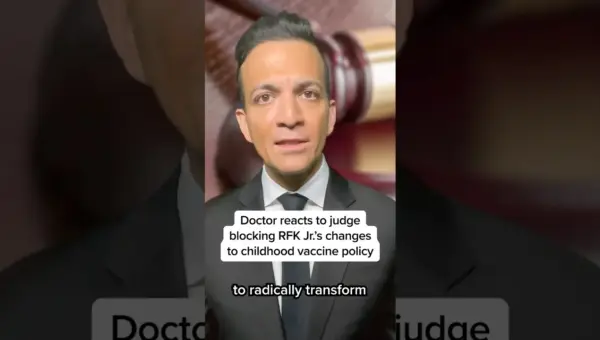
Judge Halts RFK Jr.’s Vaccine Policy Overhaul
A federal judge has temporarily blocked changes to the childhood vaccine schedule proposed by HHS Secretary Robert F. Kennedy Jr. The decision came after a lawsuit from doctors and parents argued the changes lacked proper scientific review. Dr. Vin Gupta expressed concern over the ruling's implications for public health policy.


Judge Halts RFK Jr. Vaccine Overhaul, Doctor Expresses Relief
A federal judge has temporarily halted a Biden administration overhaul of vaccine recommendations, bringing relief to public health experts. Dr. Vin Gupta expressed that while the intervention is welcome, it's concerning the legal system had to step in for what should be a scientific decision. The ruling also raises questions about potential inconsistencies in vaccine policies across different states.


Doctor Rips Oz, Trump for ‘Lack of Seriousness’ on Health
A doctor has sharply criticized Donald Trump and Dr. Mehmet Oz for spreading health misinformation, calling their approach a "lack of seriousness." The doctor highlighted false claims about diet soda and cancer, and the dangers of appointing unqualified individuals to health agencies. He stressed the critical need for science-based leadership to ensure public well-being.