Trump’s Iran Strategy: Regime Change A High Bar
Former US President Donald Trump has declared regime change as the explicit goal in Iran, citing the regime's weakness and brutality. Analysts highlight the aggressive nature of this strategy, which relies heavily on the Iranian people rising up, despite the risks of severe crackdowns. The move has sparked debate on international law and the potential for internal upheaval.

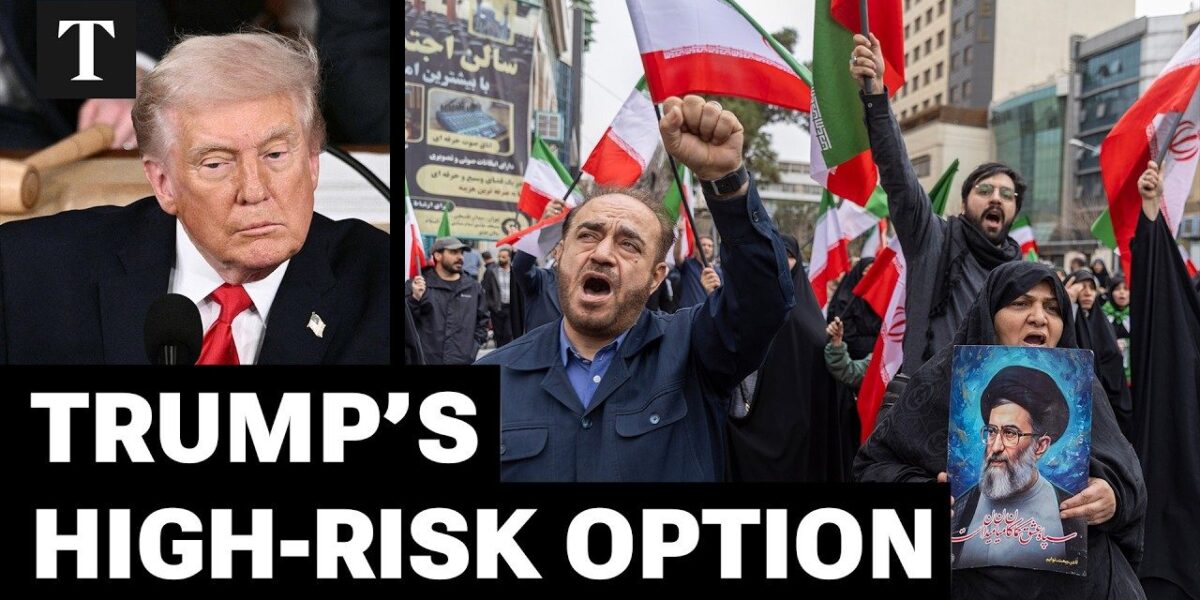
Trump Declares Regime Change Goal in Iran
In a significant escalation of policy, former US President Donald Trump has announced a strategy aimed squarely at regime change in Iran. The move, described by analysts as picking the most aggressive of available options, signals a departure from traditional diplomatic approaches and sets a “very, very high bar” for success.
Strategic Timing and Rationale Behind the Action
The timing of this aggressive stance is attributed to Iran’s perceived current weakness. Experts point to a combination of factors, including successes by both the United States and Israel in targeting Iran’s nuclear program, which have reportedly diminished its ability to retaliate effectively. The Iranian regime’s ongoing refusal to meet US demands regarding its nuclear program, missile capabilities, and regional proxy activities, coupled with its brutal crackdown on internal dissent, are cited as key drivers for the Trump administration’s decision.
Will Wechsler, Senior Director of Middle East Programs at the Atlantic Council and former Deputy Assistant Secretary of Defense, elaborated on this point: “He’s going for regime change. Nothing short of that will be a victory at the end of the day.
And so he’s given himself a very, very high bar to meet.” He added, “He’s done this now because Iran is at a particularly weak moment thanks to primarily Israeli successes, but also US successes in bombing the nuclear program. Their ability to counter strike, while still significant as we’re seeing right now, is a shadow of what it was a year ago.”
International Law and UN Response
The preemptive nature of the strikes has raised significant questions regarding international law. Critics, including a former British ambassador, have argued that the actions breach international legal norms, as they do not appear to fall under self-defense. Wechsler acknowledged this, stating, “It is true.
The international law… It is not a part of the consideration matrix for the Trump administration.”
The United Nations Security Council is slated to convene to discuss the situation. However, the effectiveness of this meeting is widely expected to be limited. “It’ll be relatively performative,” Wechsler predicted.
“We’ll see. The United States has a veto. Nothing’s that’s going to be passed that’s going to criticize the United States in that regard.
That’s just the nature of the power dynamics of the world.” He further explained the administration’s perspective: “From President Trump’s point of view… He would argue that if the outcome of focusing on international law is to mean that the regime that we have in Iran is protected by it and is able to butcher their own citizens and threaten the entire region, then international law is not serving interests, and interest is the most important end result.”
Domestic Reaction and Democratic Stance
Within the United States, the general sentiment is one of concern, largely due to the unknown outcome of the escalating situation. Political discourse is heavily influenced by partisan lenses, with many observers adopting a wait-and-see approach.
Democrats have largely focused on procedural questions, particularly regarding the necessity of seeking a War Powers resolution from Congress. This reflects a long-standing congressional tendency to “maximize their ability to complain about the executive branch and minimize their responsibility for any actions,” according to Wechsler.
A segment of both the left and the right, including figures like Tucker Carlson and Marjorie Taylor Greene, have expressed principled opposition to the actions, citing policy concerns rather than procedural ones.
The Role of the Iranian People in Regime Change
Central to Trump’s declared strategy is the call for the Iranian people to rise up and reclaim their country, alongside an appeal to security forces to lay down their arms. However, analysts caution against expecting a smooth transition. “Regime change doesn’t happen from the sky.
Regime change happens on the ground. And we don’t have forces on the ground. The only forces that are on the ground are the Iranian people,” Wechsler emphasized.
Despite the regime’s brutal suppression, including a recent crackdown where protestors were killed at a rate exceeding that in conflict zones like Gaza, Syria, and Yemen, there is an underestimation of the Iranian people’s potential willingness to resist. Wechsler noted, “We underestimate the willingness of a people to rise up against their masters.
We made that mistake 47 years ago with the Iranian revolution itself. We made that mistake with the Arab Spring.”
Suzanne Cayenur, an American-Iranian journalist, echoed this sentiment, citing conversations with sources inside Iran. “Most of them have been saying that they’ve wanted this. They’ve been calling for this,” she stated.
The key difference this time, she believes, is Trump’s explicit backing: “Trump coming out and saying, ‘We’re here. We’re covering your regime change. It’s up to you to do it, you know, in tandem with us effectively.’ Is what he’s saying is really crucial.”
Potential Scenarios and What to Watch
The path forward remains uncertain, with potential outcomes ranging from a successful, internally driven overthrow of the regime to widespread chaos or even an IRGC-led military takeover. The success of the strategy hinges on several factors, including renewed nationwide protests, the participation of workers in general strikes, defections from regime elements, and security forces laying down their arms or refusing to engage their own citizens.
The possibility of covert or clandestine actions by the US or its allies exists, but a conventional military intervention or boots on the ground are not indicated. The US goal appears to be supporting internal efforts rather than directly orchestrating regime change. The fate of Supreme Leader Ayatollah Khamenei, if confirmed to be incapacitated or killed, could serve as a critical catalyst.
As the situation unfolds, observers will be closely monitoring the resilience of the Iranian populace, the internal cohesion of the regime’s security apparatus, and the strategic decisions made by the US and its regional partners. The coming weeks and months will be crucial in determining whether Trump’s ambitious strategy culminates in a historic shift or a protracted and bloody conflict.
Source: Trump’s Iran Strategy Sets ‘Very High Bar’ For Regime Change | Will Wechsler (YouTube)

Related Articles

Trump Claims Presidential Call; Four Denials Emerge
Former President Donald Trump claimed he spoke with a past president who regretted not taking a certain action, implying approval of his own policies. However, aides for George W. Bush, Bill Clinton, Barack Obama, and sources close to Joe Biden have all denied any such conversations occurred. Trump has remained evasive when asked to identify the individual.

Israel Strikes Key Iran Leaders, Boosts Regional Security
Israel has eliminated key Iranian militant leaders, including Lar Johnny, a potential successor to the Ayatollah, and Solommani, head of the repressive Beiji militia. The operation, based on extensive intelligence, also killed hundreds of militia members. This significant strike aims to disrupt militant operations and enhance regional security.
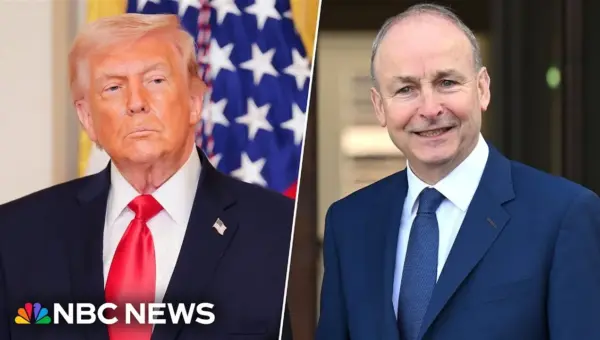
Trump Welcomes Irish Leader, Discusses Trade, Iran Tensions
President Trump welcomed Ireland's Taoiseach to the White House, discussing trade and the strong historical ties between the nations. The meeting also covered President Trump's views on Iran's military capabilities, his criticisms of NATO's support for U.S. initiatives, and upcoming foreign policy engagements.