Russia Admits War Failure, Escalates Nuclear Claims
Russia has publicly acknowledged setbacks in its "special military operation" in Ukraine, admitting initial objectives were not met. As negotiations loom, Moscow is escalating its tactics, including intensified civilian strikes and baseless accusations of Western nations providing nuclear technology to Kyiv.

Kremlin Acknowledges Setbacks in Ukraine War
In a significant shift, the Russian leadership has begun to publicly acknowledge failures in its “special military operation” in Ukraine. For the first time, sources within Putin’s camp have admitted that the initial objectives, including a swift advance to Berlin, were not met. This admission comes as the conflict, initially conceived as a short-term “policing operation,” has evolved into a protracted, large-scale armed response against a NATO-backed Ukraine. The Kremlin is now attempting to frame the ongoing military campaign as a success, despite its deviation from initial plans and the prolonged duration of the fighting, which has now surpassed the length of World War II.
Shifting Narratives: From Blitzkrieg to “Achieved Objectives”
The narrative emanating from Moscow has evolved considerably since the operation’s inception. Initially touted as a swift blitzkrieg, the war has now entered its fourth year, prompting questions among Russian citizens about the discrepancy between stated goals and battlefield realities. Despite the lack of decisive territorial gains in key areas, Russian officials, including Kremlin spokesman Dmitry Peskov, are asserting that “nearly all objectives have already been achieved.” Peskov stated, “The goals have not yet been fully achieved. Yes, but many of them have already been accomplished. The main objective is to ensure the safety of people who lived and still live in eastern Ukraine and who were truly in mortal danger.” This messaging appears designed to condition the Russian public for a prolonged conflict while signaling a potential willingness to negotiate.
Zelenskyy’s Stance: Security Guarantees First
Ukrainian President Volodymyr Zelenskyy has firmly rejected any notion of capitulation or territorial concessions that could serve as a springboard for future Russian aggression. Speaking on the prospect of negotiations, Zelenskyy emphasized Ukraine’s position: “If Russians or partners with in dialogue with Russians want just to withdraw our army from our fortifications, I mean this we can’t be such sorry foolish guys. We are no children.” He stressed that Ukraine is seeking concrete security guarantees from its international partners before any discussion of territorial compromises. “We have mostly everything everything I think everything in the paper, but it’s not still signed it. It’s not signed by the United States,” Zelenskyy noted, indicating that a lack of formal commitment from key allies is a significant hurdle. He seeks clear assurances on how partners will react to renewed Russian aggression, stating, “I want very specific answer what partners will be ready to do if Putin will come again.”
Ukraine Open to Compromise, With Caveats
Despite its firm stance against ceding territory under duress, Ukraine has indicated a willingness to consider compromises, including a potential frozen contact line. “We already said that we’re ready for the compromise to freeze the points where we stay, the places. It’s a frozen contact line. We are ready for this. It’s not very good position for us,” President Zelenskyy acknowledged. However, he reiterated that Ukraine would not withdraw its forces from existing defensive positions to facilitate Russian demands, emphasizing that Kyiv is not prepared to be “foolish guys” in such a scenario.
Russia’s Escalating Tactics: Civilian Strikes and Disinformation
Facing stalled offensives and a resilient Ukrainian defense, Russia appears to be escalating its tactics. Military analysts within Russia are openly discussing the necessity of increasing strikes on civilian infrastructure and potentially targeting Ukraine’s military and political leadership to force a capitulation. One pro-Kremlin Colonel, Mikhael Koldarion, was quoted saying, “Continued strikes on the critical infrastructure of the Ukrainian armed forces and other facilities across the country must lead the military and political leadership in Kiev to conclude on its own without outside pressure had continuing. The fight has no prospects.” He further suggested that “armed struggle implies exactly that, the elimination of the military and political leadership,” framing it as a standard method of warfare.
Accusations of Nuclear Technology Transfer to Ukraine
Adding a new dimension to the conflict’s discourse, Russia’s Foreign Intelligence Service (SVR) has accused France and the United Kingdom of preparing to transfer nuclear technology to Ukraine. The SVR claims that Paris and London are allegedly working on the transfer of either a nuclear or a “dirty bomb” to bolster Kyiv’s negotiating position, with attempts to disguise Ukraine as the developer. Germany reportedly declined an invitation to participate in this alleged scheme. Moscow has stated that it will factor these claims into ongoing negotiations, with Kremlin spokesman Peskov noting that the information “could influence the talks.” This accusation has been met with strong skepticism, with critics dismissing it as baseless slander and a crude bluff designed to destabilize negotiations and potentially justify further escalation.
International Reactions and Future Outlook
The international community largely views Russia’s claims regarding nuclear technology transfer with deep suspicion, seeing it as a disinformation campaign. The alleged plan, if true, would represent a significant violation of international law. However, Russian officials have amplified these claims, with the Foreign Ministry and the State Duma echoing the SVR’s allegations and warning of potential strikes against Europe. The Federation Council has even called for UN and IAEA investigations. The situation remains tense as Russia appears to be running out of leverage, resorting to increasingly desperate measures, including disinformation, to weaken Ukraine’s position ahead of potential future talks, possibly involving former U.S. President Donald Trump.
What to Watch Next
The coming weeks will be critical in determining the trajectory of the conflict. All eyes will be on whether Russia intensifies its strikes on Ukrainian infrastructure and leadership, as suggested by internal military discourse. Simultaneously, the focus will remain on the progress of security guarantee negotiations between Ukraine and its Western allies, particularly the United States. The effectiveness of Russia’s disinformation campaign and its impact on international perceptions and diplomatic efforts will also be closely monitored.
Source: 😱Putin DECLARED DEFEAT! Kyiv MAKES CONCESSIONS on Donbas. Russia RAISES THE STAKES (YouTube)

Related Articles

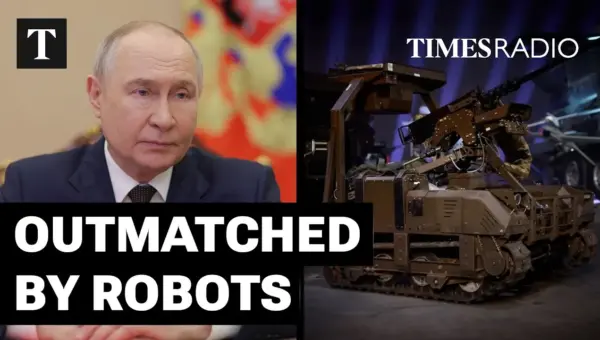
Ukraine War Robots Make Russian Tech Obsolete, Expert Says
Ukraine has achieved a historic military victory using ground robotic systems, marking a potential turning point in warfare. Defense tech expert Igor Novikov described the event as groundbreaking, highlighting the rapid evolution of conflict and Ukraine's role in pioneering its future. The conversation also touched upon concerns regarding UK defense spending and the global implications of proliferating autonomous weapon systems.

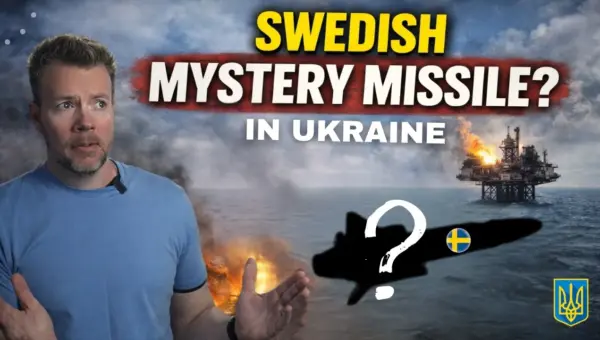
Sweden’s RBS-15 Missile Strikes Black Sea Targets
Ukraine has reportedly deployed the Swedish-made RBS-15 anti-ship missile, striking a Russian-occupied oil platform in the Black Sea. The missile's distinctive launch signature confirmed its origin, marking a significant escalation in Western arms transfers. The RBS-15's advanced capabilities, including long-range land-attack options, enhance Ukraine's ability to threaten Russian assets.


Ukraine Strikes Russia’s Oil Assets
Retired U.S. Army officer General Ben Hodges believes Ukraine's strikes on Russian oil and gas infrastructure are a key to victory. He urges continued attacks to cripple Russia's war funding, while dismissing Russian threats and questioning U.S. policy.