IRA’s Enniskillen Bombing: A Day of Remembrance Shattered
On Remembrance Sunday 1987, the IRA bombed a community center in Enniskillen, Northern Ireland, killing 11 people and wounding dozens. The attack, which occurred during a solemn commemoration, shocked the world and remains largely unresolved. This article delves into the personal tragedies, the historical context of "The Troubles," and the ongoing quest for justice.

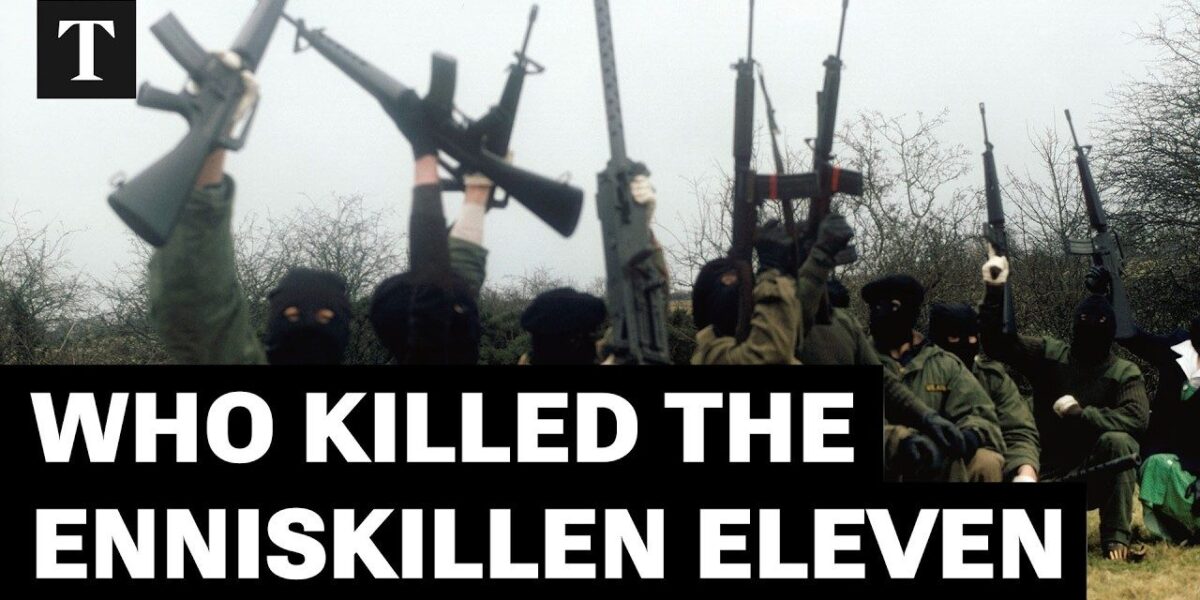
Enniskillen Bombing: Remembrance Day Massacre
On a bleak Sunday morning in November 1987, the Northern Irish town of Enniskillen was preparing to commemorate its war dead. As locals gathered for the annual Remembrance Day parade, a catastrophic explosion ripped through the heart of the community.
The blast, orchestrated by the Irish Republican Army (IRA), targeted a community center adjacent to the town’s war memorial, collapsing the building and claiming the lives of 11 innocent people while seriously wounding dozens more. This attack, occurring on a day dedicated to solemn remembrance, sent shockwaves of revulsion across the United Kingdom and beyond, standing out even amidst the decades of violence known as “The Troubles.” The bombing remains one of the most depraved acts of the conflict, leaving deep scars on the town and its residents.
The Night Before: A Community Center’s Last Hours
The events of that fateful Sunday morning were preceded by a seemingly ordinary Saturday night. The community center in Enniskillen, a three-story building on the main street, had been bustling with activity. Around 60 people had passed through its doors for bingo, seeking evening entertainment.
As the night drew to a close, only four men remained, playing cards in the basement. Unbeknownst to them, a device had been planted within the building, a silent, morbid countdown ticking away towards tragedy. The men left the premises well past midnight, unaware of the devastating act that was about to unfold.
Remembrance Day: An Attack on Solemnity
The following morning, as the community gathered outside the center to watch the Remembrance Sunday parade, the bomb detonated. The explosion caused the building to collapse, burying many bystanders under tons of rubble. The attack occurred near the town’s war memorial, where a statue of a lone soldier stands, a stark symbol of the sacrifice the day was meant to honor.
The IRA, responsible for the bombing, claimed their intended targets were “Crown Forces personnel.” However, their assertion that a British Army radio device triggered the bomb was false; evidence indicated the device was on a timer. This deliberate targeting of civilians on a day of national mourning underscored the profound depravity of the act.
Personal Tragedies: Voices from the Aftermath
The Enniskillen bombing irrevocably altered the lives of many families. Clive Armstrong, who was 16 at the time, lost his father, Ted Armstrong, an officer in the Royal Ulster Constabulary (RUC). Clive and his father were near the memorial when the bomb exploded, and he narrowly escaped.
“I was blown to the other side of the road,” he recounted. “All I can remember was coming to, no glasses, Sunday best in tatters, eyes just completely gritty.
Everything stopped. The world around us just stopped.” His father, however, did not survive.
Kathy G., who was 21, also lost her father-in-law, Sammy Gold, a retired police sergeant. Sammy had visited Kathy and her baby the previous evening and had said a poignant farewell: “Catherine, you look after that boy. He’s my pride and joy.” He was at the parade with his other son when the bomb went off.
“I can remember sitting in the back of this mini-bus,” Kathy recalled, “and all I could hear was a woman wailing.” Her husband, Keith, was devastated, repeatedly stating, “My father’s dead.” The loss of Sammy, described as “perfect” by Kathy, “ruined my life. It actually took a lot of my life away.”
Lyanna Ledwith, pregnant at the time, was a patient at the local hospital. She described the chaos as injured victims flooded the wards. “I can still see two faces of nurses that I know and they were running up the ward…
And they had to take as many staff as possible and just leave a skeleton staff on the ward. This caused this utter panic.” Two days after the bombing, Lyanna gave birth to a baby boy, Mario Ledwith, the narrator of the podcast series from which this account is drawn. He was born in the same hospital where many victims were being treated.
“The Troubles”: A Wider Context
The Enniskillen bombing occurred during “The Troubles,” a period of intense ethno-nationalist conflict in Northern Ireland that lasted from the late 1960s to the late 1990s. The conflict stemmed from the partition of Ireland in 1922, which created the independent Irish Republic and Northern Ireland, a part of the United Kingdom with a predominantly Protestant population. The IRA, seeking a united Ireland, waged a violent campaign against the British state and its security forces, whom they viewed as colonial occupiers.
This led to thousands of deaths, many of them civilians, through shootings, bombings, and other acts of violence. The Enniskillen bombing, by its nature and timing, was an act of extreme brutality that shocked even those accustomed to the daily violence of the era.
Unanswered Questions and the Search for Justice
Despite the IRA’s admission of responsibility, no individuals have ever been held accountable for the Enniskillen bombing. Nearly 40 years later, the families of the victims are still seeking truth and justice.
The narrator, Mario Ledwith, whose mother was a patient at the hospital during the aftermath, expresses the enduring impact on his hometown: “That massacre changed my town forever. Yet, growing up, it felt like something that was easier for people not to talk about.” He questions whether true peace can be achieved without accountability and expresses hope that some who know what happened that day may finally be ready to speak.
Looking Ahead: The Unfolding Investigation
The Enniskillen bombing remains one of the most significant unsolved crimes of “The Troubles.” As the narrator embarks on an investigation, the focus is on uncovering the full story behind this atrocity and understanding why such a solemn occasion was targeted. The series promises to delve deeper into the circumstances surrounding the attack, exploring the motivations of the perpetrators and the lasting legacy of the violence. The question of whether anyone will ever be held accountable for the deaths of the 11 victims looms large, highlighting the ongoing struggle for justice in the wake of the conflict.
Source: The IRA's Enniskillen Bombing: Attack on Remembrance Day (YouTube)

Related Articles
Retirement Savings Fall Short for Most
Many believe saving diligently in 401(k)s and IRAs is enough for wealth. However, this "accumulation mindset" often falls short due to limited savings potential and life's unpredictability. Real wealth building requires more than just saving; it needs active income generation and strategic growth.

Rory’s Masters Dream Fulfilled: Hollywood Celebrates
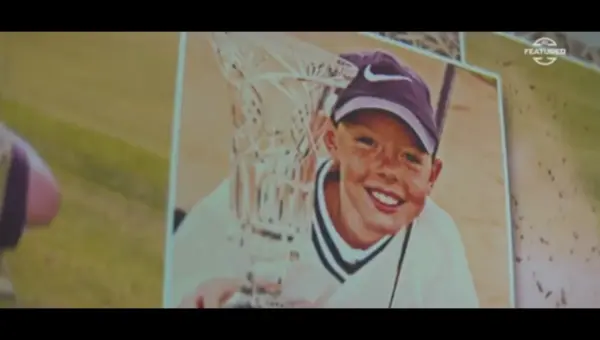
Rory McIlroy has finally captured the Masters, completing his career Grand Slam and bringing immense joy to his hometown of Holywood. The victory capped a long and often difficult journey, overcoming years of pressure and doubt at Augusta National.
UK Crumbles? Independence Movements Gain Unforeseen Traction
The United Kingdom faces a growing challenge from independence movements in Scotland, Wales, and Northern Ireland. With pro-independence parties gaining traction and legal pathways to separation, the centuries-old union is under increasing pressure, a reality largely unknown to many outside the UK.