China’s Industrial Threat Looms Larger Than Trump’s for Germany
Germany faces a significant industrial threat from China, which is seen as more critical than potential trade issues with the US. While China's economic expansion challenges core German industries, exports to the US and other European nations remain larger than those to China, highlighting a need for balanced trade perspectives.


Germany Faces Economic Crossroads: China’s Industrial Might vs. US Trade Tensions
As global economic landscapes shift, Germany, Europe’s industrial powerhouse, finds itself at a critical juncture, grappling with distinct challenges posed by both the United States and China. While political rhetoric from figures like former US President Donald Trump often dominates headlines, a deeper analysis reveals that the more existential threat to Germany’s industrial base stems from China’s aggressive economic expansion and its impact on core manufacturing sectors.
The ‘China Shock’ and its Impact on German Industry
The term ‘China shock’ has become shorthand for the profound disruption experienced by German industries due to intense competition from China. Unlike the protectionist tendencies sometimes exhibited by the US, which former President Trump aims at re-industrializing America, China’s economic strategy has been characterized by rapid growth, state-supported enterprises, and a concerted effort to dominate global markets, including Germany’s traditional strongholds.
“The mortal threat to the German industrial base is not Donald Trump. Uh Donald Trump wants to re-industrialize. Donald Trump experienced that in the US 15 years ago.
What we’re experiencing now, a China shock that’s gutting our core industries,” stated an observer in a recent analysis of the economic challenges facing Germany. This sentiment highlights a critical distinction: while US policies under Trump might lead to trade disputes and necessitate strategic adjustments, China’s economic model poses a more fundamental challenge to the very fabric of German manufacturing.
China’s Ambitions vs. Germany’s Industrial Strategy
The Chinese leadership, as observed, attempts to project an image of a responsible global player, with its foreign minister advocating for predictability on the international stage. However, this narrative is often at odds with the reality of China’s industrial policies, which are perceived by many in Germany as directly undermining its economic competitiveness. The focus is not merely on trade volume but on the strategic intent behind China’s industrial expansion.
“Uh Trump wants to rebuild America’s industries. Uh we need to protect and develop our industries and the threat is mostly from Chinese competition and not from US competition,” the analysis continued. This underscores Germany’s urgent need to not only defend its existing industrial base but also to foster innovation and growth to stay ahead of or at least competitive with China’s advancements.
Rethinking Trade Relationships and Proportionality
The scale of Germany’s economic ties with China is significant, yet it is crucial to maintain perspective. While China is a major trading partner, its importance in Germany’s export landscape is often overstated when compared to other key markets.
“And I think it’s also important to note that uh yes we have a big trading relationship with China but we export more to the US, more to the Netherlands, to Poland, to Italy than we export uh to China. So to just keep things in proportion,” an expert pointed out.
This insight is vital for policymakers. It suggests that while managing the relationship with China is paramount, over-reliance on or misinterpretation of China’s role in Germany’s export economy could lead to misplaced strategic priorities. The diversification of export markets and the strengthening of intra-European trade relationships remain critical components of Germany’s economic resilience.
Navigating the Future: Policy Implications for Germany and Europe
The dual challenges presented by the US and China require a nuanced and robust policy response from Germany and the wider European Union. The threat from China is characterized by its systemic nature, impacting sectors from automotive to renewable energy, and driven by state-backed industrial policies. The challenge from the US, while potentially disruptive, is often framed within a context of trade negotiations and reciprocal market access.
Germany’s path forward involves a delicate balancing act: fostering innovation to compete with China, maintaining open dialogue with the US to mitigate trade friction, and reinforcing its position within the European single market. The ability of German industry to adapt, innovate, and secure its global competitiveness in the face of these complex geopolitical and economic forces will be a defining factor in its future prosperity.
Looking Ahead
As Germany and Europe continue to navigate these intricate economic waters, the focus will likely remain on strategic industrial policy, technological sovereignty, and the resilience of supply chains. The effectiveness of Germany’s response to the ‘China shock’ and its ability to manage relationships with major global powers will shape its economic trajectory for years to come.
Source: China vs US: Which is Europe's biggest economic challenge | To the Point (YouTube)

Related Articles
Hungary’s Shift May Herald Putin’s EU Isolation
Hungary's election results signal a major shift, potentially isolating Russia within the EU. Meanwhile, Ukraine continues to target Russian infrastructure, exposing Moscow's growing military and economic vulnerabilities. The conflict grinds on with no clear end in sight.

Hungary’s Vote Signals End of Russia’s EU Grip
Hungary's recent election results signal a major shift in European politics, potentially weakening Russia's influence within the EU. Victor Orban's defeat, celebrated across Europe, highlights a growing public rejection of manipulative political tactics and a desire for genuine self-determination. The outcome offers hope for more democratic leadership globally.
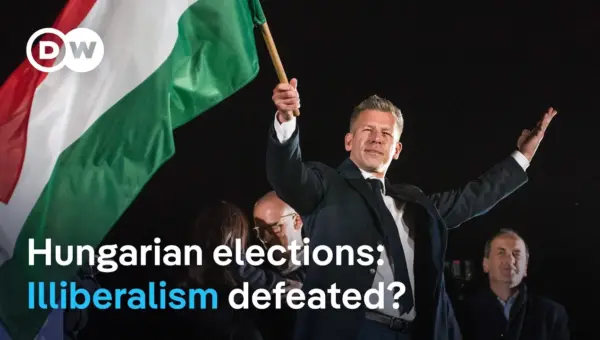
Hungary Votes Out Orban, Shaking Up Eastern Europe’s Strongmen
Hungary has voted out long-time Prime Minister Viktor Orban, signaling a potential shift in Eastern European politics. Orban's government was accused of undermining EU foreign policy and supporting illiberal leaders, impacting countries like Slovakia and the Western Balkans. The new leadership promises a pro-European realignment, but faces challenges in dismantling established structures.