Umpire’s Strike Zone Woes: 5 Challenges Lost in 3 Innings
An umpire's struggles with the strike zone were laid bare in a spring training game, losing five consecutive replay challenges within the first three innings. Analysis revealed a concerning 80% accuracy rate on critical calls, highlighting the difficulty of human umpiring.


Umpire’s Strike Zone Woes: 5 Challenges Lost in 3 Innings
Spring training is often a proving ground for new systems and a chance for players and umpires alike to shake off the rust. However, one minor league umpire found himself under an intense spotlight during a recent spring training game, losing five consecutive replay challenges within the first three innings. This unusual display raises questions about the human element in officiating and the growing role of technology in baseball.
A Challenging Start
The umpire in question faced an immediate barrage of overturned calls. The first pitch of the bottom of the first inning was deemed a ball, much to the catcher’s disbelief. Replay confirmed the pitch was well within the strike zone, both high and wide.
The next call saw the umpire incorrectly signal a strike, only for the batter to correctly challenge, arguing the pitch missed both the high and low boundaries of the zone. This pattern continued into the second inning, where another first-pitch strike call was overturned after a challenge, with the pitch appearing to be clearly in the zone.
By the bottom of the third inning, the trend was undeniable. A pitch called a strike was overturned, with the analysis suggesting the umpire was perhaps overcompensating for previous errors, incorrectly calling a pitch below the zone as a strike. The sequence of overturned calls was startling, leading to a deeper dive into the umpire’s performance.
Deconstructing the Numbers
While five missed calls out of 152 pitches might seem statistically insignificant at first glance, a closer examination reveals a more concerning picture. When accounting for pitches swung at (where the umpire’s call isn’t needed), hit-by-pitches, pitches poorly framed by the catcher, and obvious strikes that no one would dispute, the number of critical calls the umpire had to make drops significantly.
In the first three innings, after these adjustments, the umpire was left with 26 crucial calls. Of these, five were overturned, resulting in a success rate of just 80% on the calls that truly mattered.
“It’s such a hard job. I think it’s too hard of a job for a human to do.
I’m glad we have ABS. I think eventually we’re going to be like there’s just going to be a very quick system.”
The Angle and the Crouch: Unpacking the Mechanics
The breakdown of the overturned calls offered potential explanations for the umpire’s struggles. Two of the three pitches that were overturned as strikes involved left-handed batters. The analysis suggested that the umpire’s typical stance, with his head positioned towards the inside of the plate for safety against foul tips, might be compromising his angle on outside pitches, leading to misjudgments.
A more perplexing call involved a pitch that appeared to be perfectly centered. However, further review revealed a potential issue with how the strike zone is being interpreted in relation to the batter’s stance. While players are measured for their strike zone when standing upright, they crouch significantly when batting.
If the umpire is using the batter’s knee level in their crouched position as a reference, it could lead to incorrect calls. The analysis showed that a pitch called a strike was actually above the batter’s knee level when standing upright, suggesting a disconnect between the official measurement and the on-field reality.
The Future of Officiating
This umpire’s difficult outing is not an isolated incident. The transcript notes that similar struggles are occurring throughout spring training, with one team reportedly having six overturned calls. The introduction of the Automated Ball-Strike (ABS) system, or at least its underlying technology, is seen by many as a necessary step towards standardization and accuracy.
The commentator emphasized that this is not an indictment of the umpire’s effort but rather a reflection of the inherent difficulty of the job. The ability to challenge calls provides a crucial safety net, ensuring fairness for players and viewers alike. As batters become more attuned to their personal strike zones and the nuances of their crouch, the reliance on technology to ensure consistent calls is likely to increase.
A Glimmer of Hope
Despite the initial struggles, there was a moment of redemption. In the bottom of the fourth inning, the umpire correctly identified a pitch that was well below the zone, leading to a successful challenge by the catcher.
While this call was correct, the preceding sequence of errors had apparently led the opposing team to challenge almost anything, banking on the umpire’s perceived inaccuracy. The crowd even applauded the correct call, proof of the desire for accuracy in the game.
The spokesperson concluded by reiterating that this is the era of ABS Baseball, where technology is being integrated to improve accuracy. The segment was brought to you by SeatGeek, with a special offer for viewers using the code ‘jambboy10’ for 10% off tickets.
Source: Umpire loses 5 straight challenges, a breakdown (YouTube)

Related Articles

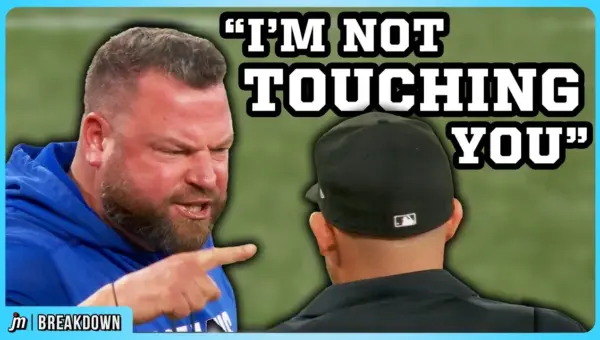
Schneider Ejected After Hitting Umpire in Face!
Toronto Blue Jays manager John Schneider was ejected after a heated argument over a balk call, which led to nose-to-brim contact with umpire Dan Bellino. The incident highlights the impact of new pitching rules and the intense scrutiny umpires face.
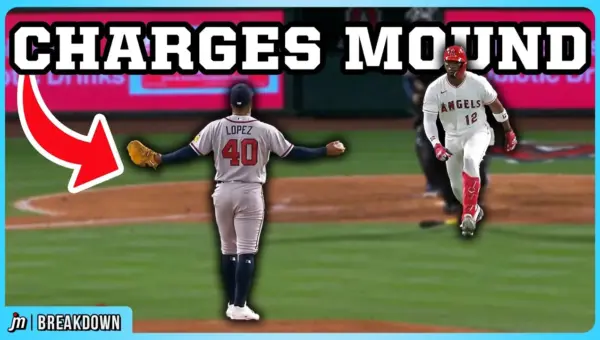
Brawl Erupts: Solair Charges Mound After Pitch Sparks Chaos
Jorge Solair charged the mound and a wild brawl ensued after pitcher Ronaldo Lopez hit him with a fastball. Both players were ejected, and later received seven-game suspensions, following the chaotic incident.


Umpire CB Bucknor’s Blunder Baffles Brewers, Rays
Umpire CB Bucknor's baffling call at first base, which he later questioned himself, led to a challenge and an overturned decision. The incident left players and coaches bewildered as the runner was clearly safe.