Iran Ceasefire: A Risky Gamble or Strategic Play?
Congressman Marlon Stutzman supports President Trump's decision to extend the Iran ceasefire, viewing it as a strategic move to address internal Iranian divisions. The focus remains on Iran's actions, not just words, as the U.S. aims to prevent nuclear proliferation while navigating domestic policy challenges like DHS funding.

Trump’s Iran Ceasefire Extension: A Calculated Risk?
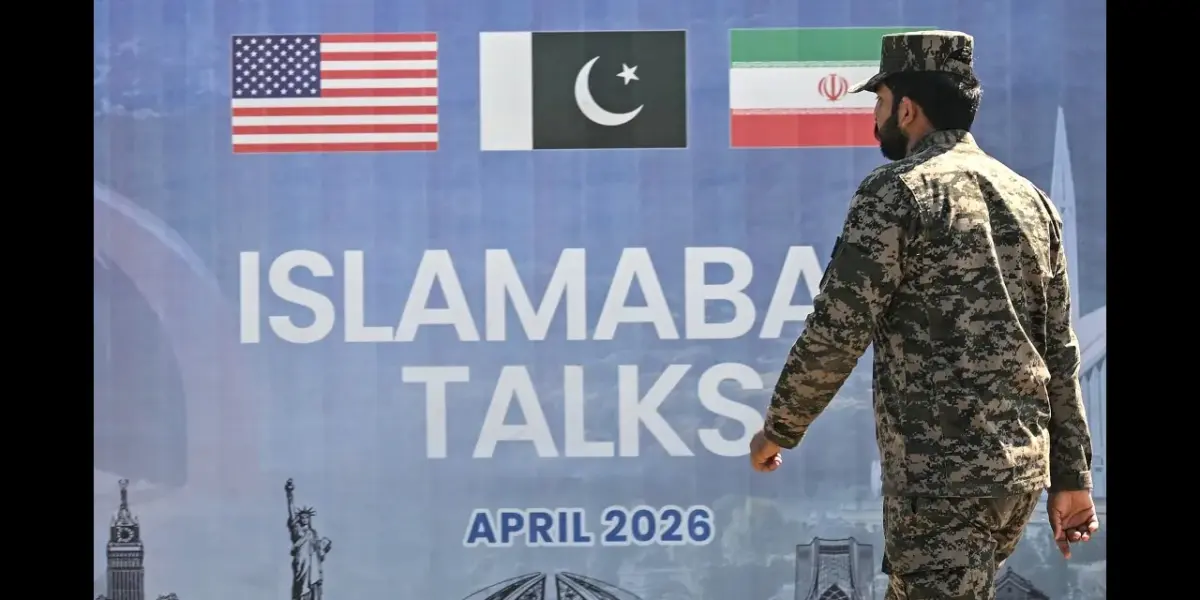
In a complex geopolitical move, President Trump has extended a ceasefire with Iran while maintaining a naval blockade. This decision comes as the Iranian leadership faces internal divisions following the death of the Ayatollah. Congressman Marlon Stutzman views this as the “right decision,” believing it gives the fractured Iranian regime necessary time to find a unified voice.
Stutzman points to a significant power struggle within Iran’s leadership. The vacuum left by the Ayatollah’s death has created an ongoing skirmish for control.
This internal instability, he argues, leads to inconsistent decision-making, which President Trump seems to recognize. The hope is that a stable, unified Iranian leadership can emerge to negotiate reliably.
Actions Speak Louder Than Words
When dealing with Iran, Stutzman stresses the importance of observing actions over relying on spoken words. He notes that Iran’s history shows a pattern of untrustworthiness. Therefore, their deeds will be a more accurate indicator of their intentions than any promises they make.
This approach is further complicated by recent events. President Trump has urged Iran to release eight women reportedly facing execution.
This appeal follows violent crackdowns on protests where thousands of Iranians may have been killed. Stutzman sees this as a crucial part of effective negotiation – offering some leniency while clearly stating demands.
The Art of Negotiation: Trump’s Approach
Congressman Stutzman praises President Trump’s negotiating style, calling him a strong diplomat. He believes Trump effectively uses America’s full power – military, economic, and diplomatic – to achieve foreign policy goals. This strategy aims to bring stability, which ultimately benefits everyone, including Americans worried about gas prices.
The long-term goal, according to Stutzman, is to prevent Iran from acquiring nuclear weapons. Such a capability would pose a significant threat not only to the United States but also to allies in Europe and the Middle East. Maintaining the blockade is seen as a key tactic to cut off Iran’s financial resources.
Cutting Off the Cash Flow
By keeping the naval blockade in place, the administration aims to reduce Iran’s funding. This financial pressure, Stutzman explains, limits their ability to pay their military and fund external operations. It also weakens their support for groups like the Houthis, Hamas, and Hezbollah, which destabilize the Middle East.
Stutzman acknowledges that resolving the Iran situation will not be quick. Iran possesses a substantial military and financial resources, allowing them to sustain their activities for some time. However, he identifies the Strait of Hormuz as a potential “Achilles’ heel” for Iran, suggesting that control over this vital waterway could be a critical leverage point.
Domestic Policy Woes: The Budget Reconciliation Debate
The conversation shifts to domestic issues, specifically the funding for the Department of Homeland Security (DHS). The Senate’s filibuster rule has blocked funding bills, forcing a reconsideration of strategies. Some are now discussing using the budget reconciliation process, a method that bypasses the filibuster, to pass essential legislation.
Stutzman hopes for a broader scope in the reconciliation process, recalling a similar discussion before the “one big beautiful bill.” He believes a dual approach, with bills moving simultaneously in the House and Senate, could be more effective. This strategy, he argues, aligns with the Republican mandate to govern and deliver on promises to voters.
The Filibuster’s Shadow Over Policy
The misuse of the filibuster rule in the Senate is a major concern for Stutzman. He cites the failure to pass the “Save America Act,” which aims to protect election integrity, as an example of this problem. He urges Senate Republicans to remain firm and pass critical policies, including DHS funding.
Beyond homeland security, Stutzman expresses a desire to defund Planned Parenthood and ensure the military has the necessary resources. He also highlights the ongoing issue of welfare fraud in states like Minnesota and California, which costs taxpayers billions. A “second big beautiful bill,” even if not as large as the first, is seen as the proper path forward.
Bridging the Divide Within the Republican Party
Acknowledging the slim Republican majority in the House, Stutzman notes that divisions among Senate Republicans appear more significant than those in the House. House Republicans, he believes, have shown a strong tendency to stick together when it matters most.
Key issues like FISA reform and addressing welfare program abuse by undocumented immigrants remain points of discussion. Stutzman emphasizes the urgency of these matters, stating that delays only underscore a lack of responsiveness to the American people’s immediate concerns. The lingering effects of inflation mean many citizens are still struggling financially, and Congress must show similar urgency in addressing their needs.
Why This Matters
The decisions made regarding Iran have far-reaching implications for global security and economic stability. A misstep in negotiating with a volatile regime could escalate tensions or even lead to conflict.
Simultaneously, the internal struggles within Congress over funding and policy reflect broader challenges in governance. The effectiveness of the budget reconciliation process could set a precedent for future legislative battles, impacting everything from national security to social programs.
Implications and Future Outlook
The current approach to Iran suggests a strategy of patience and pressure. If successful, it could lead to a more stable regional dynamic and prevent nuclear proliferation. However, if internal Iranian divisions worsen or if negotiations fail, the situation could deteriorate rapidly.
Domestically, the debate over the filibuster and the use of reconciliation highlights the deep partisan divides and the challenges of passing legislation in a closely divided Congress. The ability of Republicans to unite and deliver on their promises will be a key indicator of their effectiveness in the coming months.
Historical Context
U.S. relations with Iran have been fraught with tension since the 1979 revolution. Decades of mistrust, sanctions, and proxy conflicts have shaped the current geopolitical landscape.
Past attempts at negotiation have yielded mixed results, highlighting the difficulty of finding common ground. The current administration’s “America First” approach to foreign policy, emphasizing bilateral deals and the use of economic leverage, marks a distinct shift from previous administrations.
Looking Ahead
The coming weeks will be critical for both foreign and domestic policy. All eyes will be on Iran to see if a unified leadership emerges and if meaningful progress can be made in negotiations.
In Washington, the success or failure of the budget reconciliation process will reveal much about the current state of partisan cooperation and the ability of Congress to address pressing national issues. The administration’s next steps regarding Iran and the ongoing legislative battles in Congress will undoubtedly shape the political narrative for the remainder of the year.
Source: Rep. Stutzman Says Trump’s Ceasefire Extension the ‘Right Decision’ with ‘Seriously Fractured' Iran (YouTube)

Related Articles


US Demands New Iran Deal, China Watches Closely
The US is applying intense economic and diplomatic pressure on Iran, demanding unified proposals for negotiations. This new, tougher stance contrasts with previous American flexibility. Meanwhile, China's long-standing ties with Iran are being closely watched, and US actions in the Middle East are seen as a potential deterrent to Chinese military aggression.


Democrats Fight Back: Redistricting Backfires on Trump
Republicans' attempts to manipulate election maps have backfired, leading to Democratic victories in Virginia. This marks a shift towards a more assertive Democratic strategy, challenging traditional political norms and focusing on accountability.


Tucker Carlson Apologizes for Electing Trump, Cites ‘Misleading’ Voters
Tucker Carlson has apologized for his past support of Donald Trump, stating he feels he misled voters. While some experts view the apology as overdue, others suggest it may be influenced by audience sentiment and evolving conservative media dynamics. Private communications revealing Carlson's past disdain for Trump have also come to light, adding complexity to his public statement.