Ukraine Strikes Russian Oil Hub, Escalating War
Ukraine launched a major drone attack on Russia's Tupaz oil refinery, causing extensive damage and fires. This strategic strike aims to cripple Russia's war funding by targeting its oil economy. The conflict also sees Ukraine successfully intercepting advanced Russian missiles and targeting naval assets, indicating a significant escalation.


Ukraine Strikes Russian Oil Hub, Escalating War
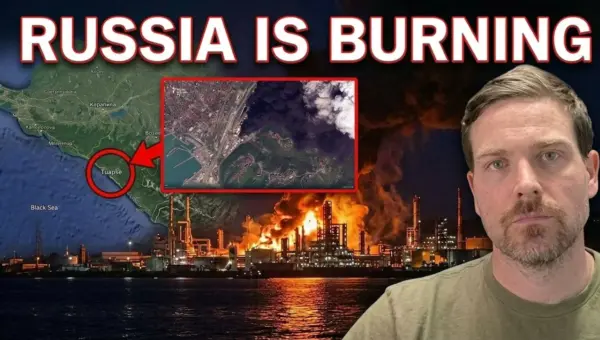
In a significant escalation of the ongoing conflict, Ukraine has launched a major drone attack targeting a key oil refinery and export terminal in Russia. The strike on the Tupaz oil refinery, one of Russia’s largest, resulted in widespread fires and extensive damage, hitting the country’s vital energy infrastructure. This attack highlights Ukraine’s strategy to cripple Russia’s war funding by targeting its oil economy.
The aftermath of the attack showed multiple large fires raging at the refinery, with heavy black smoke rising into the air. Aerial views revealed at least five separate fires, indicating the scale of the destruction. This event marks one of the most substantial attacks on Russian energy facilities since the war began, potentially causing years of disruption for repairs.
The refinery is strategically located near the Black Sea, a critical area for both Ukraine and Russia. The drones, launched in waves, targeted refinery towers and tanks, causing what is described as catastrophic loss to Russia’s oil production and export capabilities. This aggressive action underscores Ukraine’s determination to inflict maximum damage on Russian assets.
Air Defenses Under Pressure
While Ukraine targets Russian infrastructure, its own air defenses are also being put to the test. Footage shows a Ukrainian air defense team successfully intercepting a Russian cruise missile using a French-supplied Mistral missile system. The successful interception, marked by a loud ignition and explosion, demonstrates the effectiveness of some Western-supplied air defense tools.
The conflict has also seen Russia employing advanced weaponry, including Shahed drones armed with incendiary substances designed for maximum destruction. However, these too have faced interception, with one drone seen engulfed in flames before crashing. The ongoing aerial battles highlight the evolving tactics and technologies used by both sides.
Advanced Russian Missiles Targeted
Ukraine has also reported success in countering Russia’s most powerful missiles. A Kinzhal missile, one of Russia’s most advanced aerial ballistic missiles, was reportedly knocked off course by a Ukrainian electronic warfare system. This incident, along with other successful electronic warfare operations, suggests a growing capability within Ukraine to disrupt Russian missile attacks.
Since the start of 2026, Ukrainian electronic warfare systems have reportedly downed 26 Kinzhal missiles and deflected 33 cruise missiles, in addition to intercepting over 10,000 drones. The disabling of a Kinzhal missile and its subsequent impact demonstrates the vulnerability of even Russia’s most formidable weapons when faced with sophisticated countermeasures.
Naval Strikes Add to Russian Losses
Beyond energy infrastructure and air defense, Ukraine has also targeted Russian naval assets. Drone strikes have hit two high-value Russian ships, the landing ships Yamal and Konstantin Olshansky, in the bay of occupied Sevastopol. These vessels, valued at $80 million and $70 million respectively, were reportedly destroyed.
Video footage shows drones approaching and impacting the ships, leading to successful detonations and significant damage. These naval losses further compound the pressure on Russia, impacting its military capabilities and projecting Ukrainian reach far beyond its immediate borders.
Why This Matters
The recent Ukrainian drone attacks on Russia’s oil infrastructure represent a critical shift in the war’s dynamics. By targeting energy facilities, Ukraine aims to cut off the financial resources that fuel Russia’s military machine. This strategy, if successful, could significantly impact Russia’s ability to sustain its war effort and potentially lead to economic strain within the country.
The successful interceptions of advanced Russian missiles and the destruction of naval assets also demonstrate Ukraine’s growing capacity to defend its territory and project power. These actions, supported by Western military aid, show a determined resistance that is adapting and evolving throughout the conflict.
Implications and Future Outlook
The escalation of attacks on critical infrastructure suggests that the war is likely to continue with increased intensity. Russia may retaliate with further strikes on Ukrainian targets, potentially including energy and civilian infrastructure. The effectiveness of Ukraine’s drone technology and Western air defense systems will be crucial in mitigating these threats.
The long-term impact of these attacks on global energy markets remains to be seen. Disruptions to Russian oil exports could affect supply and prices worldwide. As the war progresses, both sides will likely continue to seek asymmetric advantages, with drone warfare and electronic countermeasures playing increasingly important roles.
Historical Context
The conflict between Russia and Ukraine has been ongoing for over four years, with periods of intense fighting and strategic maneuvers. Ukraine has consistently sought to disrupt Russia’s economic and military capabilities, while Russia has aimed to assert control and pressure Ukraine through military action and infrastructure attacks.
Previous Ukrainian strategies have included strikes on Russian logistics and military bases. The current focus on energy infrastructure is a more direct attempt to impact Russia’s economic backbone, mirroring tactics seen in other conflicts where resource control is a key factor.
As of April 20th, Russia has suffered a major blow to its oil refining capacity, and air defenses on both sides remain active. The war continues to escalate, with no clear end in sight.
Source: Russia Hit With SHOCKINGLY BRUTAL Attack – Air Defenses FAIL (YouTube)

Related Articles
Ukraine’s Oil Attacks Sting Russia’s War Chest
Ukraine's persistent drone attacks on Russian oil refineries, including a recent major strike on the Tuapse facility, are significantly impacting Russia's war funding. Russian military bloggers express growing frustration over inadequate defenses and a disconnect between the war's reality and public life. This highlights Ukraine's strategic economic warfare and Russia's internal challenges.


Ukraine, Germany Launch Drone Mass Production
Ukraine and Germany have launched Quantum Frontline Industries (QFI) to mass-produce the Linsa tactical drone, aiming for over 10,000 units annually. This initiative shifts Ukraine's war effort towards industrial-scale drone warfare, creating a more stable supply chain independent of foreign aid.


Trump’s Allies Face Scandals as World Leaders Rethink Ties
Allegations of foreign interference and scandals surrounding Donald Trump's allies, like Cash Patel, are raising serious questions. The article explores criticisms of U.S. foreign policy, particularly concerning Russia and Israel, and calls for greater accountability in leadership.