New Telescope Unlocks Deeper Views of the Cosmos
A new 8-inch Dobsonian telescope is set to enhance public stargazing experiences, while discussions delve into the "Great Filter" theory and our place in cosmic structures. The article also explores the reliability of space technology and upcoming astronomical events, including the potential discovery of Planet Nine.

Citizen Scientist Acquires Powerful New Light Bucket
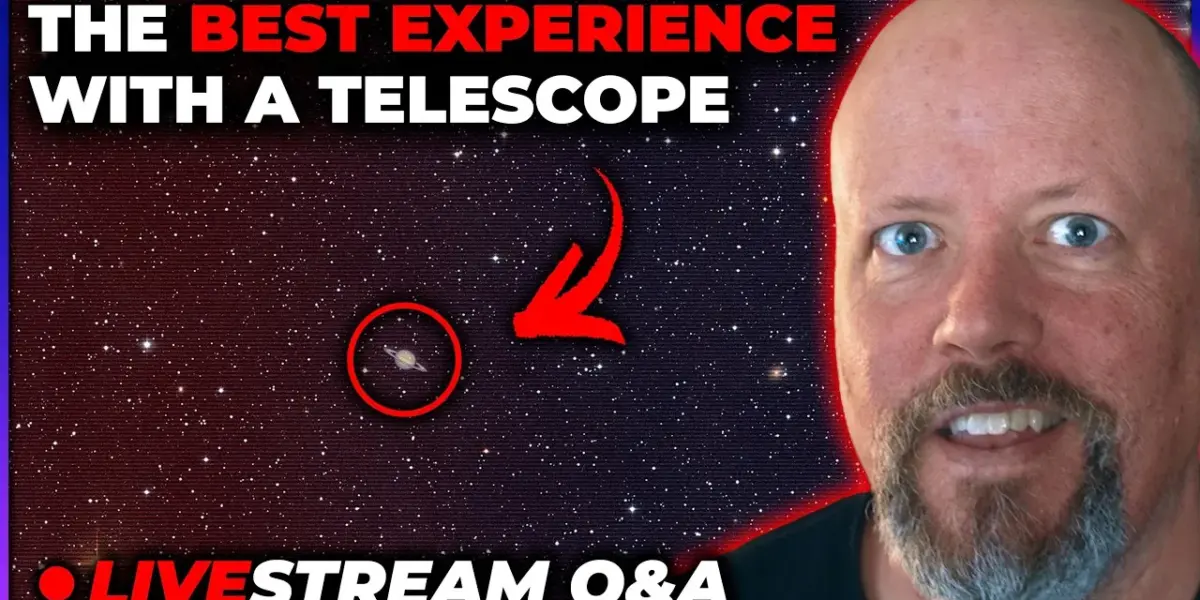
A seasoned space journalist has acquired a powerful new tool for exploring the night sky: an 8-inch Skywatcher Dobsonian telescope. This telescope, often called a “light bucket,” is prized for its ability to gather a lot of light, allowing for detailed views of planets, moons, and distant celestial objects. The journalist found this particular telescope through a stroke of luck on Facebook Marketplace, purchasing it for about a third of the cost of a new one with accessories.
This acquisition marks a significant step for the journalist, who plans to use the telescope for “sidewalk astronomy.” This involves setting up the telescope in public places, like outside movie theaters or concerts, to let people experience the wonders of space for the first time. The most rewarding part, they explained, is witnessing the awe on someone’s face as they see celestial bodies like Saturn or Jupiter through the eyepiece, often expressing disbelief that what they’re seeing is real and not a photograph.
The Great Filter: Are We Alone or First?
A common question in astronomy circles is the “Great Filter” theory, which attempts to explain why we haven’t found evidence of alien civilizations. This theory suggests there are numerous difficult steps, or “filters,” in the evolution of life and civilization. These filters could range from the origin of life itself to the development of intelligence and technological spaceflight.
One possibility is that the Great Filter lies in our past. If humanity has already overcome all the major hurdles, then the path to becoming a galaxy-spanning civilization might be clear. This would imply we are rare, perhaps even unique, in our current stage of development.
However, another, more sobering possibility is that the Great Filter lies in our future. This suggests that most civilizations reach a certain point, perhaps developing spaceflight and colonizing their solar system, but then inevitably encounter a filter that prevents them from expanding further into the galaxy. This filter could be self-destruction, a cosmic event, or some other unknown obstacle that proves insurmountable for nearly all advanced life.
Navigating the Cosmos: Local Structures and Cosmic Voids
Recent discussions have touched upon our place in the universe, specifically regarding our location within cosmic structures. While some might confuse our position within the Milky Way’s “local bubble”—a region with lower density due to past supernova activity—with being in a void, this is not the scientific consensus.
Astronomers agree that Earth resides within the Local Group of galaxies. This group is part of the much larger Virgo Supercluster, which in turn is part of the even grander Laniakea Supercluster. These superclusters are vast structures made up of countless galaxies, and we are firmly embedded within them, not isolated in a cosmic void.
Technology in Space: Reliability Over Recency
When it comes to space missions, the age of the technology used is often less important than its reliability. Missions like the Voyager probes, launched in 1977 with technology developed in the 1960s, are still operational today, showcasing the longevity of well-built spacecraft.
Even cutting-edge instruments like the James Webb Space Telescope use components that are not necessarily the absolute latest. This is because modern electronics, with their tiny transistors, are more vulnerable to radiation in space. Space agencies often opt for slightly older, but more robust and space-hardened technology, ensuring that the spacecraft can withstand the harsh environment and function for its intended mission duration.
Upcoming Celestial Events and Missions
Amateur astronomers have several exciting events to look forward to. Comet Lemon is currently visible in the night sky and is recommended for observation, especially for those with telescopes, though it will fade in the coming week.
The Vera C. Rubin Observatory is expected to begin full operations soon, promising to revolutionize our understanding of the universe.
This powerful telescope is designed to survey the sky rapidly and is anticipated to discover thousands of supernovae annually, numerous asteroids, and potentially interstellar objects. Crucially, it is also considered the best hope for confirming the existence of the hypothesized Planet Nine in our solar system.
The Chinese space program continues to advance steadily, following a long-term, multi-decade plan. Recent successes include lunar sample return missions and the deployment of their space station.
China is now preparing to send astronauts to the Moon by 2030, with testing underway for new rockets, landers, and crew capsules. This progress is independent of U.S. space efforts, though it may spur increased competition and collaboration as both nations pursue lunar exploration.
Source: A Telescope Experience You Just Can't Repeat [Q&A Livestream] (YouTube)

Related Articles
Dark Energy Drives Universe Expansion, Scientists Confirm
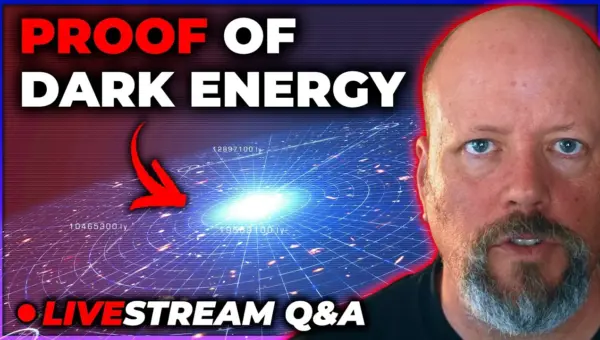
Scientists confirm dark energy, a mysterious force, is accelerating the universe's expansion, counteracting gravity. This discovery, rooted in 1999 observations of distant supernovae, suggests dark energy makes up about 68% of the universe's energy density. Future telescopes aim to unravel its true nature and impact on the cosmos's fate.
Rocket Lab Expands Reach, Eyes Mars with New Tech
Rocket Lab is powering NASA's Artemis II mission with solar technology and expanding its reach with space laser communications. The company is also developing its Neutron rocket and has ambitions for Mars exploration.

Sun’s Cosmic Siblings Found Orbiting Milky Way
Astronomers have identified potential siblings of our Sun, stars born in the same cosmic nursery, by analyzing their movements and chemical makeup. The Sun's stellar family may orbit the Milky Way together. The article also touches on the theoretical possibility of black holes acting as time mirrors, the Sun's future evolution, and the ongoing search for Planet Nine.