Artemis II Crew Blasts Off: A Giant Leap for Mars Dreams
The Artemis II mission has launched, sending four astronauts on a 10-day journey around the Moon. This historic flight is a critical test for future Mars exploration and aims to establish a long-term lunar presence. The crew, including the first African American and Canadian to orbit the Moon, faces challenges like extreme re-entry temperatures. Success here paves the way for landing humans on the Moon and eventually reaching Mars.


Artemis II Crew Blasts Off: A Giant Leap for Mars Dreams
The Artemis II mission is a huge step forward, sending four astronauts on a journey around the Moon. This mission is more than just a trip to our closest neighbor; it’s a crucial test run for future human exploration of Mars. The excitement is building as the crew heads to the launch pad, ready to make history.
The Artemis II mission launched with a powerful roar, sending its crew on a 10-day journey. Commander Reid Wiseman, Victor Glover, Christina Koch, and Jeremy Hansen are aboard the spacecraft.
They will orbit the Moon, traveling about 1.85 million miles in total. This mission is a vital part of NASA’s plan to establish a long-term presence on the Moon.
Meet the Trailblazers
The four astronauts are a diverse and experienced team. Commander Reid Wiseman has spent time on the International Space Station. Victor Glover will be the first African American to orbit the Moon.
Christina Koch holds the record for the longest single spaceflight by a woman, nearly a year in space. Jeremy Hanson, from Canada, is the rookie of the crew and the first Canadian to orbit the Moon.
Mission Objectives and Challenges
This 10-day mission will not land on the Moon but will orbit its surface. The spacecraft will generate 8.4 million pounds of thrust during liftoff. Re-entry into Earth’s atmosphere will see the capsule traveling at 25,000 miles per hour.
A key challenge will be the heat shield withstanding extreme temperatures during re-entry. NASA has made adjustments to ensure the astronauts’ safety.
The journey involves orbiting Earth first, then heading towards the Moon. After circling the lunar surface, the crew will use Earth’s gravity to slingshot back to a splashdown in the Pacific Ocean. This entire process is designed to test the systems needed for longer, more complex missions.
The Bigger Picture: A Stepping Stone to Mars
Artemis II is the first of several planned missions. If successful, NASA plans Artemis III to orbit the Moon’s south pole.
Artemis IV aims to land humans back on the lunar surface. The ultimate goal is to build a Moon base, allowing humans to live and work there.
This lunar ambition is a stepping stone to an even greater objective: Mars. NASA sees establishing a presence on the Moon as essential preparation for sending humans to the Red Planet. Fifty countries have signed the Artemis Accords, agreeing to peaceful exploration and cooperation in space.
“The ultimate goal here is to leave Earth… Traveling around the lunar surface then using the Earth’s gravity to slingshot back to the Pacific Ocean in 10 days time.”
Historical Echoes and Future Hopes
The excitement surrounding Artemis II echoes the spirit of the Apollo missions from over 50 years ago. It marks humanity’s return to lunar exploration after a long pause. This renewed push into space is inspiring a new generation.
The success of Artemis II will pave the way for future missions. These missions are not just about scientific discovery; they are about expanding human reach and capability. The journey to the Moon is proof of human ingenuity and our drive to explore the unknown.
Why This Matters
Artemis II is more than just a space mission; it represents a significant investment in our future. It is a demonstration of international collaboration, with astronauts from different countries working together. The technologies developed and tested on this mission will be vital for future deep-space endeavors.
By pushing the boundaries of space exploration, NASA and its partners are not only seeking knowledge but also inspiring innovation. The challenges overcome and lessons learned will inform the long-term goal of establishing a human presence on Mars. This mission is a critical link in that ambitious chain of exploration.
Looking Ahead
The success of the Artemis II mission is crucial for the next steps in NASA’s lunar program. The agency plans to send more astronauts to orbit the Moon and eventually land on its surface. All eyes are on Florida, watching history unfold.
The journey of the Artemis II crew is just the beginning. It is a bold step towards a future where humans can live and work beyond Earth, with Mars as the ultimate destination. The next phase of lunar exploration is underway.
Source: Artemis II crew heads to he launch pad | NewsNation Live (YouTube)

Related Articles


Artemis II Launch Delayed, Moon Landing Shifts to 2028
NASA's Artemis II mission, intended to send astronauts around the Moon, has been delayed to September 2025 due to technical issues with the SLS rocket. The program's first lunar landing, Artemis III, has been redefined as an Earth-orbit test, pushing the actual Moon landing to no earlier than 2026. Future missions targeting the lunar South Pole are now set for 2028.


Artemis II Astronauts Train for Risky Lunar Mission
The Artemis II crew is undergoing intensive training for their upcoming lunar fly-around mission. Astronauts are preparing for every possible scenario in space, a dangerous environment where system failures can occur. Ground crews will provide constant support, monitoring the spacecraft and communicating with the crew throughout the historic journey.

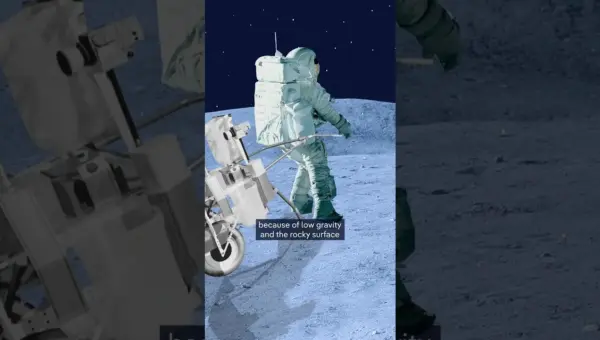
Apollo 14 Astronauts Miss Moon Target by 20 Meters
Apollo 14 astronauts Alan Shepard and Edgar Mitchell narrowly missed their main mission target, Cone Crater, turning back just 20 meters away due to challenging terrain and low oxygen. High-resolution images from the Lunar Reconnaissance Orbiter later revealed how close they were to collecting vital lunar samples from the crater's rim.