Navy Lacks Ships To Enforce Sanctions, Guard Global Trade
The Royal Navy is struggling to enforce sanctions on eight Russian tankers in the English Channel due to a severe lack of resources. Decades of underfunding have left the service unable to adequately patrol and protect vital global trade routes. This shortage raises concerns about the UK's ability to respond to future maritime security threats.

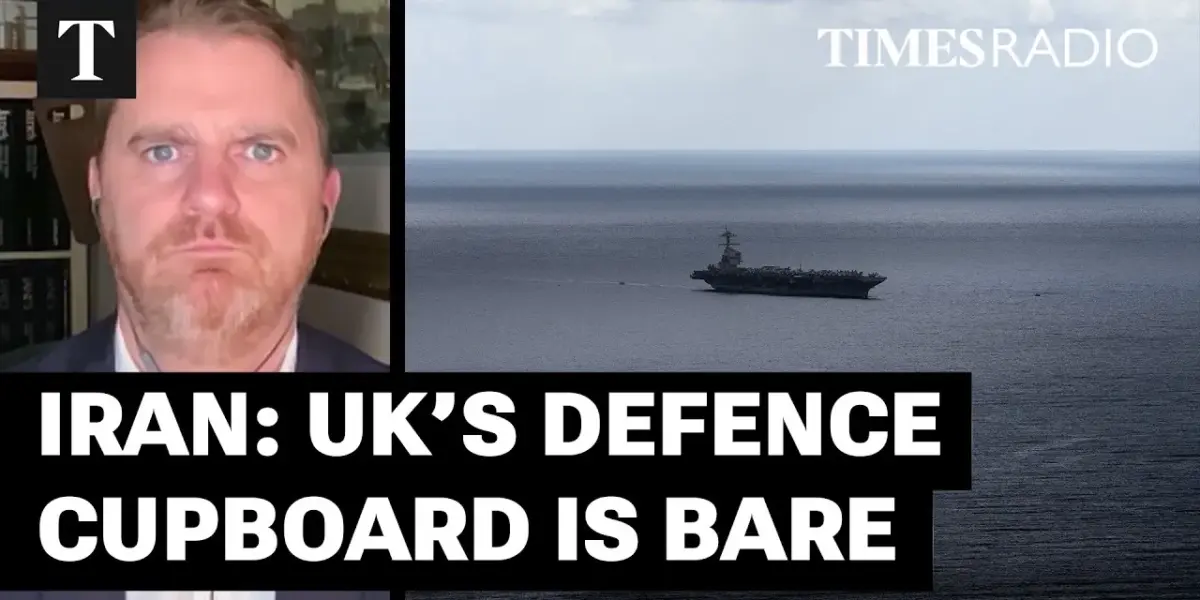
Royal Navy Struggles to Enforce Sanctions on Russian Tankers
Eight sanctioned Russian oil tankers are currently sitting in the English Channel. New laws were passed allowing the Royal Navy to seize these vessels.
However, little action has been taken, leaving the ships in place. This situation highlights a significant challenge for the UK’s naval capabilities.
Tom Sharpe, a former Royal Navy warship commander and security advisor, spoke about the issue. He noted that while the rule change was a positive step, it has not led to enforcement.
The government gained the power to intercept such ships earlier this year. Yet, despite this new authority, the sanctioned tankers remain unaddressed.
Lack of Resources Cripples Naval Operations
Sharpe explained that the core problem is a lack of resources. “We can board dark fleet ships.
Be no doubt about that and some of the capabilities we have and some of the people we have to do it and they’re the best in the world, but we just don’t have enough of them,” he stated. This shortage means the Navy cannot effectively patrol and enforce regulations across the board.
The Navy must be selective about which ships it monitors. Between two and three vessels pass through sensitive areas daily. With limited ships, the Navy cannot monitor every one.
This forces difficult choices about where to focus limited resources. Questions also arise about where detained ships would be taken and how they would be processed.
Decades of Underfunding Affects Defense Readiness
Sharpe suggested that the current state of underfunding is a long-term issue. “It’s been picked up a thousand times over a thousand years, but no one’s cared,” he said.
Defense spending has been consistently low for decades. Governments have prioritized other areas like welfare, education, and healthcare.
Defense needs often get pushed to the future. “Defense does not. Defense has always been tomorrow’s problem over successive governments.
And now tomorrow has now just come. And here we are and the cupboard is bare,” Sharpe explained. This chronic underfunding has left the military unprepared for current challenges.
Global Trade Routes Face Uncertainty
The ability of the UK to contribute to policing vital global shipping lanes, like the Strait of Hormuz, is now in question. The Strait is a critical chokepoint for oil transport. Any disruption there could lead to higher oil prices worldwide, affecting countries like the UK.
Sharpe described the situation in the Strait of Hormuz as binary. Either Iran creates a threat, making it unsafe for most ships, or a ceasefire stops the threat.
In the latter case, a large coalition force would not be needed because the danger would be gone. A narrow middle ground might exist for a coalition of warships to help, but it is difficult to imagine how this would work.
Future of Naval Support Remains Unclear
The UK could potentially contribute through the UK Maritime Trade Organization. This group helps connect the military and commercial shipping sectors.
However, directly addressing threats in the Strait of Hormuz is much harder. The effectiveness of any UK naval support remains uncertain.
The Royal Navy’s capacity to project power and enforce international maritime law is being tested. The current lack of resources raises concerns about its ability to respond to future crises.
The situation with the Russian tankers is just one example of these broader challenges. The world is watching to see how these issues will be addressed.
Source: A Coalition Of Naval Ships Could Be The Answer To Unblocking The Strait Of Hormuz (YouTube)

Related Articles


Trump’s Iran Gambit: A Risky Bet for Global Oil Prices
Donald Trump's potential withdrawal from the Iran conflict could destabilize global oil prices. Leaving allies to manage the Strait of Hormuz risks empowering Iran to control energy markets. This move could lead to significant economic pain worldwide.


Iran Conflict Fuels Gas Price Hikes Amidst MAGA Division
The U.S. faces rising gas prices and public unease due to the ongoing conflict in Iran. The lack of clear strategy and communication surrounding the military actions has fueled economic concerns and political division. Americans overwhelmingly oppose sending ground troops, while the potential disruption of the Strait of Hormuz looms large.

Trump’s Iran Strategy: Unpredictable Warfare for Oil Security
President Trump is employing a strategy of unpredictable warfare, focusing on economic and military pressure points like the Strait of Hormuz. The aim is to counter Iran's nuclear ambitions and regional influence without full-scale conflict. Investors should monitor potential impacts on oil prices and geopolitical stability.