Webb Telescope Reveals New Cosmic Secrets
The James Webb Space Telescope has selected its next batch of scientific projects, promising new insights into alien worlds and the early universe. Researchers will use Webb to study exoplanet atmospheres, investigate distant galaxies, and explore objects within our own solar system.

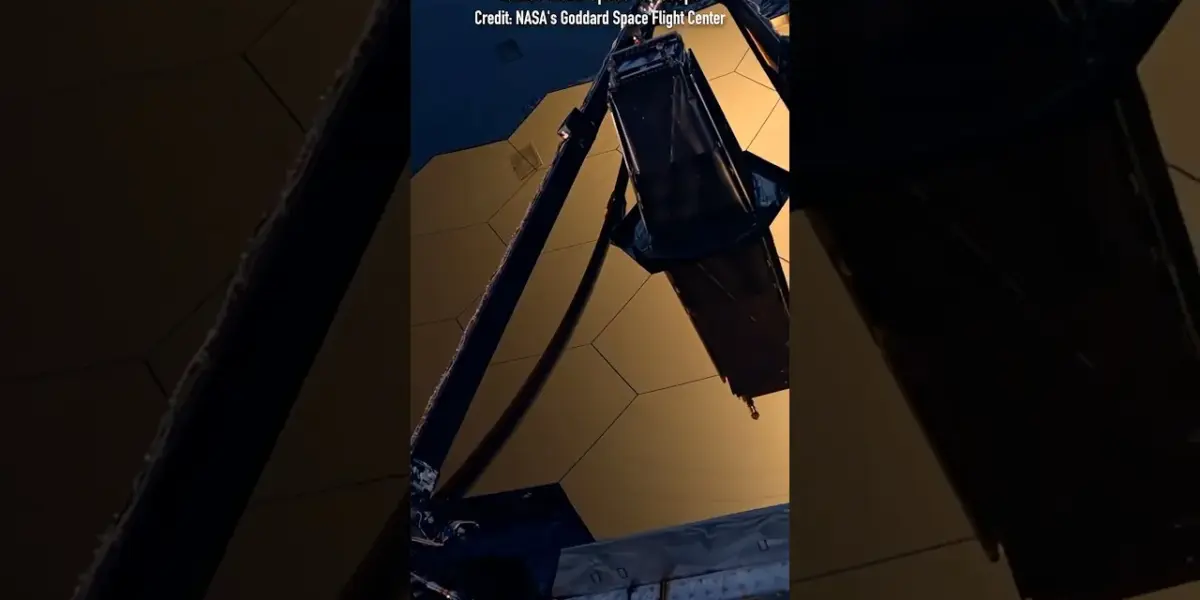
Webb Telescope Reveals New Cosmic Secrets
The James Webb Space Telescope (JWST) has announced the latest set of scientific projects that will use its powerful gaze to unlock the universe’s mysteries. Each year, NASA invites scientists worldwide to propose how they would use this incredible observatory. These proposals are then carefully reviewed, and the most compelling research is granted valuable observation time.
This year’s successful proposals cover a wide range of cosmic exploration, from the atmospheres of alien worlds to the earliest moments of the universe. Scientists are eager to point Webb’s mirrors at distant exoplanets, seeking clues about their composition and potential habitability. The data gathered promises to deepen our understanding of planets beyond our solar system.
Hunting for Alien Worlds
A significant portion of the awarded time will focus on exoplanets, particularly rocky worlds and ‘super-Earths.’ These are planets larger than Earth but smaller than Neptune. One such target is 55 Cancri e, a super-Earth located about 41 light-years away. Scientists plan to use Webb to study its atmosphere in great detail.
Studying exoplanet atmospheres is like analyzing the air we breathe on Earth to understand its properties. Webb’s instruments can detect specific gases, revealing whether a planet has an atmosphere and what it’s made of. This information is crucial for determining if these distant worlds could potentially support life as we know it.
Mysteries of the Early Universe
Another major focus involves the enigmatic ‘little red dots’ observed by Webb. These faint, distant objects are thought to be some of the earliest galaxies or perhaps actively growing supermassive black holes. Twelve separate research teams will use Webb to investigate these cosmic pioneers.
Imagine looking back in time billions of years. The light from these distant objects has traveled across the vastness of space for almost the entire age of the universe to reach us.
Webb’s sensitivity allows it to capture this ancient light, offering a glimpse into the universe’s formative years. Understanding these early structures helps us piece together how galaxies and black holes grew over cosmic history.
Exploring Our Own Cosmic Backyard
The JWST will also turn its attention closer to home, with several proposals dedicated to studying objects within our own solar system. This includes investigations into Jupiter’s moon Europa, a prime candidate for harboring life due to its subsurface ocean. Asteroids within our solar system will also be studied, providing insights into the building blocks of planets.
Europa’s icy shell might hide a vast ocean of liquid water, a key ingredient for life. By studying its surface and any plumes of water that might erupt, scientists hope to learn more about this hidden environment. Understanding asteroids helps us learn about the conditions present when our solar system formed, offering clues about Earth’s own origins.
A Legacy of Discovery
The James Webb Space Telescope, launched on December 25, 2021, is the most powerful space telescope ever built. It orbits the Sun about 1 million miles (1.5 million kilometers) away from Earth, a location called the second Sun-Earth Lagrange point. This vantage point allows it to achieve extremely cold temperatures, essential for detecting faint infrared light from distant objects.
Webb builds upon the legacy of previous observatories like the Hubble Space Telescope. While Hubble primarily observes in visible and ultraviolet light, Webb specializes in infrared light. This allows it to see through dust clouds that obscure the view for other telescopes and to observe the redshifted light from the earliest stars and galaxies.
What Comes Next
The selected projects represent the cutting edge of astronomical research. The data collected over the next year will undoubtedly lead to new discoveries and challenge existing theories. Scientists will analyze the information, publish their findings, and inspire future generations of explorers.
The full list of successful proposals is available for the public to explore, offering a detailed look at the scientific questions driving our cosmic quest. The next cycle of proposals will likely be announced in late 2024.
Source: Successful JWST science proposals announced! #shorts (YouTube)

Related Articles

NASA Reveals Ambitious Moon Mission Updates
NASA held a significant public event on March 24 to update its plans for returning astronauts to the Moon by 2028. Key announcements included progress on establishing a permanent lunar base and advancements in nuclear propulsion for space travel. The agency detailed its strategy for sustained lunar presence and future Mars missions.


ZX Spectrum Lands Spaceship Using 1982 Tech
A 1982 Sinclair ZX Spectrum computer has successfully guided a simulated spacecraft to a lunar landing. Using a combination of emulation, serial communication, and a Python intermediary, the vintage machine controlled a lander in Kerbal Space Program. The project highlights the capabilities of early hardware and the dramatic progress in computing power.


NASA Rolls Out Giant Rocket for Historic Artemis II Moon Mission
NASA is preparing for the historic Artemis II mission, set to launch as early as April 6. The massive Space Launch System rocket, carrying the Orion spacecraft and four astronauts, is being moved to the launch pad for the first crewed journey around the Moon in over 50 years. This mission is a critical step in NASA's plan to establish a long-term presence on the lunar surface.