DHS Shutdown Hurts National Security, Lawmakers Hear
A House hearing revealed the severe impacts of the Department of Homeland Security funding lapse, with agency leaders detailing workforce hardships and operational risks. Republicans blamed Senate Democrats for the shutdown, while Democrats pointed to former President Trump, as witnesses described missed paychecks, increased airport wait times, and growing cybersecurity threats.

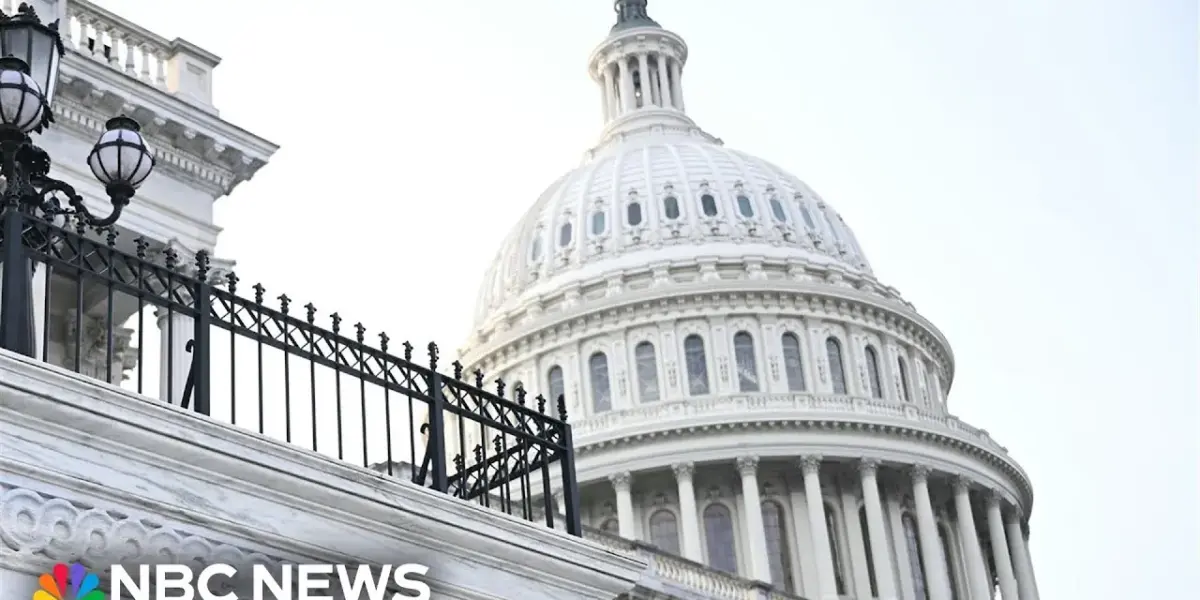
DHS Funding Lapse Sparks Urgent Congressional Hearing
Washington D.C. – Lawmakers convened a critical House hearing today to address the ongoing funding lapse for the Department of Homeland Security (DHS). The shutdown, which has idled numerous government functions, has led to significant operational disruptions and concerns for national security.
The hearing aimed to assess the harmful impacts of the lapse on the department’s various components and their dedicated workforce. Members emphasized the urgent need to restore full funding and prevent future disruptions.
Republicans Blame Democrats, Democrats Point to Trump
During the hearing, the blame for the DHS funding gap was sharply divided. House Republicans, led by the committee chair, accused Senate Democrats of intentionally shutting down DHS for political gain, weakening national security at a time of heightened threats.
They highlighted that Democrats have repeatedly voted against bipartisan deals to fund DHS. The chair stated, “Senate Democrats have repeatedly held up and voted against a bipartisan bicameral deal to fund DHS for fiscal year 2026.” He added that the department and its workforce will face damaging consequences long after the shutdown ends.
Conversely, House Democrats, including Ranking Member Thompson, called the hearing a “height of hypocrisy,” asserting that Republicans and former President Trump are to blame for the shutdown. They argued that Republicans have blocked Democratic efforts to fund agencies like TSA, FEMA, CISA, and the Coast Guard. Thompson stated, “Republicans control every part of government and could have funded these agencies with Democratic support, but chose not to.” He referenced a report that former President Trump rejected a Democratic compromise deal, calling it a “Republican shutdown.”
Witnesses Detail Devastating Impacts on Workforce and Operations
Representatives from key DHS agencies provided stark testimony on the real-world consequences of the funding lapse. Miss Han McNeel, acting administrator for the Transportation Security Administration (TSA), reported that TSA has been shut down for 85 days this fiscal year, with employees facing nearly $1 billion in missed paychecks.
She described the severe financial hardship faced by TSA officers, including missed bill payments, eviction notices, and depleted savings. “Many in our workforce have missed bill payments, received eviction notices, had their cars repossessed and utilities shut off, lost their child care, defaulted on loans, damaged their credit line, and drained their retirement savings,” McNeel testified.
The TSA is already seeing a significant increase in employees leaving the agency, with over 480 Transportation Security Officers (TSOs) lost during this shutdown alone. This has led to longer wait times at airports, with some exceeding four and a half hours.
McNeel warned of a potential crisis during the upcoming FIFA World Cup, expecting millions of international fans. She also noted a disturbing 500% increase in assaults on TSA officers since the shutdown began.
Coast Guard and CISA Face Readiness and Security Risks
Admiral Thomas G. Allen, Vice Commandant of the U.S. Coast Guard, explained that his agency, the only armed force within DHS, has operated without funding for 85 of the last 176 days. This has created unacceptable financial strain on civilian employees and military members, who face uncertainty about their next paycheck and mounting expenses.
“Our dedicated civilian employees have already missed several paychecks, leaving them without resources to support their family,” Admiral Allen stated. The Coast Guard has halted preparations for major events like the FIFA World Cup and America 250, and is facing potential utility shutdowns for critical infrastructure. He added that it takes two and a half days to recover from every day of a shutdown, meaning if it ended today, they wouldn’t catch up until July 3rd.
Nick Anderson, acting director of the Cybersecurity and Infrastructure Security Agency (CISA), highlighted that while government shutdowns pause, adversaries do not. CISA has operated under its third shutdown this fiscal year, with about 60% of its workforce furloughed. The remaining essential personnel are working without pay, facing increasing pressure from cyber threats.
“When the government shuts down, our adversaries do not,” Anderson stated. He explained that proactive assessments and partnership engagements have been scaled back, allowing risks to accumulate. Delays in critical actions, like finalizing rules for the Cyber Incident Reporting for Critical Infrastructure Act, are creating openings for adversaries and weakening national cyber defenses.
Broader Implications and Calls for Action
The hearing underscored the fundamental purpose of DHS, created after the 9/11 attacks to ensure coordinated security efforts. Lawmakers expressed concern that proposals to fund some DHS agencies but not others would dangerously degrade this inter-agency coordination. The shutdown’s impact extends to states left unsupported and critical upcoming events like the FIFA World Cup and America 250 celebration, which require heightened preparedness.
Both sides of the aisle urged an end to the shutdown, though they differed on responsibility. Republicans called for an end to political games and a return to regular order, while Democrats demanded Republicans stop the “performance” and start governing by passing legislation to reopen DHS. The testimony painted a clear picture: the funding lapse is not just a budgetary issue but a matter of trust, readiness, and national security, with long-term consequences for the department and the nation’s safety.
What’s Next
With the testimony from DHS leaders highlighting the severe operational and personnel impacts of the ongoing funding lapse, the pressure mounts on Congress to reach a resolution. Lawmakers are expected to continue negotiations, with the immediate concern being the potential fallout during major upcoming national events. The focus remains on finding a bipartisan agreement to restore full funding and prevent future shutdowns from jeopardizing national security.
Source: LIVE: House holds hearing on Department of Homeland Security funding lapse | NBC News (YouTube)

Related Articles
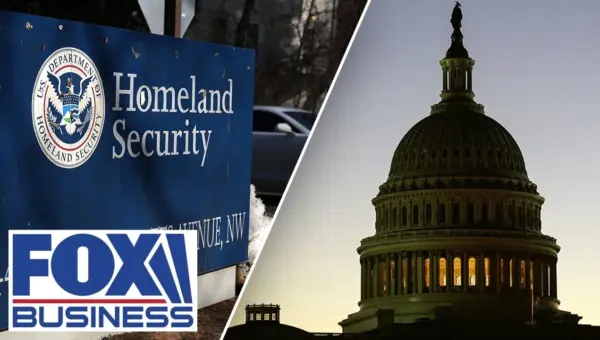
DHS Shutdown Threatens National Security, Workforce
A prolonged shutdown of the Department of Homeland Security (DHS) is creating significant national security risks and severely impacting its workforce. Agencies like TSA, Coast Guard, and CISA are struggling with staffing shortages, operational disruptions, and morale issues due to missed paychecks and funding uncertainty.

Plane Crash, Airport Chaos, and a Social Media Verdict
New details emerge from the LaGuardia plane crash investigation, highlighting potential failures in tracking systems and air traffic control staffing. Meanwhile, a potential deal to fund the TSA could end airport chaos, and Meta faces a landmark verdict for endangering children on its platforms.

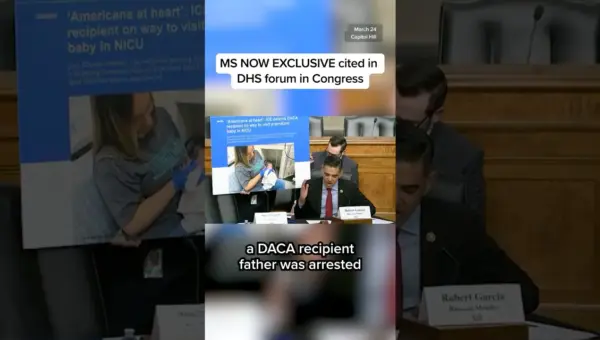
ICE Detains DACA Dad; Congress Cites MS NOW Report
MS NOW's exclusive report on an ICE detention of a DACA recipient heading to see his premature baby was cited in Congress. Representative Robert Garcia used the story to highlight alleged DHS abuses, stating such cases should 'outrage every single American.' The incident raises questions about immigration enforcement priorities.