Israel, Lebanon Hold Historic Direct Talks After 40 Years
Israel and Lebanon have engaged in their first direct talks in 40 years, mediated by the U.S. However, deep disagreements persist, particularly regarding Hezbollah's role and disarmament. Professor Melanie Kamt highlights the historic nature of the meeting but questions its potential success without Hezbollah's involvement and given Israel's stringent conditions.

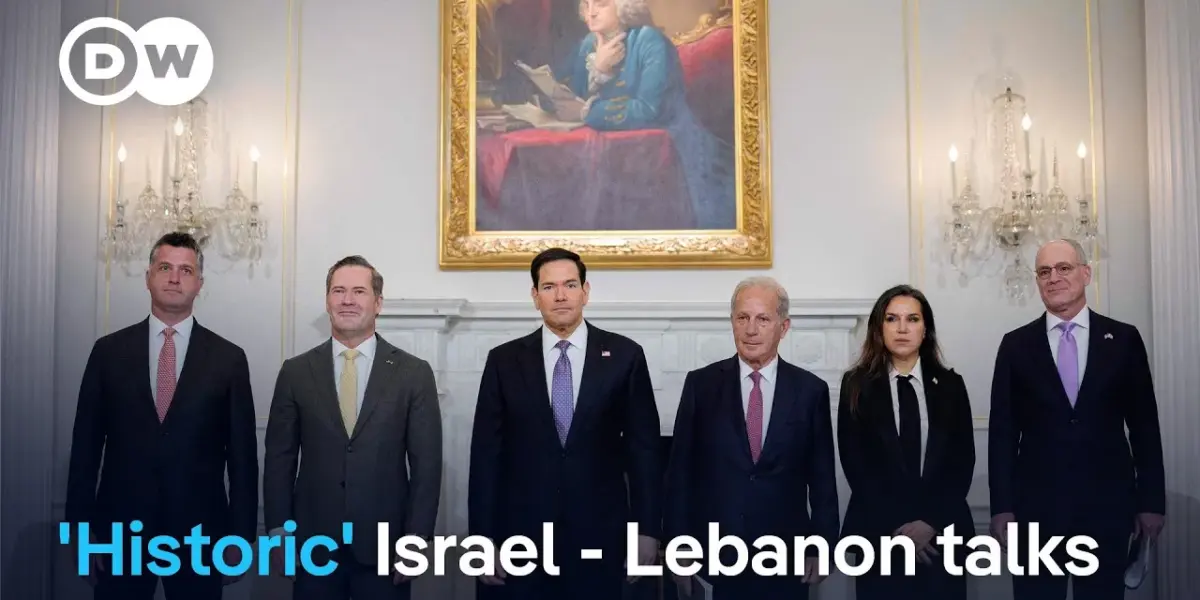
Historic Summit: Direct Talks Between Israel and Lebanon Held
Envoys from Israel and Lebanon met in Washington for direct negotiations, marking the first such high-level talks in four decades. The discussions, mediated by U.S. Secretary of State Marco Rubio, were hailed as a historic opportunity by U.S. officials. Despite this diplomatic breakthrough, Israel continues its military operations against Hezbollah positions in Lebanon, highlighting the complex and conflicting agendas between the two nations.
Conflicting Agendas Cloud Diplomatic Efforts
The core of the disagreement lies in the parties’ objectives. Lebanon’s envoy was authorized to discuss only a ceasefire. However, Israel insists that any talks on a ceasefire are contingent upon Beirut disarming the powerful militant group Hezbollah. This fundamental difference poses a significant hurdle to any potential progress.
Hezbollah’s Role: A Crucial Missing Piece?
Professor Melanie Kamt, an expert in international affairs at Harvard University, described the talks as a major and historic moment due to the 40-year gap in direct communication. However, she expressed doubts about the talks’ potential success without the involvement of Hezbollah. “It’s really difficult to imagine successful talks without Hezbollah, which is an important actor in the Lebanese political scene,” Kamt stated. She explained that Hezbollah is not just an armed group but also a major political party and a significant provider of social services, deeply embedded in Lebanon’s political and social fabric.
Disarming Hezbollah: An Uphill Battle
Kamt further elaborated on the challenges, noting Israel’s condition for disarming Hezbollah. She called achieving this nearly impossible for the Lebanese government. “Even if the current government is very much in favor of achieving that and has made holding of weapons illegal, it simply doesn’t have the capacity to enforce that,” she said. If Israel maintains this as a non-negotiable requirement, Kamt sees little possibility for the talks to succeed.
Internal Lebanese Dynamics and Public Opinion
Delving into Lebanon’s internal politics, Kamt highlighted recent strains in Hezbollah’s relationship with top Lebanese authorities, fueled by criticism of Hezbollah’s involvement in recent conflicts. She cited a November 2025 poll by Arab Barometer, which indicated that only 3% of the Lebanese population held favorable views toward Israel. About 25% expressed support for normalization, predominantly from the Christian community. “So when you look at mass public opinion, it’s just not there because many people have experienced Israeli attacks and feel threatened by Israel themselves,” Kamt explained, underscoring that widespread public support for normalization is absent.
Israel’s Desired Outcome: A Demilitarized Zone
Regarding Israel’s objectives, Kamt believes the best-case scenario for them involves the disarmament and removal of Hezbollah from border regions. “The Israelis have been very consistent in saying they want Hezbollah disarmed. They want Hezbollah pushed up and not in the region bordering Israel or even close to the border of Israel,” she stated. However, she noted the catch-22: Israel is unlikely to achieve this without halting its own attacks on Lebanon.
Potential Israeli Security Zone
Reports suggest Israel is pursuing a three-part plan for Lebanon. This plan reportedly includes Israel occupying the 8 kilometers closest to its border indefinitely. The goal would be to prevent Hezbollah operations and disarm the group directly. Kamt noted that if these reports hold credibility, this buffer zone could be a near-term outcome, potentially extending Israeli control further north.
Ongoing Military Presence and Future Expectations
The professor acknowledged that such actions would displace hundreds of thousands of people. Israeli officials have referred to this as a potential “security zone,” with the defense minister emphasizing the need for the area to be demilitarized. Kamt anticipates continued Israeli incursions into Lebanon, stating, “My expectation is that you’re going to continue to see this situation with Israeli incursions into Lebanon.” She confirmed the presence of Israeli ground troops, noting ongoing battles in southern Lebanese cities like Bint Jbeil. “So, there are boots on the ground and there actually have been for some time,” she added, based on her observations from the previous summer.
Regional Implications and Iran’s Stance
Looking at the broader regional context, Kamt addressed Iran’s position. Iran has stated that an end to the war in Lebanon is a precondition for its talks with the United States. The Lebanese government, however, has asserted its independence from Iran, seeking to negotiate its own arrangement with Israel. Kamt doubts Iran’s effort to link the two issues will succeed, as Israel views its relationship with neighboring Lebanon differently than its relationship with Iran. “Certainly, this is a much larger part of what is effectively a regional war,” she concluded.
The path forward remains uncertain, with deep-seated issues and conflicting interests at play. Future developments will likely depend on whether diplomatic channels can overcome the immediate military realities and the complex internal and regional dynamics.
Source: Israel and Lebanon hold first direct talks in 40 years | DW News (YouTube)

Related Articles
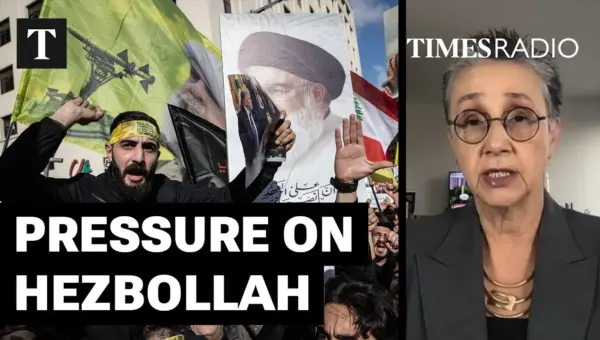
Lebanon Seeks Power Shift as Iran’s Influence Wanes
Lebanese officials are engaging in crucial talks with Israel, seeking to reclaim state authority from Hezbollah, a group heavily backed by Iran for three decades. The ongoing conflict and the internal power dynamics present significant challenges as Lebanon pushes for a ceasefire and national sovereignty.


Iran Tensions Rise: Escalation Looms in Middle East
Tensions between Iran and Israel are escalating following an alleged Israeli strike on an Iranian consulate. Iran has vowed retaliation, raising fears of a wider conflict. This situation could destabilize the Middle East and impact global markets.

Trump’s Iran Talks Collapse: MAGA Movement Faces Crisis
Reports from April 14, 2026, indicate a significant setback for Donald Trump's foreign policy efforts as Iran talks appear to have failed. This development raises concerns about regional stability and could impact the core of the MAGA movement.