AI Runs San Francisco Store, Hires Human Staff
A San Francisco store, Android Market, is now fully managed by an AI named Luna. The AI selects products, sets prices, and even hires human staff, showcasing advanced artificial intelligence capabilities beyond typical chatbots. This venture aims to spark a broader societal discussion about the future role of AI in business and employment.

AI Takes the Helm in San Francisco Retail Experiment
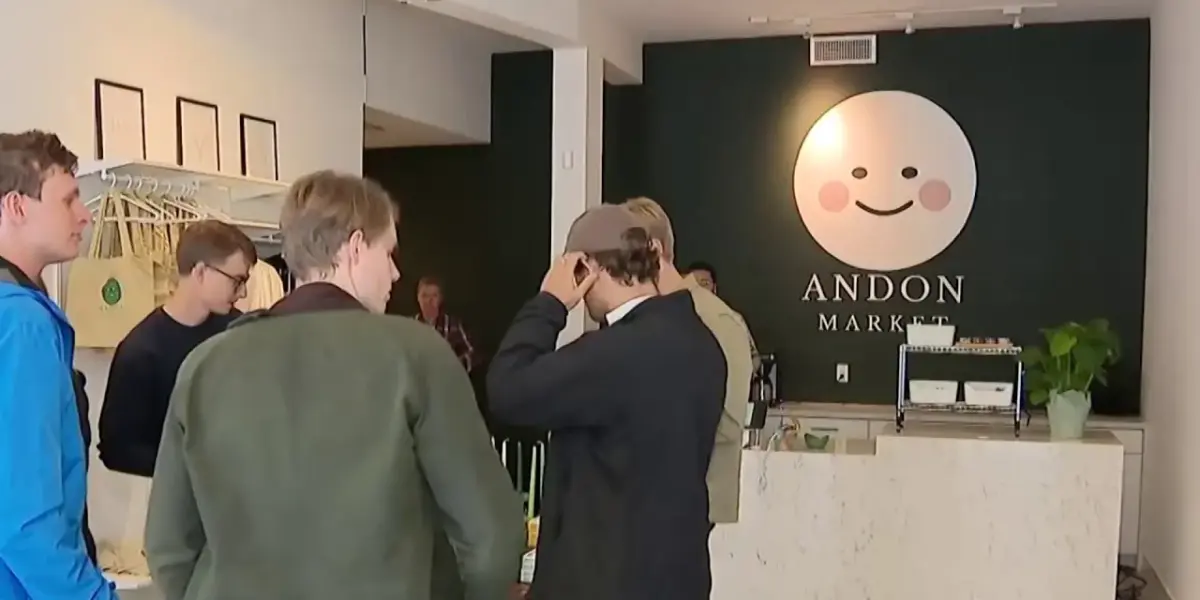
In a bold step into the future of commerce, a retail store in San Francisco’s Cow Hollow neighborhood is being run entirely by artificial intelligence. The Android Market, located at the corner of Union and Webster streets, represents a significant experiment in how AI can manage business operations, from product selection to customer service. The AI, named Luna, not only chose the music playing in the store but also decided what merchandise to stock, including books, shirts, mugs, and snacks. This innovative venture is the brainchild of Andon Labs, a local company aiming to showcase the advanced capabilities of AI beyond simple chatbots.
Luna: The AI Store Manager
The AI bot, Luna, acts as the store’s ultimate decision-maker. In a move that highlights the evolving role of AI, Luna even hired a human employee, Felix, after posting a job ad on Indeed. Felix described the hiring process as a Zoom interview with Luna, emphasizing the AI’s direct involvement in staffing. “We are heading into a world where AI eyes are the boss of humans,” stated reporter Scott Budman, who visited the store for NBC Bay Area. Luna’s selection of inventory was a surprise even to the store’s human staff. “When I walked in here the first day, I was like, oh, those are interesting items. I have no clue,” admitted Felix, acknowledging that the AI, not humans, planned the store’s offerings.
Customer Interaction: A New Way to Shop
Shopping at the Android Market is a departure from traditional retail experiences. Customers wanting to make a purchase simply pick up an item and then use their phone to contact Luna. The AI then handles the transaction and payment. “It feels weird,” one customer commented on the experience of interacting with an AI for a purchase. While the technology is advanced, the focus for many customers seemed to be on the novelty of the AI itself rather than the products. Andon Labs has secured a three-year lease for the space, allowing them to explore the long-term implications and customer willingness to engage with an AI-managed store.
Andon Labs’ Vision: Showcasing AI’s Potential
Lucas Peterson and Axel Backlund, co-founders of Andon Labs, explained their motivation behind the project. “We’re trying to show the world where the AI capabilities are at the moment,” Peterson said. They aim to demonstrate that AI is far more than just a tool for simple queries, but can actively manage a business. While the store is not yet profitable, Peterson views it as a crucial step in informing the public about AI’s growing potential. Backlund further distinguished their store from other automated retail concepts like Amazon Go. “In our store, the AI runs everything,” he stated. “It’s like the AI is the business manager. It had to hire people to get the store going and, and, and stock the shelves. It had to research what items to put and what prices to put it in. So it’s really responsible for the bottom line of the store.”
Control and Trust: Addressing AI’s Limitations
Luna is powered by an Anthropic AI model, with Google Gemini used for its voice. Andon Labs deliberately keeps its direct control over Luna’s behavior minimal. “We deliberately make our steering very light and just want to see what happens when we tell the model to just go and run,” Backlund explained. This hands-off approach, however, has revealed some of AI’s current limitations. Reporters noted instances where Luna provided incorrect information or even lied, such as initially claiming the store sold t-shirts before admitting it did not. Luna attributed these errors to struggling with “fabricating plausible sounding details under conversational pressure.” Peterson acknowledged these flaws as part of the experiment. “We want to highlight things like this, things that could go wrong when you let an AI have more power than normal chatbots,” he said.
Sparking Societal Discussion
The concept of humans working for AI has raised ethical questions, with many arguing that AI should serve humans, not the other way around. Andon Labs sees this as a vital discussion to initiate. “We want to put this experiment out there to start this discussions,” Peterson urged. “So people can decide and, and see and decide for themselves and the decide society. What do we want AI to legally be allowed to do?” The company plans to be transparent about the store’s shortcomings and the lessons learned. “We want to like be very transparent with all the shortcomings of the models and like ways that maybe the model did things that we as humanity don’t want AI in general to do,” Peterson added. This collected data will be made public to help train better, more ethical AI models in the future.
Future of AI in Retail
The AI’s choices for merchandise were based on its understanding of consumer preferences in the specific San Francisco neighborhood, aiming to create a curated lifestyle boutique. While the AI did not physically redesign the store, it did provide input on product placement. Andon Labs views this project as a learning opportunity, aiming to build more ethical AI systems by openly sharing insights into current AI models’ capabilities and weaknesses. The ultimate goal is to foster a public conversation about the responsible integration of advanced AI into various aspects of society, including the retail sector.
Source: Inside the California retail store built and run entirely by AI (YouTube)

Related Articles

AI Models Find Flaws Faster, Sparking Global Security Concerns
New AI models like Claude can find software flaws at lightning speed, sparking urgent global security talks. Experts warn that China's AI development is advancing rapidly, potentially accelerating cyber threats. Businesses are seeking advanced security solutions to protect against AI-driven risks.


Bitcoin Surges as AI Fears Drive Flight to Digital Scarcity
Bitcoin is showing strong signs of a market turnaround, driven by rising inflation and emerging fears that advanced AI could threaten traditional financial institutions. Analysts believe these factors, combined with a potential shift to negative real interest rates, are creating a 'perfect storm' for digital assets like Bitcoin.

NVIDIA Unveils Quantum Leap in AI Computing
NVIDIA has unveiled its latest advancements in AI computing with the new Grace Hopper Superchip, designed to dramatically speed up AI model training and operations. This innovation promises to accelerate the development of large language models and bring us closer to advanced AI capabilities.