China Plays High-Stakes Taiwan Game Before Trump Summit
China is strategically maneuvering ahead of a potential meeting between Xi Jinping and Donald Trump, using Taiwan as a key focus. Beijing's invitation to Taiwan's opposition party and its military actions aim to gain leverage. The U.S. is responding with its own diplomatic and military signals, creating a high-stakes diplomatic standoff.

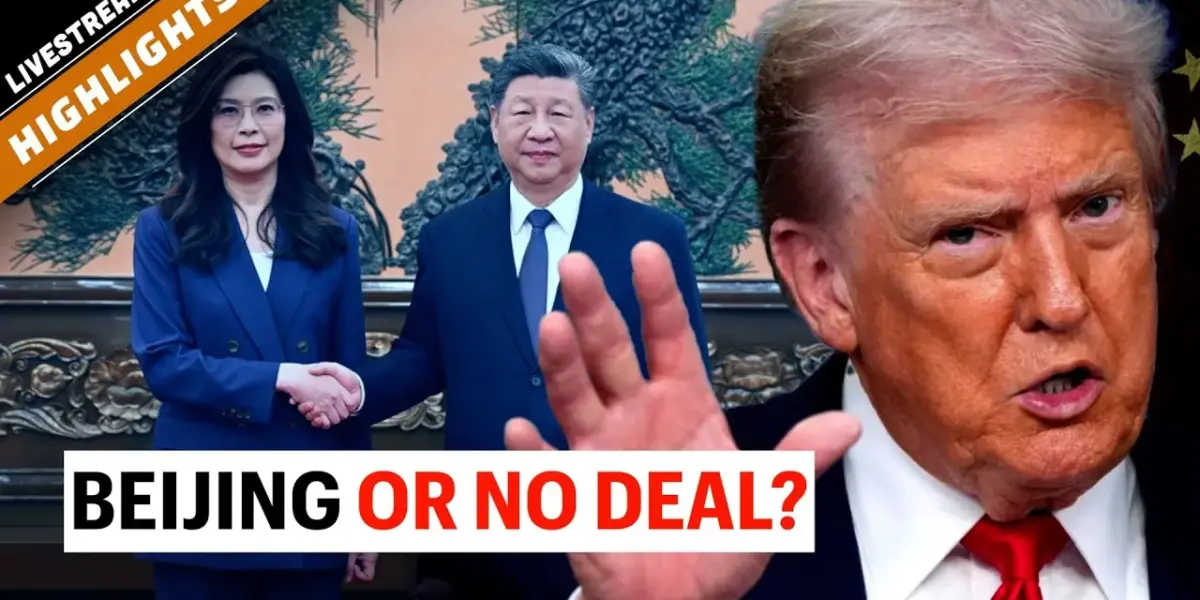
China Plays High-Stakes Taiwan Game Before Trump Summit
China’s leader, Xi Jinping, seems to desperately need a visit from former U.S. President Donald Trump to boost his own political standing. Just as Trump announced he was postponing his trip to China, Beijing made a surprising move.
On March 30th, Sun Yat-sen, head of China’s Taiwan Affairs Office, announced that Xi Jinping had invited the leader of Taiwan’s opposition party, the KMT, to visit China. The KMT chairwoman, Hung Hsiu-chu, was invited to Shanghai and Beijing from April 7th to 12th. This invitation is significant because it’s the first time in ten years a KMT chair has led a delegation to China. It also happens just one month before Trump’s planned visit.
Reports suggest that Hung Hsiu-chu, who was recently elected, had been trying to meet with Xi Jinping. Beijing had previously rejected her requests, likely because they weren’t sure she had enough support within her own party. Some officials in Beijing felt she was too friendly with China, causing division within the KMT.
Beijing ignored her signals for a visit for a while. But as soon as Trump postponed his trip, Beijing changed its mind and sent the invitation. The timing strongly suggests this meeting was planned to happen before Trump’s visit.
Strings Attached to the Invitation
Beijing’s invitation came with specific demands. Taiwanese media, citing sources close to Beijing, reported three key expectations for the KMT’s visit:
- First, to stop or at least delay Taiwan’s purchase of weapons from the U.S.
- Second, to block a special defense budget proposed by Taiwan’s current administration, making it hard for the ruling party to move forward.
- Third, to continue opposing U.S.-Taiwan cooperation on supply chains and encourage Taiwanese businesses to invest more in mainland China.
The goal of these demands is clear. Beijing wants to create a political show just before Trump’s visit. This performance aims to make it look like most people in Taiwan are against U.S. arms sales and support the “one China” principle. It’s a way to show Washington that Beijing still has influence in Taiwan.
If this plan works, Xi Jinping could use it as a bargaining chip when meeting Trump. He could claim that Taiwan is already moving away from the U.S. This could pressure Trump to be less firm on Taiwan or convince him that opposing Taiwan’s independence is the more practical choice.
U.S. Responds with Diplomatic and Military Signals
Washington responded quickly to Beijing’s actions. On the same day Beijing announced Hung Hsiu-chu’s visit, U.S. Senator Jeanne Shaheen led a group of lawmakers on a visit to Taipei. This bipartisan delegation didn’t waste time with formalities.
Their first stop was Taiwan’s top defense research center, the National Chung Shan Institute of Science and Technology. They went to observe a live test of Taiwan’s own drone system. This action sent a clear message: even if political processes are slowed down, Taiwan’s defense capabilities are still advancing.
Meanwhile, another U.S. delegation, led by Congressman Jim Banks, was in Taiwan meeting with President Lai Ching-te. This happened while the opposition KMT leader was meeting with Chinese officials. Banks had previously warned Taiwanese officials about delays in the defense budget. His message this time was direct: Taiwan’s legislature must pass the special budget.
Defense Deals and Submarine Mapping
Behind the scenes, there are other significant developments. Taiwan’s defense budget has been blocked multiple times by the opposition party. However, the deadline for the first payment for the U.S.-made HIMARS rocket system was March 31st.
In an unusual move, the U.S. allowed flexibility on this payment due to an emergency. The Defense Security Cooperation Agency stepped in to keep the process moving. This means the order will proceed and production will continue, regardless of whether Taiwan’s legislature passes the budget.
Far from land, a different kind of confrontation is happening at sea. Since the beginning of the year, China has deployed numerous research vessels in the South China Sea, the western Pacific, and even the Indian Ocean. Military experts believe this is large-scale seabed mapping. China’s focus on mapping the deep ocean, even under the guise of scientific research, is seen as preparation for modern warfare, where nuclear submarines are key U.S. assets.
Airspace Control and a Sensitive Extradition Case
China has also quietly established a large aviation warning zone off the coast of Shanghai. This zone is in effect for 40 days and covers the entire airspace from the surface to unlimited altitude, with no exceptions. The area is vast, stretching from the Yellow Sea to the East China Sea, and is even larger than Taiwan itself.
These simultaneous developments – the KMT visit, the upcoming Trump-Xi meeting, Japan deploying long-range missiles, U.S. focus on the Middle East, and a temporary strategic gap in the Indo-Pacific – all seem connected. China’s airspace control zone sends signals of deterrence to Japan, psychological pressure to Taiwan, leverage to the U.S., and readiness to its own people.
The situation has further complicated by a case involving a U.S. citizen. The U.S. Department of Justice charged two Chinese siblings for allegedly planting an explosive device at a U.S. Air Force base in Florida. The 20-year-old man, an American citizen, disappeared before his arrest and managed to return to China with his sister’s help.
Washington has requested his extradition. Beijing faces a difficult choice. If they hand him over, it could lead to questions about who helped him escape, potentially revealing sensitive information. If they refuse, China could be seen as protecting a suspect in a case involving a U.S. military base. This could lead to U.S. sanctions, increased pressure, or even the cancellation of the Trump-Xi talks.
A Summit Under Pressure
The upcoming meeting between Trump and Xi Jinping is a negotiation under pressure. Both sides are trying to gain an advantage. China’s main goal is the visit itself, which is crucial for Xi Jinping’s political future.
For Trump, the outcome of the meeting is more important than the visit itself. If he sees the visit as mere political theater or strategic moves against the U.S., he might delay or cancel it. Trump’s unpredictable style means the summit’s schedule remains uncertain, especially with over a month to go.
Why This Matters
This situation highlights the complex and often tense relationship between the U.S. and China, particularly concerning Taiwan. Beijing’s actions demonstrate a strategic effort to shape perceptions and gain leverage ahead of a critical diplomatic meeting.
The KMT’s visit to China, timed with U.S. political events, suggests an attempt to influence Taiwanese public opinion and present a narrative favorable to Beijing. Simultaneously, U.S. delegations visiting Taiwan and facilitating defense deals underscore Washington’s commitment to supporting Taiwan’s security and capabilities.
The escalating military activities, like seabed mapping and airspace control, indicate China’s long-term strategic planning and readiness. These moves are not just about Taiwan; they reflect broader geopolitical ambitions and a challenge to U.S. influence in the Indo-Pacific region.
The extradition case adds another layer of complexity, turning a legal matter into a geopolitical one. It presents Beijing with a dilemma that could have significant consequences for U.S.-China relations and the upcoming summit.
Implications, Trends, and Future Outlook
The events described point to an ongoing strategic competition between the U.S. and China. Both nations are using diplomatic, economic, and military tools to advance their interests and influence outcomes.
Taiwan remains a central point of contention. China’s efforts to assert control and influence over the island are met with increasing U.S. support for Taiwan’s self-defense. This dynamic is likely to continue, with potential for increased tensions.
The upcoming Trump-Xi meeting, if it proceeds, will be closely watched for signs of de-escalation or further confrontation. Trump’s transactional approach to foreign policy could lead to unexpected outcomes, while Xi Jinping’s need for a successful summit for domestic political reasons adds another layer of pressure.
The broader trend is one of strategic maneuvering and a potential arms race in the Indo-Pacific. Nations in the region are increasingly aligning themselves, and military capabilities are being enhanced. The predictability of international relations is being tested by the assertive actions of major powers.
Historical Context and Background
The relationship between China, Taiwan, and the United States has a long and complicated history. Following the Chinese Civil War, the Republic of China (ROC) government retreated to Taiwan, while the Communist Party established the People’s Republic of China (PRC) on the mainland. The U.S. initially supported the ROC but shifted its recognition to the PRC in 1979.
However, the U.S. maintains unofficial relations with Taiwan and is committed to its defense under the Taiwan Relations Act. This has created a delicate balancing act, with the U.S. acknowledging Beijing’s “one China” principle while also providing Taiwan with the means to defend itself.
The political dynamics within Taiwan also play a crucial role. The KMT, historically closer to mainland China, and the Democratic Progressive Party (DPP), which advocates for Taiwanese independence, represent differing views on the island’s future. Beijing’s engagement with the KMT often reflects an effort to influence these internal political dynamics.
The current events can be seen as an intensification of these long-standing dynamics, amplified by the specific political circumstances of the U.S. and China, and the critical importance of Taiwan in the regional and global order.
Source: Will Trump Go to Beijing After These Moves? (YouTube)

Related Articles
Trump’s Pope Feud Risks Alienating Key Catholic Voters
Former President Donald Trump is facing mounting pressure following a public spat with Pope Francis and escalating international tensions. The dispute with the Pope risks alienating crucial Catholic voters, while the US blockade of Iranian ports adds to global instability. These events unfold as Trump continues to fight legal battles against media organizations.

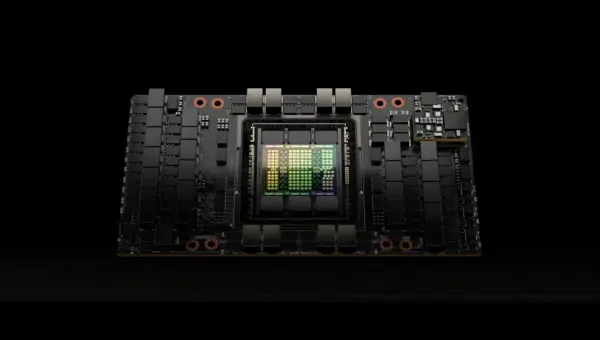
Nvidia Chips Smuggled: China Gains AI Edge?
An investigation into alleged smuggling of $92 million in Nvidia AI chips to China raises national security concerns. U.S. authorities are scrutinizing how advanced technology bypassed export controls, potentially boosting China's military AI capabilities.
Trump’s Tariff Threat: China’s Iran Arms Deal Sparks Crisis
President Trump has warned China against supplying weapons to Iran, threatening a "staggering" 50% tariff if they do. U.S. intelligence reports suggest China may be preparing to send air defense systems, including missiles, to Iran. This development significantly heightens tensions ahead of a crucial summit between President Trump and Chinese President Xi Jinping.