A Divided Economy: Why Main Street Struggles While Wall Street Soars
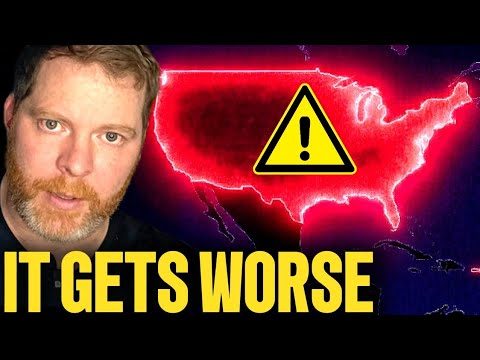
Despite official narratives of economic strength and record stock market highs, many Americans are experiencing a deepening financial squeeze, driven by falling GDP, rising costs, and policies that disproportionately benefit corporations. This divergence highlights a 'two-economy' system where Wall Street's prosperity is increasingly disconnected from the struggles of Main Street, mirroring historical patterns of superficial growth preceding economic downturns.

A Divided Economy: Why Main Street Struggles While Wall Street Soars
In an era often touted by official narratives as one of economic resilience and record-breaking market performance, a stark divergence is increasingly evident between the prosperity celebrated on Wall Street and the growing financial strain experienced by everyday Americans. While headlines proclaim stock market highs and a robust economy, many households grapple with escalating costs, stagnant purchasing power, and a pervasive sense that the system is failing them.
This growing chasm suggests that the United States is operating not as a singular economic entity, but as two distinct economies: one characterized by speculative financial gains and corporate windfalls, and another defined by the grinding reality of rising bills and diminishing opportunities for the vast majority.
The Disconnect: GDP Dips, Stocks Soar
Recent economic indicators starkly illustrate this dichotomy. Despite a prevailing narrative from financial institutions and the press forecasting a strong economic outlook, the actual Gross Domestic Product (GDP) for a recent quarter delivered a sobering surprise. Projections had anticipated a robust 2.8% growth, signaling a healthy economy. However, the real figure came in at a mere 1.4%, a significant drop from the previous quarter’s 4.4%.
GDP is a foundational metric that measures the total value of goods and services produced within a country’s borders, serving as a key indicator of economic activity and productivity. A substantial decline in GDP growth suggests a significant slowdown in the real economy – the one where goods are made, services are rendered, and people earn wages. Critics argue that such a slowdown indicates that the American working class’s economic engine is sputtering, if not stalling.
Paradoxically, even as the GDP falters, major stock market indices like the S&P 500 continue to hit new all-time highs. This apparent contradiction raises fundamental questions about what truly drives market performance and whose interests it reflects. For many, this disconnect is not merely an anomaly but a symptom of a deeper systemic issue where financial markets have detached from the underlying economic health of the nation.
Echoes of the Past: A Familiar Pattern
Economic observers draw parallels between the current situation and historical periods, most notably the late 1920s. Leading up to the devastating crash of 1929, public discourse and financial news were similarly optimistic. The Dow Jones Industrial Average frequently set new records, politicians heralded a ‘new golden era of permanent prosperity,’ and Wall Street reveled in extravagant celebrations that defined the ‘Roaring Twenties.’
However, beneath this veneer of prosperity, the underlying economy was already showing signs of weakness. The market’s ascent was fueled by speculation, easy credit, and a financialized system that had become untethered from productive capacity and equitable wealth distribution. This historical parallel serves as a cautionary tale, suggesting that sustained market highs, absent corresponding improvements in the real economy, can be indicative of an unsustainable ‘hot air balloon’ economy—one that has cut its tether to ground-level realities.
Corporate Maneuvers: Inflating Value, Deflating Wages
The current surge in stock market valuations, according to some analysts, is not primarily driven by genuine economic expansion or increased productivity. Instead, it is often attributed to corporate strategies such as widespread layoffs and aggressive stock buyback programs. When companies reduce their workforce, they cut operating costs, which can temporarily boost profit margins. Simultaneously, stock buybacks—where companies repurchase their own shares from the open market—reduce the number of outstanding shares, thereby artificially inflating the earnings per share and, consequently, the stock price.
While these actions can be financially beneficial for shareholders and executives, they often come at the expense of workers and long-term economic stability. Critics contend that this amounts to a ‘parlor trick,’ creating an illusion of growth that masks a fundamental lack of investment in new factories, research and development, or job creation. This strategy prioritizes short-term financial engineering over sustainable economic development, further contributing to the divergence between Wall Street and Main Street.
The Tariff Controversy: A Cost Passed to Consumers
Adding another layer to the financial burden on the working class is the complex issue of tariffs. Recently, a Supreme Court ruling struck down certain emergency tariffs, prompting a flurry of political discussion. While some politicians have called for billions of dollars in refunds to households, arguing that the public deserves repayment for the cost of these tariffs, the reality is far more intricate.
The federal government reportedly collected over $133 billion from these tariffs. While tariffs are often presented as a tax on foreign countries, economic analysis consistently shows that the burden predominantly falls on domestic consumers. When goods arrive at U.S. ports, it is typically the American importer, not the foreign manufacturer, who pays the tariff. These costs are then almost invariably passed on to the consumer through higher prices for everyday goods, from groceries to household items. Reports suggest that between 55% and 90% of tariff costs are ultimately borne by American households.
Now, with the Supreme Court’s decision, corporations are reportedly lining up to sue the government for refunds on these collected tariffs. Should these lawsuits succeed, the potential outcome is a significant windfall for these corporations. Rather than the money being returned to the consumers who ultimately paid the inflated prices, it is expected that these corporate refunds will be pocketed by businesses, potentially fueling further stock market gains. This scenario represents a ‘double dip’—consumers paid the higher prices, and now corporations stand to profit from a refund, while the funds originally collected by the government were reportedly allocated to various programs, including signing bonuses for agencies like ICE, and are no longer readily available for direct public reimbursement.
This situation underscores how policies ostensibly designed to protect domestic industries or generate revenue can inadvertently become an additional tax on the working class, with any subsequent ‘refunds’ primarily benefiting corporate bottom lines rather than alleviating consumer financial stress.
The Squeeze on the ‘Everyman’s Economy’
For the average American household, the economic reality is one of increasing pressure. Mainstream media often frames this struggle with polite euphemisms, suggesting people are becoming ‘more budget-conscious’ or ‘minimizing their lifestyles.’ However, for millions, this translates into a desperate struggle to stay afloat. Families are cutting out discretionary spending, foregoing vacations, and opting for generic brands—measures that reflect a fundamental erosion of purchasing power rather than a voluntary lifestyle choice.
Essential costs, particularly healthcare and insurance, continue to skyrocket, often with high deductibles that render insurance practically unusable for many until catastrophic events occur. Simultaneously, wages struggle to keep pace with inflation, meaning the currency people earn is constantly being devalued. As the cost of daily necessities rises, the finish line of financial stability seems to recede further and further, even for those who diligently adhere to traditional financial advice.
This ‘peasants’ economy,’ as some describe it, is characterized by a pervasive sense of being stretched thin. Despite working harder and making sacrifices, many find themselves riding the ‘jagged edge of poverty,’ feeling trapped in a system where their labor doesn’t translate into a secure living, while corporate profits reach unprecedented highs.
Systemic Failure, Not Personal Fault
A particularly insidious aspect of this economic climate, critics argue, is the narrative often propagated by the ruling class that individual struggles are personal failings. Messages like ‘work more hours,’ ‘retire later,’ or ‘learn to code’ are frequently offered as solutions, implying that financial hardship is a consequence of insufficient effort or poor choices. However, this perspective overlooks the systemic nature of the challenges.
The math, according to those advocating for the working class, does not lie: a falling GDP, stalling economy, and tariffs that act as a tax on survival point to a system designed with inherent disadvantages for the majority. The current stock market highs, they contend, are built on the ‘bones of the working class,’ sustained by policies and practices that benefit a privileged few.
This perspective challenges individuals to resist internalizing systemic failures as moral shortcomings. It suggests that the current economic landscape is an ‘obstacle course designed for you to lose,’ and that acknowledging this reality is the first step toward navigating it effectively.
Looking Ahead: Eyes Wide Open
The widening gap between financial market performance and the everyday economic struggles of the working class raises critical questions about the long-term viability and fairness of the current economic system. When the people who perform the essential labor—driving trucks, building homes, working in warehouses—cannot afford to live comfortably in the society they sustain, the social contract begins to fray.
As this economic divergence continues, there’s a growing call for greater transparency and a more critical examination of economic data. Understanding the true state of the economy, beyond the often-optimistic headlines, is deemed essential for individuals to protect their families, build resilient local communities, and redefine their sense of self-worth outside of an economic system that may increasingly view them as expendable line items. The path forward, many believe, requires an ‘eyes wide open’ approach, acknowledging the realities of economic decline and disparity, rather than succumbing to misleading narratives of universal prosperity.
Source: The GDP Falls: The Economy Isn't Broken. It's A Liquidation. (YouTube)

Related Articles

US Warehouses Burn as Workers Strike Back
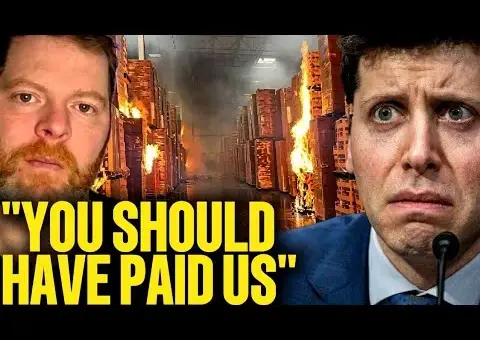
A series of warehouse fires across the US signals growing worker frustration over economic inequality and a perceived abandonment by the government. Experts link these acts to the widening K-shaped economy, where the wealthy prosper while others struggle. This unrest mirrors historical protests against technological change and raises concerns about the future.
US Markets Surge as Iran Tensions Ease, Oil Prices Steady
U.S. stock markets are hitting new highs as tensions with Iran ease, with the S&P 500 reaching record levels. Despite persistent oil prices around $92 a barrel, the U.S. economy shows resilience, boosted by record oil exports. The focus is shifting to the economic confrontation with Iran, including the non-renewal of oil sales waivers, and long-term strategies to bypass the Strait of Hormuz.


Global Oil Crisis Fuels US Economic Divide
A massive influx of oil tankers to the Gulf of Mexico signals a global supply crisis, not American victory. While some celebrate, the reality points to soaring prices and economic hardship for average Americans, benefiting only big oil companies and traders.