Sun’s Evolution to Render Earth Uninhabitable
Earth faces a profound transformation over the next billion years, primarily driven by the Sun's increasing luminosity. This will lead to dramatic climate shifts, the loss of oceans, and ultimately, the extinction of all life on our planet.

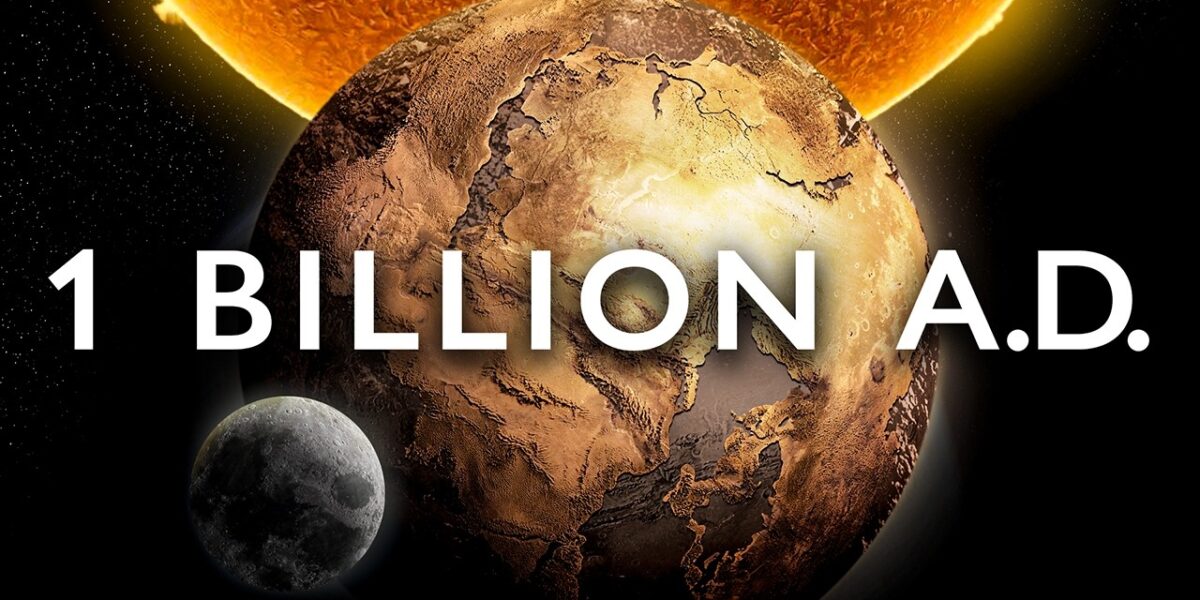
Sun’s Growing Luminosity to Transform Earth into Barren World
Our life-giving Sun, a constant presence in our sky, is also the ultimate architect of Earth’s future demise. Over the next billion years, subtle but relentless changes in our star will orchestrate a transformation of our planet, rendering it unrecognizable and ultimately uninhabitable. This profound shift, driven by the Sun’s natural evolutionary path, will extinguish most life on Earth, far exceeding the devastation of past extinction events.
Continental Drift and the First Extinction Event
Long before the Sun’s full impact is felt, Earth’s very surface will undergo dramatic alterations. Plate tectonics, the slow dance of Earth’s lithospheric plates that has been ongoing for over 3 billion years, will continue to reshape continents. Geologist Dr. Christopher Scotese’s Pangea Proxima theory suggests that in approximately 100 million years, continental drift will lead to the formation of a new supercontinent.
Africa will collide with Europe and Arabia, closing the Mediterranean Sea and creating a colossal mountain range. Australia will merge with Southeast Asia, and North America will drift further from Eurasia, widening the Atlantic. Southern and Baja California will join Alaska, forming new mountain ranges while the Rockies diminish.
By 250 million years from now, these landmasses will converge into Pangea Proxima. The Atlantic and Indian Oceans will close, uniting the Americas with Eurasia and Africa. This dramatic reorganization will disrupt global ocean currents, leading to a lack of circulation.
Waters deeper than a few hundred meters will become oxygen-depleted, triggering a mass extinction event that decimates marine life. Inland regions of the supercontinent will experience arid, desert-like climates with extreme temperatures potentially reaching 55°C, making only polar regions habitable for land mammals.
The Carbonate-Silicate Cycle and the ‘Plant-pocalypse’
While continental shifts pose a significant threat, a more insidious change will begin to unfold in approximately 500 million years, driven by the Sun’s increasing luminosity. Our Sun, like all main-sequence stars, is gradually converting hydrogen into helium in its core.
This process causes the core to become denser, increasing its temperature and accelerating the rate of fusion. Consequently, the Sun’s energy output and brightness increase over time.
Currently, the Sun brightens by over 1% every 100 million years. In 500 million years, it will be approximately 5% brighter than it is today. This extra solar energy warms Earth and accelerates chemical weathering processes.
The carbonate-silicate cycle, Earth’s natural thermostat, relies on this weathering to regulate atmospheric carbon dioxide (CO2). Carbonic acid in rainwater reacts with silicate rocks, dissolving them and carrying ions to the oceans. Marine organisms use these ions to build shells of calcium carbonate, effectively sequestering CO2.
When these organisms die, their shells form carbonate rocks, which are eventually subducted into the mantle and released back into the atmosphere through volcanic activity. However, the accelerated weathering caused by the brighter Sun will draw down atmospheric CO2 faster than volcanic outgassing can replenish it. This leads to a precipitous drop in CO2 levels, initiating what can be termed the ‘plant-pocalypse’.
Photosynthesis Fails as CO2 Levels Plummet
Plants, the foundation of most terrestrial ecosystems, rely on photosynthesis to convert CO2 into sugars for energy and growth. C3 plants, which include most trees, grasses, and staple crops like wheat and rice, require relatively high CO2 concentrations.
A study in the International Journal of Astrobiology suggests that within 500 million years, CO2 levels will fall below 150 parts per million, the critical threshold for C3 photosynthesis. As CO2 levels decline, these plants will struggle to survive, leading to their gradual extinction.
A smaller group of plants, C4 plants, which account for only about 5% of Earth’s biomass, possess a more efficient photosynthetic mechanism and can survive with as little as 10 ppm of CO2. These plants may persist for another 800 million to 1.2 billion years. However, even they cannot withstand the Sun’s ultimate fate.
Runaway Greenhouse Effect and the Loss of Oceans
In 1 billion years, the Sun will be over halfway through its main-sequence lifetime and approximately 10% brighter than today. Models predict surface temperatures could soar to 50°C or higher, more than triple the 20th-century average. This intense heat will cause oceans to evaporate at an accelerated rate.
The resulting water vapor will accumulate in the atmosphere, creating a thick, insulating blanket that traps heat and triggers a runaway greenhouse effect, similar to that observed on Venus. Earth’s average temperature will increase uncontrollably.
Within 1 to 1.5 billion years, Earth is projected to lose its oceans. While significant amounts of water will remain locked beneath the crust, seeping back to the surface through geological activity, it will not be enough to restore the seas.
The last vestiges of surface water will be sterile, nutrient-poor polar lakes, which will eventually evaporate as well. Earth will transform into a barren desert world, with vast dune fields and salt flats marking the former ocean floors.
The End of Plate Tectonics and Atmospheric Collapse
The drying of Earth’s crust will have a critical consequence: the cessation of plate tectonics. Without the lubricating effect of water, subduction will grind to a halt, effectively freezing the planet’s plates in place. Geological activity will cease, leaving Earth vulnerable to accumulating impact craters and shield volcanoes.
These volcanoes will continue to release trapped CO2 from the mantle, further heating the already scorching planet. The atmosphere will become a suffocating blanket of carbon dioxide and water vapor.
The last havens for life might be underground ice caves or high-elevation mountains, where residual water could persist. Here, extremophile microbes, tolerant of extreme heat and dehydration, might eke out an existence. Some may even drift into the atmosphere, seeking cooler layers, akin to speculative habitable zones on Venus.
The Sun’s Final Stages and Earth’s Demise
By 2.8 billion years from now, the Sun will be 28% brighter, pushing surface temperatures to around 190°C, even at the poles. The last microbes will eventually perish, marking the definitive end of all life on Earth. Three billion years from now, Earth will be a barren, lifeless rock, devoid of any biosignatures that would indicate its once vibrant past.
The ultimate fate of our solar system arrives in approximately 6 billion years. As the Sun exhausts its hydrogen fuel, its core will collapse, igniting hydrogen fusion in a shell around it. This will cause the Sun to expand dramatically, becoming a red giant.
Its luminosity will increase a thousandfold, and its radius will swell to engulf Mercury, Venus, and potentially Earth. While some scientists once theorized Earth’s orbit might expand enough to escape this fate, new data from NASA’s Transiting Exoplanet Survey Satellite (TESS) suggests stars are far more efficient at engulfing their inner planets than previously thought. Earth will likely be consumed by its dying star.
Humanity’s Potential and the Cycle of Cosmic Creation
This grim prognosis assumes no human intervention. However, humanity possesses a unique capacity to alter its destiny. With advanced technology, future humans might find ways to adapt to these changes, terraform parts of Earth, or colonize other planets.
While Earth’s story may end, humanity’s may continue. And even if our story concludes, it is proof of our origins; we are, after all, made of stardust, destined to return to the cosmos and perhaps seed new worlds.
Source: What the Earth Will Look Like in 1 Billion Years (YouTube)

Related Articles

Cosmic Hum Hints at Gigantic Black Hole Mergers
Astronomers are using networks of rapidly spinning pulsars, nature's precise cosmic clocks, to detect the faint hum of merging supermassive black holes. New research is now focusing on pinpointing individual merger events, moving beyond the general background noise to understand these colossal cosmic collisions.


Artemis II Astronauts Set New Human Distance Record
The Artemis II mission set a new human distance record, reaching 413,145 km from Earth. The mission also established a record for the greatest distance between two groups of humans, with astronauts on China's Tiangong space station being 419,656 km away from the Artemis II crew.


Distant Galaxy Appears to Break Light Speed Limit
A distant galaxy, GN-z11, appears to be moving away from Earth faster than the speed of light due to the expansion of space. This phenomenon, while seemingly violating Einstein's laws, is a key indicator of the universe's dynamic growth and offers insights into its early history.