Cosmic Whispers: Unraveling the Universe’s Secrets
Fraser Cain's recent Q&A session highlighted the exciting advancements in exoplanet discovery, solar system exploration, and the enduring mysteries of dark matter and energy. The discussion underscored humanity's ongoing quest to understand our place in the cosmos.


Cosmic Whispers: Unraveling the Universe’s Secrets
In a recent live Q&A session, Fraser Cain, editor of Universe Today, offered a captivating glimpse into the ongoing quest to understand our universe, touching upon the latest advancements in space exploration, astronomical discoveries, and the enduring questions that drive humanity’s cosmic curiosity. While the session itself was an interactive dialogue, the underlying themes reveal a vibrant and rapidly evolving landscape of space science, from the search for exoplanets to the fundamental nature of reality itself.
The Ever-Expanding Frontier of Exoplanet Discovery
The discovery of planets beyond our solar system, or exoplanets, has revolutionized our understanding of planetary formation and the potential for life elsewhere. Missions like NASA’s Kepler Space Telescope and the Transiting Exoplanet Survey Satellite (TESS) have identified thousands of these distant worlds, revealing a staggering diversity in size, composition, and orbital characteristics. These exoplanets range from gas giants larger than Jupiter to rocky worlds comparable in size to Earth. Scientists are particularly interested in the ‘habitable zone’ – the region around a star where temperatures could allow liquid water to exist on a planet’s surface, a key ingredient for life as we know it. The ongoing analysis of exoplanet atmospheres, using advanced instruments like the James Webb Space Telescope, aims to detect biosignatures – chemical indicators that could point to the presence of life. This pursuit is not just about finding alien life; it’s about understanding our own place in the cosmos and the prevalence of Earth-like conditions throughout the galaxy.
Probing the Depths of Our Solar System
Beyond the search for alien worlds, our own solar system continues to be a rich source of scientific inquiry. Robotic missions are venturing to planets, moons, and asteroids, providing unprecedented data. The Perseverance rover on Mars, for instance, is actively searching for signs of ancient microbial life and collecting samples for potential return to Earth. Missions to Jupiter’s icy moons, like Europa, and Saturn’s moon Enceladus, are driven by the tantalizing possibility of subsurface oceans that could harbor life. These icy worlds, warmed by tidal forces from their parent planets, represent some of the most promising locations for astrobiological research within our solar system. Understanding the geological processes and potential chemistry within these subsurface oceans is crucial for assessing their habitability.
The Enigmas of Dark Matter and Dark Energy
While we’ve made incredible strides in observing the universe, much of its composition remains a profound mystery. Dark matter and dark energy, though invisible and poorly understood, are believed to constitute about 95% of the universe’s total mass-energy content. Dark matter, detected through its gravitational influence on visible matter, plays a crucial role in the formation of galaxies and large-scale cosmic structures. Dark energy, on the other hand, is thought to be responsible for the accelerating expansion of the universe. Unraveling the nature of these enigmatic components is one of the most significant challenges in modern physics and cosmology. Experiments at particle accelerators and sophisticated astronomical surveys are continuously probing these mysteries, seeking clues that could reshape our fundamental understanding of the cosmos.
Historical Context and Future Endeavors
The current era of space exploration builds upon a rich history of discovery. From Galileo’s first telescopic observations of the heavens to the Apollo missions that landed humans on the Moon, each step has expanded our cosmic perspective. The launch of the Hubble Space Telescope in 1990 marked a turning point, providing breathtaking images and invaluable data that have transformed astronomy. The James Webb Space Telescope, Hubble’s successor, is now pushing the boundaries even further, peering back to the earliest moments of the universe and analyzing the atmospheres of exoplanets with unparalleled precision. Looking ahead, future missions are planned to explore even more distant worlds, refine our understanding of dark matter and dark energy, and perhaps, one day, answer the age-old question: Are we alone?
Why It Matters: Our Place in the Cosmos
The pursuit of space exploration and scientific understanding is not merely an intellectual exercise; it is deeply intertwined with humanity’s innate drive to explore, discover, and comprehend our place in the grand cosmic tapestry. Each discovery, whether it’s a distant exoplanet, a potential sign of life on Mars, or a new insight into the fundamental forces governing the universe, enriches our collective knowledge and inspires future generations. The technological advancements spurred by space exploration often find applications that benefit life on Earth, from improved weather forecasting to medical imaging. Ultimately, understanding the universe helps us understand ourselves, fostering a sense of wonder, humility, and interconnectedness with all that exists.
Source: Open Space February 23rd 2026: Live QA with Fraser (YouTube)

Related Articles
Cosmic Hum Hints at Gigantic Black Hole Mergers
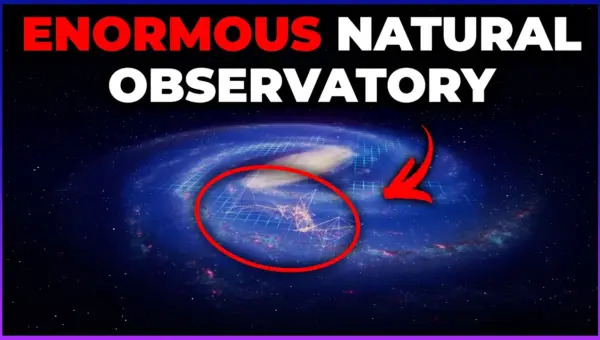
Astronomers are using networks of rapidly spinning pulsars, nature's precise cosmic clocks, to detect the faint hum of merging supermassive black holes. New research is now focusing on pinpointing individual merger events, moving beyond the general background noise to understand these colossal cosmic collisions.

Artemis II Astronauts Set New Human Distance Record
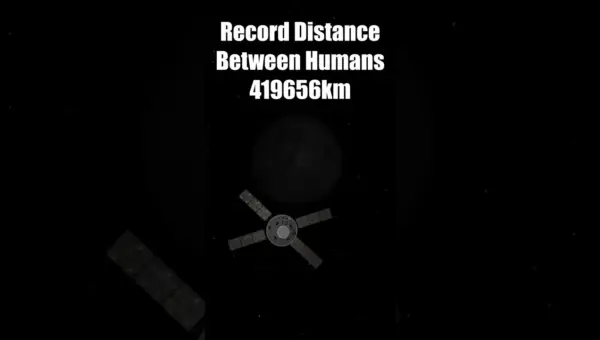
The Artemis II mission set a new human distance record, reaching 413,145 km from Earth. The mission also established a record for the greatest distance between two groups of humans, with astronauts on China's Tiangong space station being 419,656 km away from the Artemis II crew.

Mars Rover Detects Mysterious Lightning Signals
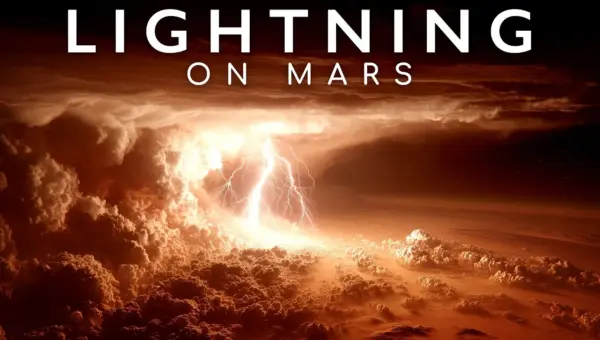
NASA's Perseverance rover has detected mysterious crackling sounds, providing the first tantalizing evidence of lightning on Mars. This discovery, along with a faint whistler wave detected by the MAVEN spacecraft, suggests that electrical discharges occur in Martian dust storms, impacting atmospheric chemistry and posing new challenges for future human exploration.