New Law of Nature Hints at Universe’s Drive for Complexity
Scientists propose a new law of nature, beyond entropy, suggesting a universal drive towards increasing information and complexity. This theory has implications for mineralogy, astrobiology, and even cancer research.

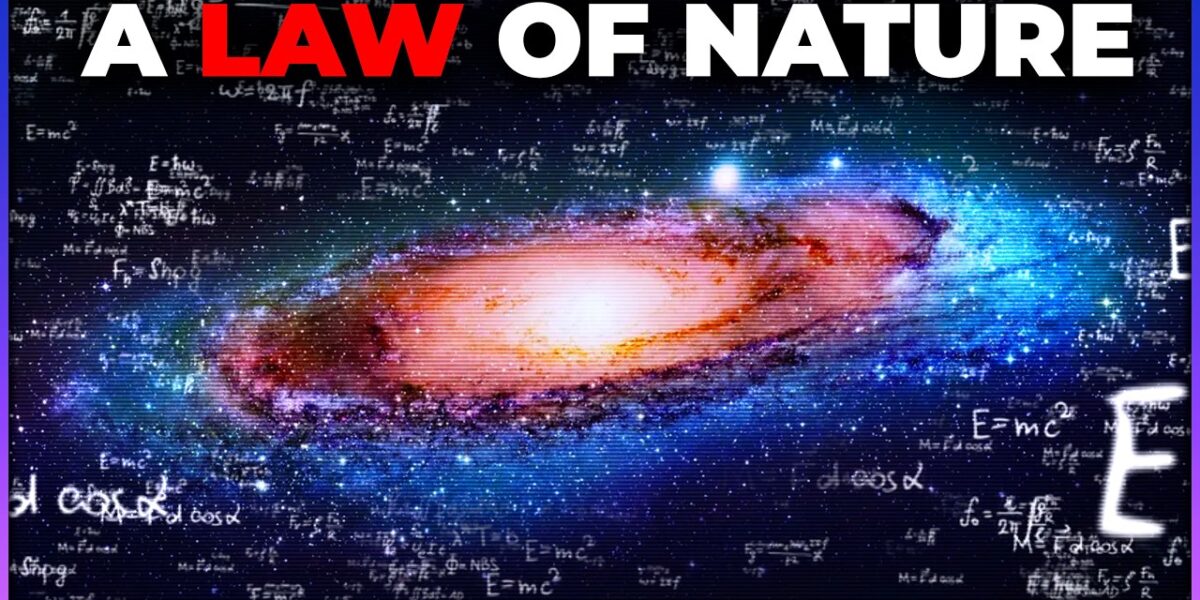
Universe’s Hidden Drive: A Law Beyond Entropy?
For centuries, the second law of thermodynamics, with its inexorable march towards entropy and universal disorder, has been the bedrock of our understanding of the cosmos. Yet, within this grand narrative of decay, pockets of astonishing order emerge: life, intricate crystals, and stars that forge the elements essential for existence. Scientists Robert Hazen and Mike Wong, from the Carnegie Institution for Science, propose a groundbreaking idea that this local order isn’t merely a temporary anomaly but a fundamental aspect of the universe, suggesting a second, complementary law of nature that drives increasing complexity.
The Second Arrow of Time: Information as the Engine
In their new book, “Times Second Arrow: Evolution, Order, and a New Law of Nature,” Hazen and Wong argue against the notion that entropy solely dictates the universe’s fate. While acknowledging that all processes, including the emergence of order, must obey the second law of thermodynamics, they posit that an additional, mechanistic law is at play. This law, which they term the “second arrow of time,” is not driven by energy, but by information.
“Entropy causes evolution” has been the prevailing thought, but Hazen and Wong propose that entropy is merely consistent with evolution. Instead, they highlight a process that actively generates order and complexity. “What we say is entropy is completely consistent with evolution,” explains Dr. Hazen, a geologist specializing in minerals.
“But that in fact there is an additional descriptive law that talks about how that order arises. It’s a very mechanistic idea and it’s one that’s based not on energy but on information.”
From Minerals to Astrobiology: Evidence Across Scales
The inspiration for this theory stems from observing the universe’s progression. As Dr. Wong, an astrobiologist, puts it, “You look around us and you especially think about our universe and and the stars and the planets and the galaxies and the structures and these ideas that that stars make elements and elements make planets and planets u make minerals and then minerals make life.” This chain of creation suggests a universal process of generating order.
The evidence, they suggest, spans vast scales. Dr. Hazen’s work on minerals reveals an increasing diversity and patternization over Earth’s 4.5 billion-year history. “The possible configuration space of atoms that make minerals keeps expanding because earth does new things in mixing in the way certain elements become concentrated and that ex that space expands much much faster than the number of stable minerals which in our formulation means that this information this functional information increases.”
In astrobiology, the search for life beyond Earth offers another compelling area. Dr. Wong describes the frustration with traditional biosignature detection, where abiotic processes can mimic signs of life. Their approach involves a more holistic analysis, looking at the entire network of chemical species in a planet’s atmosphere or the complex suite of organic molecules in a sample.
“We think that evolutionary selection for function leaves its fingerprints in the distributions of organic molecules. And you’ll really only be able to pick this up if you look at it holistically at the entire suite of organic chemistry in a sample rather than an individual molecule one at a time.”
Selection for Function: A Universal Principle
At the heart of their theory lies the concept of “selection for function.” They propose three fundamental sources of selection:
- Static Persistence: The ability of entities to maintain their structure without decaying, seen in stable crystal structures or long-lived atomic nuclei.
- Dynamic Persistence: Applicable to open systems that exchange energy and matter with their environment, like stars or hurricanes. Here, it’s the activities of the system that persist, not necessarily its exact material composition.
- Novelty Generation: The discovery of new functions and ways of enhancing persistence over time, evident in biological innovations like locomotion or flight.
Dr. Wong illustrates this with a coding analogy: “Every time I click a button on my computer to enter a new character into my computer code, I increase the entropy of the universe by a minuscule amount… But only one of those characters will make my code run.
The other one won’t.” While both actions increase entropy, only the functional one is selected for. Nature, they argue, operates similarly, selecting configurations of molecules that lead to functional systems, like living cells capable of reproduction.
Implications Beyond Biology: Cancer and AI
The implications of this theory extend far beyond the origins of life. Oncologists are beginning to apply this framework to understand tumor development.
Tumors evolve to persist and thrive against the body’s defenses, a process that doesn’t fit the classic Darwinian model but aligns with selection for function. By understanding these evolutionary trends, new therapies can be developed to stifle tumor evolution and create “evolutionary traps.”
Researchers in artificial intelligence, the evolution of the internet, and even social structures are exploring these ideas. “It turns if you have a valid theory of evolving systems, then it has to apply across the full range of this full spectrum of things where we see an increase over time in diversity, in patterning, in behavioral ability, and so forth,” notes Dr. Hazen.
The Fermi Paradox and the Future
This theory also offers a new lens through which to view the Fermi Paradox – the apparent contradiction between the high probability of extraterrestrial civilizations and the lack of evidence for them. While the law of increasing functional information suggests a universal trend, it doesn’t dictate the speed or outcome of this increase. Dr. Wong suggests that humanity has only scratched the surface in searching for extraterrestrial intelligence, likening our current search volume to a “hot tub” within the vast “ocean” of the universe.
We may not yet know what signals to look for. “What is it that we cannot predict about the next major transition in evolution?
And if we cannot truly predict what that is, are we even looking for the right things when we when it comes to the question, are we alone in the universe?” asks Dr. Wong. This profound question highlights the potential of Hazen and Wong’s work to revolutionize our understanding of life, complexity, and our place in the cosmos.
The research continues, with scientists predicting the existence of undiscovered minerals based on their mineral ecology model and applying information-theoretic frameworks to diverse evolving systems. The quest to understand the universe’s drive towards complexity is far from over, promising new insights into the fundamental laws that govern our existence.
Source: Is Complexity Moving the Universe Forward? (YouTube)

Related Articles


Alien Life Could Travel Between Stars, Scientists Say
Scientists are exploring the scientific concept of panspermia, where life could travel between star systems on asteroids or comets. Evidence shows life's resilience and the movement of material between planets, making this a credible hypothesis. The search for extraterrestrial life is now focusing on when and where we might find it.
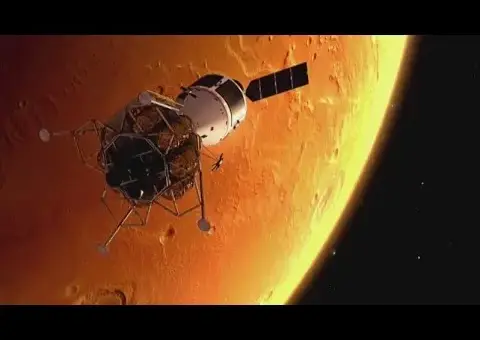
AI Robots Lead Humanity’s Martian Exploration Drive
Advanced AI robots are poised to lead humanity's exploration of Mars, acting as intelligent partners to overcome the planet's harsh conditions. This development promises to unlock Martian secrets and drive technological innovation, despite the significant costs involved.

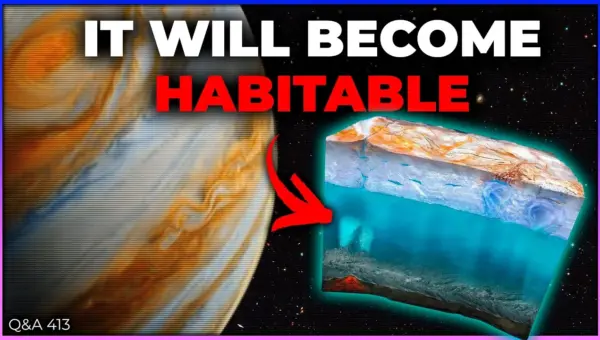
Sun’s Fiery End Could Terraform Jupiter’s Moons
Our Sun's future red giant phase could turn Jupiter's moons into water worlds. Scientists explore the potential for life on icy moons and discuss the far-reaching implications of stellar evolution and the search for habitable zones beyond our familiar solar system.