Six Planets Align in Stunning February 2026 Celestial Show
Six planets, including Mercury, Venus, Saturn, and Jupiter, will be visible in the night sky during a rare alignment from late February to early March 2026. Telescopes will reveal Uranus and Neptune, offering a stunning celestial parade.

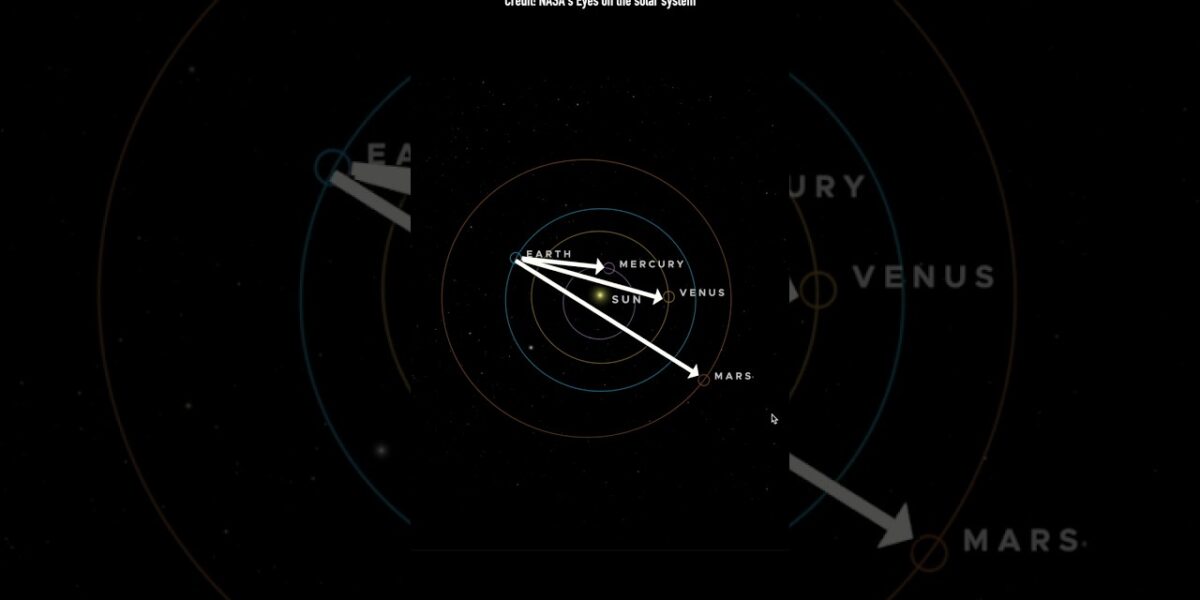
Six Planets to Grace Night Sky in Rare Alignment
Stargazers are in for a treat as the cosmos prepares to put on a spectacular display. In late February and early March of 2026, an exceptional celestial event will unfold, offering a rare opportunity to witness six planets simultaneously visible in the night sky. This captivating phenomenon, often dubbed a “planet parade” or “planetary alignment,” will allow observers to see Mercury, Venus, Saturn, and Jupiter with the naked eye, while Uranus and Neptune will be visible with the aid of a telescope.
Understanding the “Alignment”
The term “alignment” or “parade” refers to the visual appearance of these planets in a roughly linear fashion across the sky. This cosmic arrangement is a natural consequence of our solar system’s architecture.
All planets orbit the Sun on a relatively flat plane, known as the ecliptic. When multiple planets happen to be on the same side of the Sun as Earth, and their orbits bring them into a similar line of sight from our perspective, we perceive this alignment.
It’s crucial to understand that this is not a physical lining up of planets in three-dimensional space. Instead, it’s a matter of perspective from Earth.
During the February-March 2026 event, all visible planets, except for Mars, will be positioned on the same side of the Sun as our planet. Mars will be on the opposite side, rendering it invisible during this period.
When and How to Observe
While some media outlets have pinpointed February 28th as a specific date for this event, the visibility will extend throughout the latter part of February and into early March 2026. The precise timing is influenced by the orbital positions of Mercury and Venus.
Mercury, being closer to the Sun, rises earlier in the evening and sets earlier each night, while Venus rises progressively earlier each night. The end of February offers a favorable window where both planets are well-positioned for observation.
For the best viewing experience, observers should look towards the western horizon just after sunset. This is where Mercury, Venus, and Saturn will be most visible. However, a clear, unobstructed view of the horizon is essential.
Trees, buildings, and mountains can easily obscure these fainter celestial bodies. Jupiter, being exceptionally bright, will be the easiest planet to spot with the naked eye and will remain visible for several months.
Historical Context and Frequency
While the upcoming event is a remarkable sight, planetary alignments of this magnitude are not entirely unprecedented. Similar alignments involving a significant number of visible planets have occurred in recent years.
The last notable occasion was in February 2025, and before that, in 2022. These recurring events serve as a gentle reminder of the dynamic nature of our solar system and the predictable, yet awe-inspiring, dance of celestial bodies.
Telescopic Views of Outer Planets
For those with access to a telescope, the alignment offers an even more profound experience. Uranus and Neptune, the two outermost planets in our solar system, will also be observable. Uranus, the seventh planet from the Sun, is located at an average distance of about 2.9 billion kilometers (1.8 billion miles).
Neptune, the eighth planet, orbits even further out, at an average distance of approximately 4.5 billion kilometers (2.8 billion miles). Their faint light, typically requiring optical aid, will join the visible parade, vastly expanding the celestial spectacle.
What Comes Next?
The February-March 2026 planetary alignment is more than just a beautiful celestial show; it’s an opportunity for scientific observation and public engagement with astronomy. Such events encourage people to look up at the night sky, fostering curiosity about our solar system and the universe beyond. For astronomers, these alignments can sometimes provide unique opportunities for studying planetary atmospheres and dynamics, although dedicated scientific missions are the primary tool for such in-depth research.
The ongoing exploration of our solar system through missions like NASA’s Juno at Jupiter and the Europa Clipper mission, scheduled to launch in 2024 with a flyby of Jupiter’s moon Europa in 2030, continues to expand our understanding of these worlds. While these missions provide unparalleled data, the simple act of observing planets with our own eyes connects us directly to the vastness of space in a deeply personal way.
As we witness this rare gathering of planets, it is a powerful reminder of our place in the cosmos and the intricate, beautiful mechanics that govern our solar system. It’s a chance to marvel at the scale of the universe and to appreciate the celestial ballet that unfolds above us every night, inviting us to ponder the wonders that lie beyond our terrestrial home.
Source: The "planetary alignment" in February & March 2026 (YouTube)

Related Articles
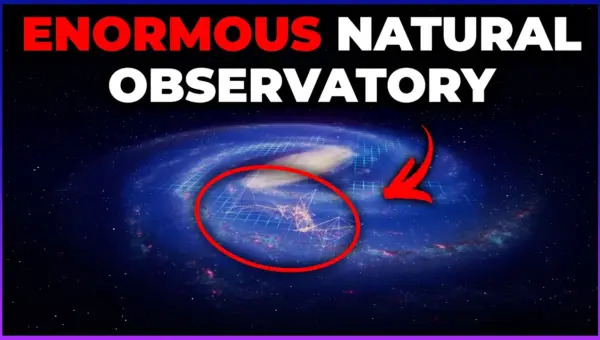
Cosmic Hum Hints at Gigantic Black Hole Mergers
Astronomers are using networks of rapidly spinning pulsars, nature's precise cosmic clocks, to detect the faint hum of merging supermassive black holes. New research is now focusing on pinpointing individual merger events, moving beyond the general background noise to understand these colossal cosmic collisions.

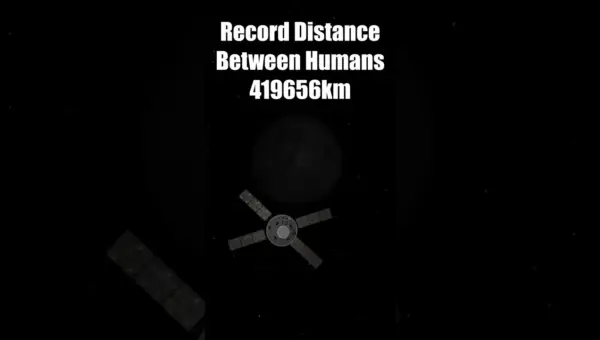
Artemis II Astronauts Set New Human Distance Record
The Artemis II mission set a new human distance record, reaching 413,145 km from Earth. The mission also established a record for the greatest distance between two groups of humans, with astronauts on China's Tiangong space station being 419,656 km away from the Artemis II crew.


Distant Galaxy Appears to Break Light Speed Limit
A distant galaxy, GN-z11, appears to be moving away from Earth faster than the speed of light due to the expansion of space. This phenomenon, while seemingly violating Einstein's laws, is a key indicator of the universe's dynamic growth and offers insights into its early history.