Antimatter Engines: A Glimpse of Future Space Travel
Antimatter engines, once a staple of science fiction, are moving closer to reality. Advances in production and storage techniques suggest that hybrid antimatter propulsion systems could enable rapid exploration of our solar system within decades, with full interstellar missions potentially on the horizon.

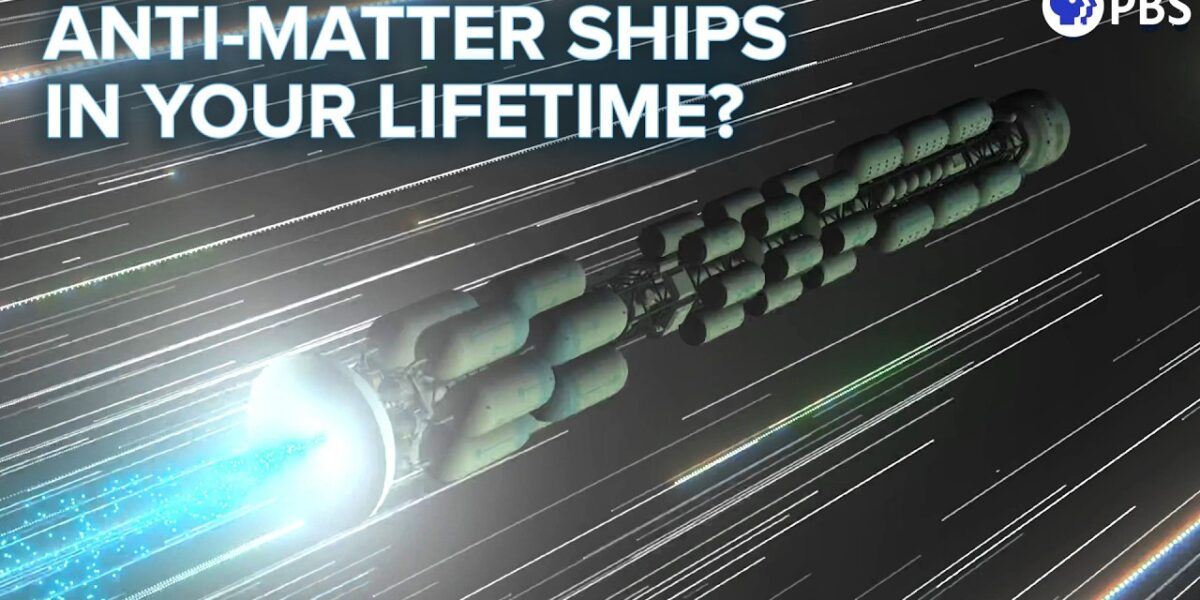
Antimatter Engines: A Glimpse of Future Space Travel
The dream of interstellar travel, long confined to the realms of science fiction, is inching closer to reality, not through faster-than-light warp drives, but through the profound power of antimatter. While true warp speed remains a theoretical hurdle, advancements in antimatter production, storage, and utilization suggest that propulsion systems harnessing this exotic form of matter could become a reality within our lifetime, at least for unmanned probes and potentially for more ambitious missions.
The Science of Antimatter: A Mirror Image of Reality
Antimatter, first theorized by Paul Dirac in 1928 and later observed by Carl Anderson in 1932, is the cosmic counterpart to ordinary matter. For every fundamental particle of matter, there exists an antiparticle with an opposite charge and other quantum properties. This symmetry is a fundamental aspect of our universe, rooted in the laws of quantum mechanics and special relativity. The process of pair production allows matter and antimatter to emerge from pure energy, as described by Einstein’s famous equation, E=mc². Conversely, when matter and antimatter meet, they annihilate, converting their entire mass into energy. This annihilation process is staggeringly efficient, releasing an immense amount of energy—annihilating a mere gram of antimatter with a gram of matter would yield an explosion comparable to a powerful nuclear bomb.
The Promise and Perils of Antimatter Propulsion
This immense energy density makes antimatter the ultimate theoretical fuel for spacecraft. However, the path to harnessing this power is fraught with challenges. The notion of antimatter annihilation producing ‘pure energy’ is a simplification; the process typically generates a shower of particles, including photons, neutrinos, and other massive particles. While photons carry immense energy, their lack of mass means they possess relatively little momentum, making them inefficient for propelling a spacecraft. To achieve meaningful thrust, a propulsion system needs to expel mass at high velocities. Therefore, ideal antimatter engines would utilize the annihilation energy to blast massive particles, such as pions produced from proton-antiproton annihilation, out of the engine at extreme speeds.
Producing and Storing the Elusive Fuel
The primary hurdles to antimatter propulsion lie in its production and storage. Antimatter is incredibly difficult and energy-intensive to create. While positrons (anti-electrons) were discovered early on, heavier antiparticles like antiprotons were not synthesized until 1955. Subsequent experiments have produced antinuclei, such as anti-deuterium and anti-helium, but in minuscule quantities. Capturing these fleeting particles requires sophisticated techniques, including slowing them down and trapping them in electromagnetic fields. The CERN Antiproton Decelerator is a leading facility in this regard. Storing antimatter is even more challenging; since antimatter annihilates on contact with ordinary matter, it must be contained within ‘force fields,’ typically using sophisticated magnetic and electric traps like the Penning trap for charged antiparticles.
Towards Anti-Hydrogen and Beyond
A significant breakthrough has been the creation of neutral anti-hydrogen atoms by the ALPHA collaboration at CERN. By combining antiprotons and positrons and cooling them to extremely low temperatures (below 1 Kelvin), scientists have managed to trap anti-hydrogen atoms for extended periods, with the current record being 1,000 seconds. The hope is that by producing enough anti-hydrogen, it could be solidified into ‘anti-hydrogen ice’ pellets, providing a more stable and manageable fuel form. These pellets, suspended in magnetic fields, could then be used in a propulsion system. When anti-hydrogen meets hydrogen, the initial electron-positron annihilation produces gamma rays, followed by a more complex proton-antiproton annihilation that generates charged pions. These pions, being massive, can be channeled by magnetic fields to provide thrust, forming the basis of a ‘pion rocket’ design.
Hybrid Approaches and Near-Term Prospects
While a pure antimatter engine for interstellar travel remains a distant goal, hybrid approaches offer a more immediate path. Antimatter-catalyzed nuclear propulsion, for instance, could significantly enhance the efficiency of existing nuclear technologies. By using a minuscule amount of antimatter (on the order of micrograms) to initiate a fission or fusion reaction, the size and complexity of nuclear reactors or thermonuclear devices could be drastically reduced. This could enable the development of smaller, more powerful spacecraft capable of reaching the outer solar system, such as the Oort Cloud, within a decade—a feat currently beyond our reach. Early experiments have already shown that antiprotons can amplify fission reactions in non-critical materials, validating this concept.
The Road Ahead: Production, Storage, and the Final Frontier
The ultimate limitation for antimatter propulsion is the rate at which we can produce and store sufficient quantities of antimatter. Current production rates, even at advanced facilities like CERN, are incredibly slow, suggesting centuries or even millennia to accumulate enough for significant propulsion. Future advancements may involve building larger, dedicated antimatter harvesting colliders or even exploring in-situ resource utilization in space. The Van Allen belts, for example, are known to trap antiprotons and positrons produced by cosmic ray interactions, offering a potential future source. The safety of storing large quantities of antimatter also makes space-based harvesting and fueling facilities an attractive prospect.
While a fully crewed antimatter-powered interstellar mission is likely beyond our immediate future, the development of unmanned probes and hybrid propulsion systems utilizing antimatter is becoming increasingly plausible. The journey to the stars may indeed be powered by the annihilation of matter and its mirror image, a testament to humanity’s relentless pursuit of understanding and conquering the cosmos.
Source: Why Antimatter Engines Could Launch In Your Lifetime (YouTube)

Related Articles


Astrophysicist Shares Breast Cancer Journey & Science Insights
Astrophysicist Dr. Becky Smethurst shares her breast cancer diagnosis journey and emphasizes the importance of evidence-based medicine over unproven treatments. She also discusses her passion for space and scientific discovery.


Universe’s End Time Shrinks Dramatically
New research suggests the universe's end may arrive much sooner than previously thought, with a revised timeline of 10 to the power of 78 years. This 'heat death' theory posits that all matter will decay, not just black holes. While still an immense duration, it's a significant shift from earlier predictions.


Loeb Challenges Musk’s Mars Dream, Eyes Space Habitats
Astrophysicist Avi Loeb criticizes Elon Musk's Mars colonization plans, calling the planet uninhabitable. He proposes building large, city-sized space platforms instead, arguing this is a more scientifically sound and achievable goal for humanity's future in space.