Artemis 2: A New Toilet Takes On Deep Space
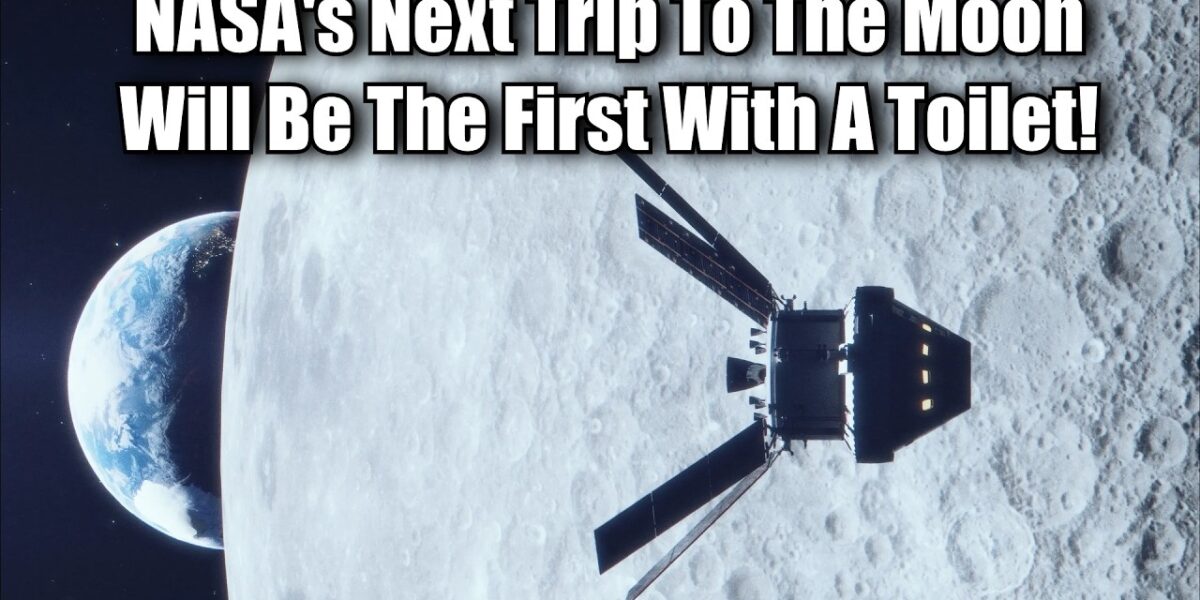
The Artemis 2 mission will feature the Universal Waste Management System (UWMS), the first toilet designed for deep space travel beyond the Moon. This advanced system represents a significant upgrade from the rudimentary 'Apollo bags' used by earlier lunar explorers, offering astronauts enhanced comfort and privacy.

Artemis 2: A New Toilet Takes On Deep Space
As the Artemis 2 mission prepares to carry astronauts on a historic journey around the Moon, a seemingly mundane yet critically important piece of technology is set to make its own giant leap: the Universal Waste Management System (UWMS), a new generation of space toilet. This advanced commode will be the first of its kind to venture beyond the Moon, ensuring a level of comfort and dignity previously unimaginable for deep-space travelers.
The Artemis 2 mission, slated to launch from Kennedy Space Center, will send four astronauts – NASA’s Reid Wiseman, Victor Glover, and Christina Koch, along with Canadian astronaut Jeremy Hansen – on a 10-day voyage, pushing humanity’s reach further into space than it has been in half a century. While the primary focus is on testing the Orion spacecraft’s capabilities and verifying systems for future lunar landings, the UWMS represents a significant upgrade in crewed spaceflight, addressing a fundamental human need with cutting-edge engineering.
A Leap from Apollo’s ‘Bags’ to Orion’s ‘Bathroom’
The contrast between past and present space exploration is stark when it comes to personal hygiene. Apollo astronauts, the pioneers who first walked on the Moon, faced considerable challenges. Their waste management solution consisted of simple adhesive bags, often referred to as ‘Apollo bags.’ These were essentially specialized sandwich bags with a sticky rim to aid in collection.
The process in zero gravity was arduous and undignified, requiring astronauts to manually ensure a seal and then add an antibacterial agent to prevent the bag from inflating and potentially rupturing due to gas buildup. The astronauts even had to manually mix the contents within the bag by massaging it.
The sheer discomfort and unpleasantness of this system were so profound that the Space Shuttle program established a rule: if its advanced toilet failed, the mission would be aborted. The thought of reverting to the Apollo bags was a powerful motivator for ensuring toilet functionality.
Orion’s UWMS, however, represents a paradigm shift. It is housed within a dedicated hygiene compartment in the Orion capsule, complete with a closing door, offering astronauts a semblance of privacy.
This isn’t just about convenience; it’s about the psychological well-being and operational efficiency of the crew on extended missions. The UWMS is proof of decades of engineering effort, building upon lessons learned from the Space Shuttle and the International Space Station (ISS).
Engineering a Compact, Reliable Space Toilet
The UWMS, developed by NASA in partnership with Collins Aerospace, is designed to be compact, lightweight, and highly reliable, crucial for a spacecraft like Orion. It is approximately 65% smaller and 40% lighter than the waste management systems used on the ISS. This miniaturization was achieved through innovative design, including a simplified system that uses a single motor to drive dual impellers for separating urine and feces.
The airflow generated by these fans is key to corralling waste. Liquids are directed to a pre-treatment tank, while solids are collected in a hard-sided canister with bags. The system incorporates advanced materials, such as 3D-printed titanium and Inconel, for durability and corrosion resistance, particularly important for handling pre-treated urine.
A critical aspect of the UWMS is its urine pre-treatment process. In microgravity, urine can precipitate crystals that clog plumbing. To prevent this, the system injects a chemical mixture, likely highly acidic, to lower the pH and inhibit microbial growth and crystal formation.
This pre-treatment demands robust, corrosion-resistant materials. While the urine on the ISS is recycled, on Artemis missions, it will be vented overboard. The solids collected in bags are stored within the spacecraft for return to Earth, allowing for scientific analysis and ensuring no waste is left behind in lunar orbit.
Lessons from the ISS and the Space Shuttle
The development of the UWMS has been significantly informed by extensive testing and operational experience on the ISS. A version of the UWMS was delivered to the ISS in October 2020 and has undergone rigorous testing by astronauts. These tests have focused on ergonomics, usability, and reliability, leading to numerous refinements.
For instance, early tests revealed issues with noise levels, which have been mitigated with acoustic insulation. Feedback from crews has also driven improvements in bag seals and odor control.
The Space Shuttle’s waste management system, while an improvement over Apollo, also had its quirks. It initially featured a ‘slinger’ device that would shred solid waste and fling it onto the walls of a drum, intended to be freeze-dried. However, this system proved problematic, sometimes leading to ‘poop dust’ re-entering the cabin.
Eventually, the Shuttle reverted to using bags for solid waste. The experience gained from these earlier systems, including troubleshooting issues like a failed pressure sensor on the ISS UWMS due to a faulty capacitor, has been invaluable in refining the system for the demanding environment of deep space.
What’s Next: Lunar Landings and Beyond
The Artemis 2 mission, while not landing on the Moon, is a crucial stepping stone. It will test the Orion spacecraft’s systems, including life support and navigation, at lunar distances. The success of the UWMS on this mission will provide confidence for future Artemis flights, particularly Artemis 3, which is planned to land astronauts near the Moon’s south pole.
The requirements for a lunar lander’s toilet will be different, needing to function in both microgravity and lunar gravity, and potentially be integrated with the lander’s systems. NASA has even run crowdsourced competitions and explored projects like ‘Lavatory on Orbit’ (LU) to develop lunar-capable toilets, though LU was unfortunately defunded in 2023.
The development of the UWMS is a prime example of how engineering tackles the unglamorous but essential challenges of space exploration. As Artemis 2 embarks on its journey, this sophisticated toilet, an unsung hero of the mission, will enable astronauts to focus on the vastness of space, rather than the limitations of their facilities. It’s a small step for a toilet, but a giant leap for human comfort and capability in the cosmos.
Source: The First Toilet To Fly Beyond The Moon! A New Era In Lunar Luxury! (YouTube)

Related Articles


NASA’s Artemis Success Fuels Mars Ambitions
NASA's successful Artemis 2 mission, returning four astronauts safely to Earth, marks a major leap in space exploration. This triumph in human spaceflight not only paves the way for future lunar missions but also reignites ambitions for eventual human journeys to Mars, showcasing technological prowess and inspiring a new generation.


US Pilot’s Daring Rescue Spurs Iran Ceasefire Talks
A U.S. pilot's daring rescue from Iran has paved the way for ceasefire talks, highlighting geopolitical tensions and diplomatic efforts. Domestically, the week saw continued focus on border security, support for crime victims, and legislative wins against online exploitation.


US Reclaims Moon Lead with Artemis Success
NASA's Artemis 2 mission successfully returned to Earth, bringing the Orion capsule and its four astronauts home after a historic lunar journey. This achievement reasserts U.S. leadership in space exploration and sets the stage for future lunar missions.