eCVT: The Underappreciated Transmission Revolution
The electronically controlled continuously variable transmission (eCVT) is a marvel of engineering, offering infinite gear ratios and optimal engine efficiency. Despite its 'rubber band' reputation, this sophisticated system, found in vehicles like the Ford Maverick Hybrid, prioritizes fuel economy and refinement, representing excellent value for the everyday driver.

The Unsung Hero of Automotive Efficiency: Why the eCVT Deserves Your Attention
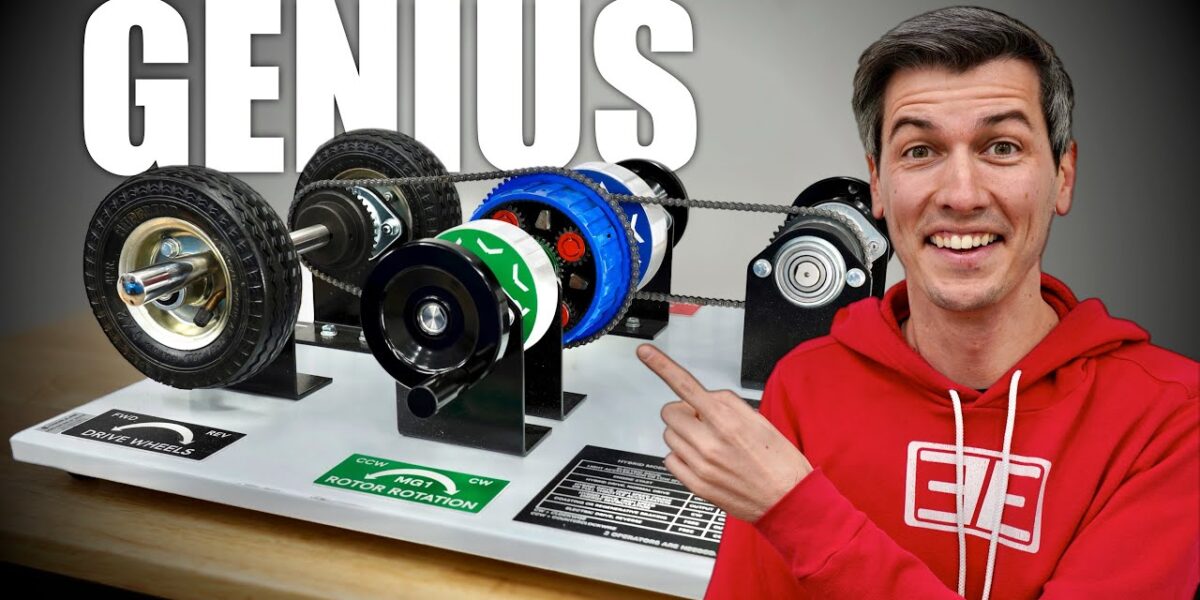
Forget the hate. The electronically controlled continuously variable transmission (eCVT), often maligned for its perceived lack of engagement or peculiar driving feel, is, in fact, one of the most ingenious and elegant solutions to the age-old challenge of optimizing engine performance and efficiency. Eschewing the traditional pulleys and belts that have given CVTs a bad rap, the eCVT leverages a sophisticated yet simple planetary gear set, working in tandem with electric motors, to achieve what was once a theoretical ideal: infinite gear ratios.
This innovative approach allows engineers to decouple engine speed from wheel speed, enabling the engine to operate at its most efficient or powerful RPM, regardless of vehicle speed. While many enthusiasts still associate ‘CVT’ with a droning, disconnected driving experience, modern eCVTs, like those found in hybrids such as the Ford Maverick, offer a glimpse into a more refined and efficient automotive future. This isn’t just about fuel economy; it’s about a smarter, more integrated powertrain.
How the eCVT Works Its Magic
Fundamentally, the eCVT’s brilliance lies in its simplicity. Unlike complex multi-gear automatics or dual-clutch transmissions, it primarily relies on a single planetary gear set. This gear set, comprising a sun gear, planet gears, and a ring gear, is the heart of the system. However, the true genius emerges when this mechanical core is paired with two electric motors: a starter-generator and a traction motor.
The starter-generator (often the sun gear component) is responsible for initiating the engine’s combustion cycle and can also function as a generator to replenish the battery. The traction motor (typically linked to the ring gear) directly powers the wheels or acts as a generator during regenerative braking. The engine itself is connected to the planet carrier, which holds the planet gears.
By precisely controlling the speeds and directions of the two electric motors relative to the engine’s rotation, the eCVT can manipulate the output speed to the wheels. This allows for an unprecedented range of ‘gear ratios’ – effectively infinite within the system’s operational parameters.
For instance, to start from a standstill, the eCVT can utilize the traction motor alone, meaning the engine doesn’t even need to be running, just like in the hybrid Ford Maverick. When the battery level drops, the starter-generator can crank the engine. Once running, the system can cleverly manage power flow: the engine can drive the wheels, generate electricity to charge the battery, or do both simultaneously. This seamless integration is key to the eCVT’s efficiency.
Slowing down is equally elegant. By shutting off the engine and using the traction motor for regenerative braking, energy is captured and returned to the battery. Even engaging reverse requires no dedicated gear; a simple reversal of the traction motor’s rotation achieves the task.
The ‘Infinite Gears’ Explained
The concept of infinite gears boils down to how the engine’s rotational speed relates to the wheel’s rotational speed. In traditional transmissions, fixed gear ratios dictate this relationship. First gear, for example, provides a high ratio (engine spins many times for one wheel rotation) for strong acceleration. Higher gears offer lower ratios for efficient highway cruising.
With an eCVT, this relationship is fluid. By adjusting the speed of the starter-generator (the sun gear), the system can alter the effective gear ratio. Spin the starter-generator faster than the engine, and the wheels slow down relative to the engine, creating a high gear ratio akin to first gear. Keep the starter-generator stationary while the engine turns, and you get a mid-range ratio, like third or fourth gear. Crucially, by spinning the starter-generator in the opposite direction while the engine runs, the wheels can spin much faster relative to the engine, simulating a high gear for highway efficiency.
The true ‘infinite’ nature comes from the ability to continuously vary the starter-generator’s speed across its entire operational range, from full forward to full reverse, thereby providing any conceivable gear ratio between the engine and the wheels. This allows the engine to be held at its most efficient RPM for cruising or its peak power RPM for maximum acceleration, without being dictated by a fixed gear.
Addressing the ‘Rubber Band’ Effect
Despite its mechanical elegance, the eCVT isn’t entirely free from criticism. The much-discussed ‘rubber band’ effect, where engine RPM doesn’t immediately correlate with acceleration feel, can still manifest. This is not due to belts, but rather the decoupling of engine and wheel speeds. When the driver demands sudden acceleration, the eCVT might initially hold the engine at an optimal power RPM, while the vehicle’s speed gradually catches up. This can feel disconnected to drivers accustomed to the immediate, linear response of traditional transmissions.
Manufacturers often mitigate this by programming the eCVT to mimic the behavior of a conventional automatic, with simulated gear shifts and rising engine RPMs. While this addresses driver expectations and comfort, it often comes at the cost of pure performance and efficiency potential. The irony is that a system designed for ultimate optimization is sometimes deliberately detuned to feel more familiar.
However, in many driving scenarios, particularly at lower throttle inputs, the eCVT can maintain a low, efficient engine RPM without noticeable drawbacks, leading to impressive fuel economy figures. This is where the eCVT truly shines, particularly in hybrid vehicles.
Value and Target Audience
Vehicles employing eCVT technology, such as the Ford Maverick Hybrid (starting around $24,000 for the base XL trim, with hybrid variants often commanding a slight premium), are primarily aimed at budget-conscious buyers prioritizing fuel efficiency and low running costs. The target demographic includes commuters, small families, and individuals looking for a practical, economical, and surprisingly capable vehicle.
For these buyers, the eCVT represents exceptional value. The significant fuel savings over the vehicle’s lifespan, combined with the inherent simplicity and potentially lower maintenance needs compared to complex multi-speed automatics, make it a compelling proposition. While enthusiasts might crave the direct engagement of a manual or the crisp shifts of a DCT, the eCVT delivers a different, yet equally valid, set of benefits: unparalleled efficiency and a smooth, refined driving experience, especially in city driving and stop-and-go traffic.
Though the technology has roots stretching back to the early 2000s (Ford Escape Hybrid) and even the 1990s (Toyota Prius), its widespread adoption and refinement continue to evolve. The eCVT is not just a transmission; it’s proof of elegant engineering, solving complex problems with a beautifully simple mechanical and electrical symphony, proving that sometimes, the most advanced solutions are also the most understated.
Source: Don’t Hate — eCVTs Are Genius Transmissions! (YouTube)

Related Articles


Turbochargers: Insane G-Forces and Engineering Marvels
Discover the astonishing world inside a turbocharger, where components spin at over 300,000 RPM, generating forces of 1.7 million Gs. This article delves into the extreme engineering required to harness such power.

Corvette ZR1X: A Hybrid Hypercar Masterpiece
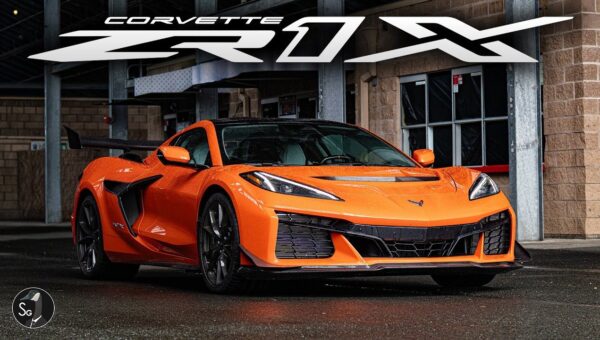
The Chevrolet Corvette C8 generation reaches its zenith with the ZR1X, a 1,250 horsepower hybrid hypercar. Boasting a 1.68-second 0-60 mph time and a bespoke Alcon braking system, it redefines supercar performance. This machine represents the culmination of meticulous planning and advanced engineering.

Inline-6 vs. V6: Unpacking the Engine Debate
The age-old debate between inline-six and V6 engines boils down to inherent design strengths. Inline-sixes offer superior balance and simplicity, while V6 engines prioritize compactness and packaging flexibility. The 'better' choice ultimately depends on the vehicle's intended purpose and engineering goals.