Faraday Cages: Scam or Savvy Security?
Are personal Faraday shields a worthwhile investment or a scam? Our rigorous testing in an EMC chamber reveals that while some RFID blocking solutions are effective, most Faraday bags and boxes fall short in blocking cell phone signals. Airplane mode remains a more practical alternative for phone security.

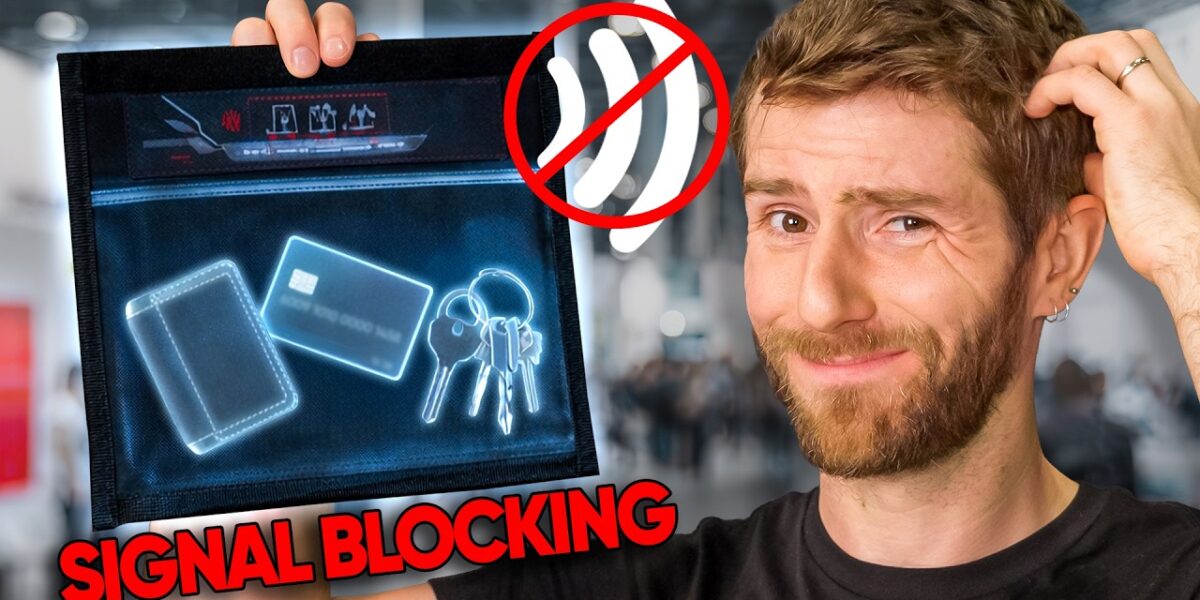
Faraday Cages: Scam or Savvy Security?
In an age where digital threats are constantly evolving, the need for personal privacy and security is paramount. From protecting your identity to securing your vehicle, the risks are real. However, the market is flooded with products claiming to offer protection, often shrouded in pseudoscience and unsubstantiated claims. This brings us to a pressing question posed by a user on the LTT subreddit: are personal Faraday shields actually effective, or are they just a scam? To get to the bottom of this, we embarked on a rigorous testing process within a controlled environment.
The Controlled Environment: An EMC Chamber
To ensure our measurements were accurate and not influenced by external radio frequencies (RF), we utilized an EMC chamber from Raymond EMC. This specialized chamber provides a functionally zero RF environment, essentially allowing us to test Faraday cages within an even larger Faraday cage. This controlled setting is crucial for isolating the performance of the shields themselves.
The Contenders: A Diverse Range of Shields
Our investigation included a variety of popular Faraday shields available on the market, alongside a DIY solution. The lineup featured:
- Hadui Bag: A budget-friendly option at $10, noted for its small size and somewhat flimsy construction.
- Samfoke Box: Priced at $25, this kit included two pouches – one for keys and one for a phone – and amusingly, a free IQ test.
- Mission Darkness Bag: Positioned as a premium option at twice the price of the Samfoke box, boasting two layers of shielding cloth.
- Ridge Wallet: A product from our partners, claiming RFID blocking capabilities.
- Amradal Shielding Fabric: Purchased in bulk, this fabric allows users to create custom-sized RF shields.
- DIY Solutions: Including a reusable Ziploc bag with metal foil tape and a common metal cookie tin.
Testing Methodology: RF Shielding Effectiveness
Our primary testing tool was an Xtech EMF meter, capable of measuring millivolts per meter (mV/m). Inside the EMC chamber, with the door closed, our baseline reading was an almost negligible 17-19 mV/m. We then introduced a cell phone, set to transmit signals (searching for networks, Bluetooth, and Wi-Fi), to establish a baseline RF output. The phone was placed on a pedestal approximately 40 cm from the EMF meter.
Initial Phone Baseline:
With the phone active but outside any shield, readings fluctuated between 1 to 2.5 V/mV/m when actively searching, and around 650-1200 mV/m when in a more idle state. This established the signal strength we aimed to block.
Performance of Off-the-Shelf Shields:
Hadui Bag: Following the manufacturer’s recommendation to fold the bag twice, we placed the phone inside. The results were surprisingly underwhelming. The Hadui bag provided virtually no measurable reduction in RF signals, performing identically to the phone being outside any shield. Curiously, the Hadui bag also claims to withstand temperatures up to 1,000°F, a feature whose practical application for phone shielding remains questionable.
Samfoke Box: Similar to the Hadui bag, the Samfoke box, even when carefully closed, showed minimal effectiveness. The test revealed that the boxes, bags, and even loose fabric performed largely the same in blocking RF signals from the phone.
Mission Darkness Bag: Despite its higher price point and double-layer shielding, the Mission Darkness bag also failed to demonstrate significant improvement over the other tested bags and boxes. The effectiveness was consistent with the other products, suggesting a similar level of protection, or lack thereof, for cell phone signals.
The RFID Wallet Test: A Different Approach
The Ridge Wallet presented a unique challenge. Unlike devices actively transmitting signals, RFID chips are passive, powered by the reader. To test its effectiveness against card skimming, a different methodology was required. We used a Flipper Zero to power up an RFID card and attempt to read its data. The test confirmed that the Ridge Wallet does block RFID skimming, despite not forming a complete enclosure around the card. This success is attributed to the inherently low range and power of RFID readers, making even partial shielding effective in this specific scenario.
DIY Solutions: Can You Build Your Own?
Recognizing the potential for cost-effective DIY solutions, we tested common household items and materials:
- Reusable Bag with Foil Tape: A simple Ziploc bag lined with overlapping metal foil tape, when folded and sealed similarly to the commercial bags, proved effective in blocking signals.
- Metal Cookie Tin: An empty metal cookie tin, when used as an enclosure, also demonstrated effective RF blocking. However, we noted that the orientation and seams could slightly impact performance.
- ESD Safe Bags: Surprisingly, some standard ESD (Electrostatic Discharge) safe bags, often found protecting electronics during shipping, showed a decent level of RF blocking, nearly on par with some commercial products. However, other types of ESD bags offered minimal to no protection.
- Bulk Shielding Fabric: The Amradal bulk fabric, when fashioned into a pouch (even a rudimentary one resembling underwear), also performed well, showing significant signal reduction.
The Verdict: Cell Phone Shielding – Mostly Ineffective
The overarching conclusion from our testing is that while some products and DIY methods can block specific types of signals (like RFID for wallets), most off-the-shelf Faraday bags and boxes are largely ineffective at blocking cell phone signals. The Hadui bag, Samfoke box, and Mission Darkness bag all performed similarly poorly in reducing RF emissions from our test phone.
Why the Discrepancy? The Airplane Mode Alternative
A key takeaway is that for users concerned about their phones emitting signals, simply enabling airplane mode offers the same level of signal reduction with none of the downsides. Unlike a Faraday cage, airplane mode doesn’t drain your phone’s battery by constantly searching for a connection. The marketing of these shields for cell phone use seems to overlook basic functionality of how smartphones operate.
Who Should Care and Why?
For everyday users: If your primary concern is blocking cell phone signals, most commercial Faraday bags are likely not worth the investment. Airplane mode is a more practical and effective solution. However, if you are concerned about RFID skimming of credit cards or key fobs, a well-constructed RFID-blocking wallet or pouch (like the Ridge Wallet, which passed our test) can offer genuine protection.
For specific security needs: Individuals in high-security environments or those dealing with highly sensitive data might require professional-grade shielding solutions. However, for the average consumer, the effectiveness of many consumer-grade Faraday products for phone security is questionable.
DIY Enthusiasts: For those looking for a cost-effective way to create RF shielding, using materials like foil tape on a Ziploc bag or utilizing a metal tin can provide surprisingly effective results for specific applications, though durability and convenience may vary.
Availability and Pricing
The tested products range in price from $10 for the Hadui bag to $25 for the Samfoke box, with the Mission Darkness bag at a higher tier. The Ridge Wallet is also available, and bulk shielding fabric can be purchased for DIY projects. Specific availability and pricing can be found through the respective retailers and partners linked in the original video description.
Sponsor Spotlight: Squarespace
This investigation was supported by Squarespace, a platform that makes building a personalized website simple and effective. Whether for a business or a personal brand, Squarespace’s design tools and AI can help you create a professional online presence. Visit squarespace.com/ltt for a special offer.
Conclusion
While the concept of a personal Faraday cage is appealing for digital security, the reality for many consumer-grade products, particularly those marketed for cell phones, falls short. Always scrutinize claims and consider practical alternatives like airplane mode. For specific needs like RFID protection, targeted solutions can be effective, but buyer beware when it comes to broad claims of cell phone signal blocking from many off-the-shelf products.
Source: Are these a scam? (YouTube)

Related Articles


Secrets Unravel: DC’s Hidden Scrutiny Threatens Careers
Washington D.C.'s political figures face mounting scrutiny, where personal secrets are increasingly exposed. Recent events, like Congressman Swalwell's resignation, highlight the danger of assuming privacy in the digital age. This trend forces a re-evaluation of conduct for public figures globally, impacting trust and diplomacy.


UK Conscription Debate: ‘Wrong People’ for Modern Warfare?
As global instability rises, the UK faces a debate on whether conscription is needed for modern warfare. Experts are divided, with some seeing it as crucial for societal resilience and others fearing it would recruit unwilling individuals, potentially weakening the armed forces. The discussion highlights a clash between historical approaches and the realities of today's complex security landscape.


Student Journalist’s Data Shared With ICE After Campus Protest
A British student journalist at Cornell University, Amandla Thomas Johnson, is reportedly in hiding after his personal data was handed over to ICE by Google. The transfer occurred via an administrative subpoena, raising serious concerns about digital privacy and government surveillance powers.