Nvidia’s $100B OpenAI Pledge Falters Amid Funding Concerns
Nvidia's $100 billion investment pledge to OpenAI is reportedly stalled, raising concerns about OpenAI's massive data center spending plans. The AI giant faces significant funding challenges as its key partnership faces delays and scrutiny.

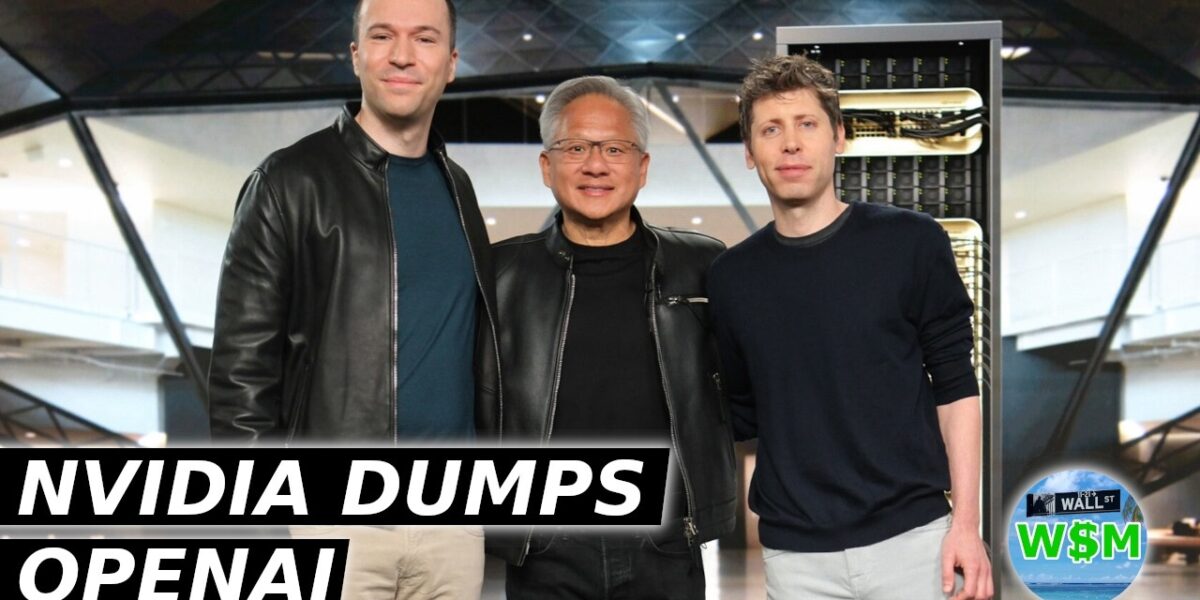
Nvidia’s $100B OpenAI Pledge Falters Amid Funding Concerns
The ambitious $100 billion investment pledged by Nvidia to OpenAI, announced with significant fanfare in September 2025, appears to be on shaky ground, with reports suggesting the deal has stalled and Nvidia is reconsidering its commitment. This development raises critical questions about OpenAI’s massive projected AI data center spending and its reliance on external capital.
OpenAI’s Colossal Spending Plans Under Scrutiny
OpenAI has committed to an astounding $1.4 trillion in AI data center spending over the next eight years. Despite reporting an annualized revenue of approximately $20 billion, the company is reportedly losing billions of dollars monthly, underscoring its substantial dependence on outside investors to fund its aggressive expansion plans.
The cornerstone of this funding strategy was the September 2025 announcement of Nvidia’s intention to invest up to $100 billion. This investment was framed as crucial for constructing new data centers, with Nvidia’s CEO Jensen Huang stating the funds would be deployed progressively as 10 gigawatts (GW) of AI systems were established, with the first GW slated for the second half of 2026.
The Unfulfilled $100 Billion Promise
More than four months after the initial announcement, it has emerged that Nvidia has yet to disburse any funds to OpenAI. This delay has fueled speculation that the much-hyped investment may not materialize as originally presented. While Nvidia CEO Jensen Huang has publicly dismissed reports of the deal being in jeopardy as “nonsense,” his subsequent comments confirmed that Nvidia would participate in OpenAI’s upcoming funding round, rather than executing the direct $100 billion investment as initially stated.
This shift suggests that Nvidia’s contribution will be a smaller allocation within a larger capital raise, rather than a standalone commitment. OpenAI is reportedly seeking to raise a total of $100 billion from various sources, including Microsoft, Nvidia, and Middle Eastern sovereign wealth funds.
OpenAI’s Infrastructure Projects: Stargate and Beyond
The situation is further complicated by OpenAI’s other major infrastructure initiative, Project Stargate. Announced in early 2025, this joint venture with Oracle and SoftBank aimed to build 10 GW of AI data centers with an estimated $500 billion expenditure.
However, Project Stargate has reportedly made minimal progress, with only a 200-megawatt data center completed in Abilene, Texas, representing just 2% of its target capacity and a fraction of the projected cost. Funding for both Project Stargate and the Nvidia-backed initiative remains a significant concern.
A key point of contention is the operational capacity and expertise. Neither Nvidia, a GPU manufacturer, nor OpenAI, a software developer, possess significant experience in building and operating large-scale data centers. The cost estimates for these facilities are staggering.
A single 1 GW AI data center is estimated to cost around $50 billion, meaning the 10 GW target could indeed approach the $500 billion mark. Nvidia’s initial $100 billion pledge would only cover 20% of this total, leaving a substantial funding gap.
Critique of OpenAI’s Narrative and Business Practices
The article also digs into criticisms of OpenAI’s public narrative, particularly CEO Sam Altman’s recurring claims that increased computing power is essential for breakthroughs like curing cancer. While Altman emphasizes the need for more capacity to avoid making difficult choices between research and widespread access to AI services, critics argue this narrative is a deflection.
Concerns have been raised about OpenAI’s data acquisition practices. While a deal with Reddit, in which Altman has a personal financial interest, involves licensing fees, OpenAI has been accused of scraping data from numerous websites, including animation styles from Studio Ghibli, without explicit licensing or compensation. This has drawn sharp criticism, with animation legend Hayao Miyazaki expressing strong disapproval of AI animation, calling it an “insult to life itself.”
The article questions the scientific capabilities of current AI models like ChatGPT. It argues that while these models can perform well on standardized tests by regurgitating information from their training data, they lack the capacity for genuine scientific innovation, such as discovering a cure for cancer. The example of GKO Bioworks, a synthetic biology company that claimed AI-driven breakthroughs but failed to generate revenue or develop new drugs, is cited as a cautionary tale of inflated claims versus tangible results.
Market Impact and Investor Considerations
The faltering Nvidia-OpenAI deal and OpenAI’s ongoing funding challenges have significant implications for the broader AI market. Nvidia, as a primary supplier of AI hardware, has heavily benefited from the AI boom, with OpenAI being one of its largest indirect customers. The uncertainty surrounding the investment could impact Nvidia’s future revenue projections, although the company’s overall market position remains strong.
For investors, the situation highlights the speculative nature of some of the largest investments in the AI sector. OpenAI’s reliance on massive capital infusions and its ambitious, yet often unproven, technological claims warrant careful scrutiny. The discrepancy between announced commitments and actual financial flows, as seen with the Nvidia deal, highlights the importance of due diligence and understanding the underlying financial health and operational realities of companies in rapidly evolving industries.
The narrative surrounding AI’s potential, while inspiring, must be balanced with a realistic assessment of current capabilities and funding sustainability. As OpenAI seeks further funding, its ability to secure substantial capital will depend not only on its vision but also on its demonstrable progress and financial discipline.
Source: Nvidia Losing Confidence In OpenAI (YouTube)

Related Articles

OpenAI Warns of Post-AGI World, Proposes Economic Overhaul
OpenAI has released a paper warning of massive job losses and societal upheaval following the advent of Artificial General Intelligence (AGI). The company proposes an overhaul of economic policy, including public wealth funds and robot taxes, to manage the transition. Concerns remain about OpenAI's leadership and its commitment to safety as AI development accelerates.
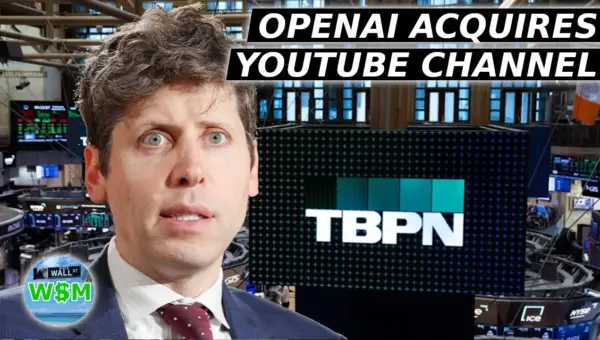
OpenAI Buys YouTube Channel for $300M Strategy Play
OpenAI has acquired the tech podcast TBPN for hundreds of millions of dollars. The move is seen as a strategic play to reach key audiences and potentially boost its upcoming IPO, rather than a purely financial investment.


AI Fears Ignite Violence Against Tech Leaders
Fears surrounding artificial intelligence have taken a dangerous turn with an alleged Molotov cocktail attack on OpenAI CEO Sam Altman's home. The incident highlights the intense emotions and potential for violence fueled by anxieties about AI's rapid development. This case serves as a stark warning about the real-world consequences of unchecked fears and the need for responsible AI discourse.