Putin’s War Chest Swells as Oil Prices Surge, Analyst Warns
British journalist Peter Dickinson warns that Russia's economy is strengthening due to surging oil and gas prices, bolstering Putin's war chest. He also analyzes Hungary's role as a Kremlin proxy and Russia's diminishing global prestige despite its war capabilities.

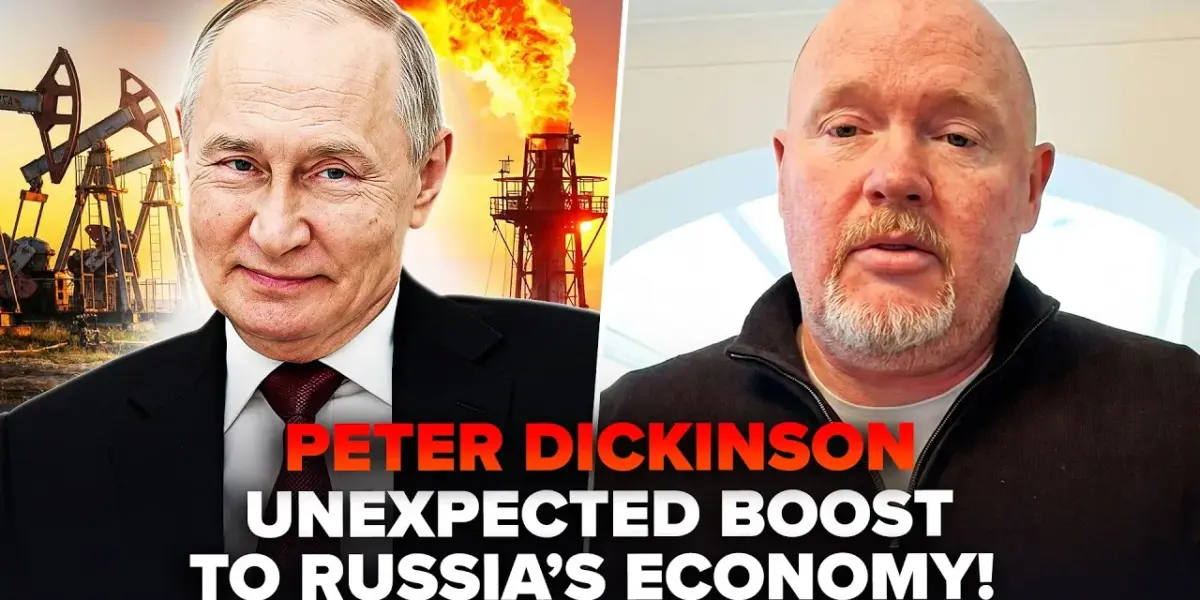
Russia’s Economy Strengthened by Rising Energy Markets
In a stark assessment, British journalist Peter Dickinson has warned that Russia’s economic position is strengthening by the hour, largely due to the surge in global oil and gas prices. This development is significantly strengthening President Vladimir Putin’s war chest and revitalizing the Russian economy at a critical juncture.
According to Dickinson, a fellow at the Atlantic Council, the current geopolitical landscape places Russia in an exceptionally advantageous position. Unlike many other energy-exporting nations whose supplies are vulnerable to disruption in regions like the Persian Gulf, Russia’s energy exports are not subject to such immediate threats. This resilience, combined with soaring market prices, is providing a substantial financial injection into the Russian budget.
“At the moment, it’s looking very advantageous for the Russians because of course they’re not hostage to this war,” Dickinson stated in a recent interview. “Their energy supplies do not have to go through the Gulf region.
And so they are in an extremely strong position.” He noted that only a select few countries, including the United States, Norway, some North African, South American, and Nigerian nations, share a similar advantage. However, with the global hub of oil and gas exports under significant pressure, Russia’s unaffected status makes it a primary beneficiary.
This economic upswing arrives at a time when Russia was reportedly facing considerable economic pressure. “Things were starting to look very dark for Russia economically. But all of a sudden now it’s a new dawn.
It’s a new day. The sun is shining on Russia again economically and Putin now his war chest is expanding,” Dickinson observed.
Hungary’s Orban: A Kremlin Proxy in the EU?
The interview also delved into the role of Hungarian Prime Minister Viktor Orban, with Dickinson characterizing him as the Kremlin’s representative within the European Union. For the past 12 years, Orban has allegedly acted as a spoiler, hindering Ukraine’s integration into the EU, minimizing Western support, and facilitating Russia’s objectives in Ukraine.
Dickinson dismissed the notion of a genuine conflict of interest between Hungary and Ukraine, labeling the confrontation as artificial. He suggested that Orban’s focus on Ukraine is a proxy battle for the Kremlin, aimed at garnering domestic support by demonizing Ukraine ahead of elections.
“So he’s built this legend up of a confrontation between Hungary and Ukraine, which is completely artificial. There’s no real conflict of interests or competition between Hungary and Ukraine. There never has been and there never could be realistically,” Dickinson explained.
He added that Orban’s re-election strategy appears increasingly reliant on creating an enemy out of Ukraine, a tactic Dickinson believes is not resonating with the Hungarian populace, who are also reportedly uncomfortable with Orban’s perceived alignment with the Putin regime.
Russia’s Diminishing Global Standing Amidst War Capabilities
Despite the economic boost from energy exports, Dickinson presented a nuanced view of Russia’s broader geopolitical standing. He argued that while Russia is losing allies such as Syria, Venezuela, and Iran, these losses, though damaging to its prestige and reputation, do not significantly impact its warfighting capabilities in Ukraine.
“These allies didn’t bring Russia anything,” Dickinson asserted. “Iran gave Russia the blueprints for the drones that it now makes itself.” He elaborated that while Iran may have provided some drones and missiles, the quantity was limited, and Russia has since developed its own advanced drone manufacturing capabilities.
The loss of these allies, according to Dickinson, signals that Russia is no longer a global power but a regional one, overextended in Ukraine and losing influence in its traditional sphere of influence. However, he believes these humiliations may paradoxically strengthen Putin’s resolve to achieve victory in Ukraine, as it has become his primary, perhaps only, remaining objective.
Potential Future Conflict Zones
Looking ahead, Dickinson identified the Middle East as a potential flashpoint for further escalation. He emphasized that the coming weeks would be crucial in determining whether the conflict with Iran de-escalates or expands significantly.
However, he reiterated that the most significant threat for major geographical escalation remains Europe. Should Russia succeed in Ukraine, Dickinson warned of a dangerous precedent, potentially leading to further Russian aggression into Moldova and testing NATO’s resolve in the Baltic states or Poland.
Regarding Latin America, Dickinson suggested that while the U.S. might intervene in Cuba, he did not foresee it as a major global conflict, characterizing it more as a limited military operation. He noted that traditional Russian support for Cuba would not materialize in such a scenario.
China’s Ascendant Role and Europe’s Position
The discussion also touched upon the growing influence of China. Dickinson described China as the “colonial master” of Russia, dictating terms for resource purchases and benefiting immensely from Russia’s weakened state and the global preoccupation with ongoing conflicts.
He expressed skepticism about European influence in potential peace negotiations, particularly concerning interactions with former U.S. President Donald Trump. Dickinson suggested that Trump views Europe as lacking decisiveness and is more inclined to strike deals directly with Russia, potentially sidelining European participation.
Regarding China’s potential involvement in peace talks, Dickinson remained cautious. He noted that while China has floated peace proposals, it lacks experience in global conflict resolution and, from its perspective, benefits from the continuation of the war. Therefore, he speculated that any Chinese participation in peace processes might not be constructive.
Putin’s Greatest Fear: Unfulfilled Ambitions
When asked about Vladimir Putin’s biggest fear, Dickinson pointed directly to Ukraine. He believes Putin’s primary concern is the failure to achieve his ultimate goal: the destruction of Ukraine as a state and a nation.
“His goal has always been to destroy Ukraine as a state and as a nation to eradicate Ukrainian statehood and to wipe Ukraine off the map,” Dickinson stated. He observed that with Russia currently holding only 20% of Ukraine, suffering heavy casualties, and failing to make significant battlefield breakthroughs, this objective appears increasingly unattainable, especially as Ukraine grows stronger and more confident.
Source: 😱Putin’s war chest is expanding! British journalist delivered bad news for Ukrainians (YouTube)

Related Articles

Iran Faces $160 Billion Annual Loss From U.S. Blockade
Iran faces crippling economic pressure from a U.S. naval blockade, costing an estimated $450 million daily. This financial strain threatens Iran's ability to meet basic expenses and fund its government. The U.S. demands unconditional surrender, including halting nuclear activities and opening key shipping lanes.

Russia Poses Greater Threat Post-Ukraine War, Expert Warns
A new report warns that Russia may become more dangerous and unpredictable after the war in Ukraine, potentially ushering in a new era of confrontation with Europe. Despite military and economic weakening, Russia's vast resources, strategic mindset, and China's support contribute to its continued threat. Europe faces a critical period of vulnerability as it works to bolster its defenses and adapt to this evolving security landscape.

US Demands Force Cuba’s Hand
The Trump administration has presented Cuba with a list of demands, including political prisoner releases and compensation for past nationalizations. A deadline of April 24th has been set, after which unspecified actions may be taken by the U.S. This situation carries significant geopolitical and regional stability implications.