Trump’s Iran War Support Divides GOP, Lacks Broad Public Backing
President Trump's military actions in Iran are met with majority disapproval from American voters, according to a new poll. The survey highlights a significant divide within the Republican party, with MAGA supporters showing far greater backing than non-MAGA Republicans.

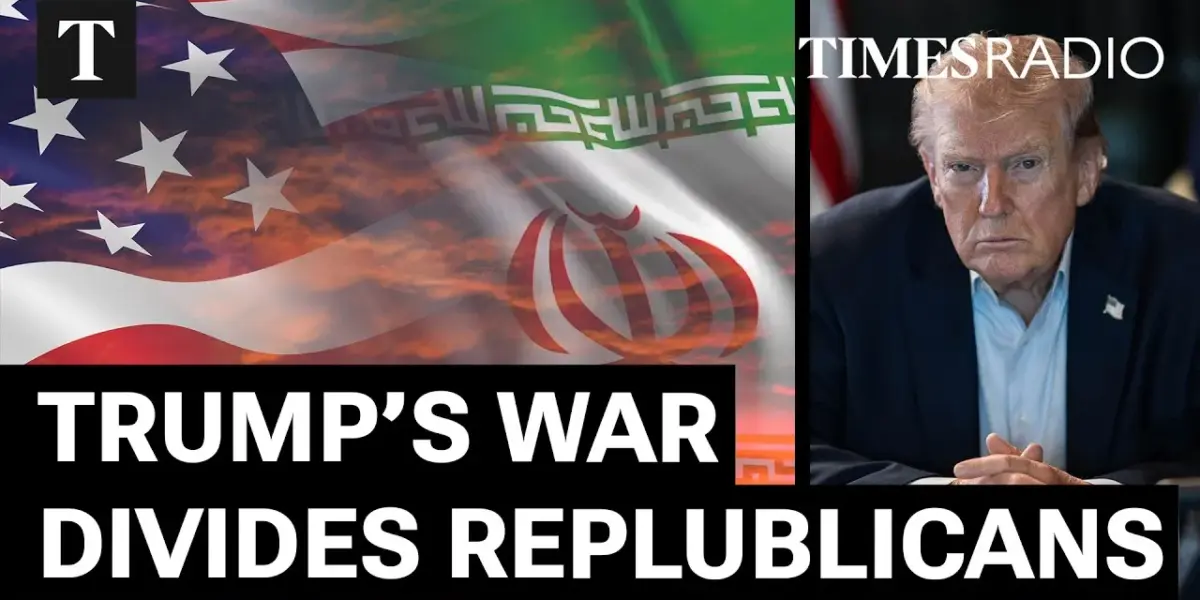
Trump’s Iran Strategy Faces Public Skepticism, Internal GOP Divide
WASHINGTON D.C. – In the early stages of military action in the Middle East, President Donald Trump’s approach to Iran is facing significant disapproval from the American public, with a majority of voters expressing dissent. A recent poll reveals a deep partisan rift, not only between Democrats and Republicans but also within the Republican party itself, particularly between the Make America Great Again (MAGA) base and non-MAGA Republicans. This lack of broad consensus raises concerns about the administration’s strategy and its ability to garner national support for a conflict.
Majority Disapprove of Trump’s Iran Policy
An initial snapshot of public opinion, detailed by Democratic pollster Jeff Horwit of Heart Research Associates in collaboration with NBC News, indicates that 54% of American voters disapprove of the Trump administration’s handling of the situation in Iran. Conversely, only 41% approve. This finding is particularly striking as it suggests that, even at the outset of military engagement, the administration is starting from a position of public skepticism.
Horwit highlighted the challenges facing the administration, noting, “We are in the very early stages of of the war and it’s not clear what the objectives are. I think that that is one real challenge for the administration and those seem to have shifted over even the last couple of days.” He added, “What the American people are looking for is a clear guidance, clear objective on what is trying to be accomplished here. And the real danger is we’re starting off at a very low point as you noted where you have a majority who are disapproving and also in fact a majority who say that we should not have taken action.”
Partisan Chasm Widens on Iran Engagement
The polling data underscores a stark partisan divide. While 79% of Republicans approve of Trump’s handling of Iran and 77% believe military action was warranted, the support among Democrats and Independents is significantly lower. A substantial 90% of Democrats and 61% of Independents disapprove of the administration’s approach, with similar margins expressing opposition to the military action itself.
Adding another layer to this division, Horwit pointed to a notable divergence within the Republican party. “When you drill down, Ali, and you look at Republicans who identify with the with the MAGA Make America Great Again movement versus Republicans who do not, that there’s a huge divide there,” he stated.
Among MAGA Republicans, 90% believe the U.S. should have taken action. However, this figure drops dramatically to just a bare majority of 54% among non-MAGA Republicans.
Flipping Traditional GOP Stances
This internal Republican split challenges traditional assumptions about the party’s foreign policy leanings. Horwit described the situation as “fascinating” and attributed it to Donald Trump’s transformative influence on the party.
“Donald Trump has flipped the party on its head where as you’re quite right that traditional Republicans normally would this is sort of going back to the Jeb Bush Republican if that still exists here. Someone who was sort of you know believed in strong international you know like books that you know they they would tend to have a different view but because that Trump has this lock on on Republicans that it is that you know the MAGA supporters are really are really with him and those traditional Republicans are not.”
Religious Appeals and Their Limits
The article also touched upon the role of religion in shaping public opinion, particularly concerning the involvement of Israel and the framing of the conflict. Horwit acknowledged the interconnection between evangelical Christians and the Republican party, noting that this demographic often supports Israel. “I think that is certainly the case when you consider um that the involvement of Israel in this military action and that that is one group while while Democrats and progressives um in a lot of public polling it’s pretty clearly seen have moved away from Israel in recent times given the war in Gaza that evangelical Christians there is that connection here and so I think that’s really a play to Trump’s base and evangelical Christians to to have that religious aspect,” he explained.
However, he cautioned that for the administration to achieve broader public acceptance, it must “go beyond the base of that evangelical block.” The complexities of religious demographics were further illustrated by the divisions within the Jewish American community regarding the handling of the Gaza conflict and the potential for individuals with ties to Iran to desire the regime’s overthrow.
Lack of Unifying Leadership and Social Media Strategy
Looking ahead, Horwit expressed concern about the administration’s approach to leadership and communication, particularly in the context of a conflict. “The president has really it’s been consistent over the course of this term. He has not tried to unify the country,” he observed, contrasting this with historical leaders who “made their case and that they also knew when they were following short and that and that they needed to lead public opinion.”
The effectiveness of the White House’s social media strategy was also questioned. Horwit suggested that the current approach is primarily aimed at “super serving the people who already gung-ho support what’s happening” and is not designed to persuade undecided voters. “It’s all about his base.
He is not trying to um persuade anyone else really with with with his communication here and and and that’s what this is about,” he concluded. “So for people who are not in uh the true social world, who are not uh in his base, uh this is a message I think by and large is is falling flat and they’re seeing this from other sources too that what he may be saying uh is not necessarily uh an accurate portrayal of what is actually going on.”
What’s Next?
As the situation in Iran continues to evolve, the Trump administration faces the significant challenge of clarifying its objectives and building broader public support. The stark divisions within the electorate, particularly the chasm within the Republican party, suggest that any sustained military action could become a deeply polarizing issue. The administration’s ability to articulate a clear strategy and connect with a wider swath of the American public, beyond its core base, will be critical in determining the long-term political viability and public acceptance of its foreign policy decisions.
Source: Trump Is Failing To Get Support For Iran War Outside Of MAGA Base | Jeff Horwitt (YouTube)

Related Articles

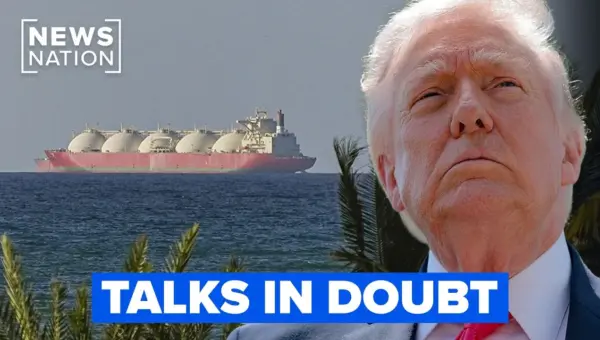
US Seizes Ship, Puts Iran Talks and Ceasefire on Knife’s Edge
The U.S. seized an Iranian cargo ship, threatening to derail planned peace talks and a crucial ceasefire. Iran has vowed retaliation, while the U.S. warns of military action if diplomacy fails. This incident raises global concerns about Middle East stability and trade.

Iran Tensions Flare as US Seizes Ship; Polls Show Trump Approval Drop
Tensions between the U.S. and Iran escalated this weekend as American forces seized an Iranian-flagged cargo ship. The incident adds new uncertainty to upcoming peace talks and comes as President Trump's approval rating drops to a new low. Meanwhile, a tragic mass shooting in Louisiana left eight children dead, and unseasonably cold weather brought snow and frost to parts of the U.S.
Iran Escalates Tensions, Threatens Global Oil Shock
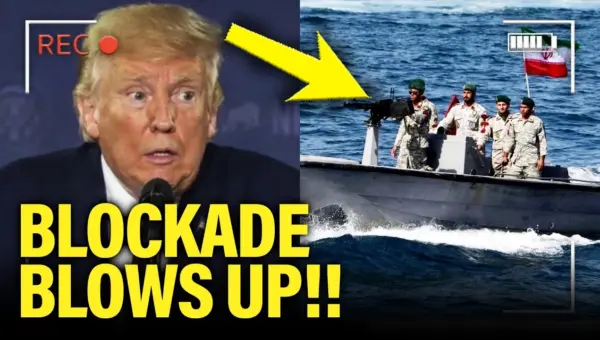
Tensions flare in the Persian Gulf as Iran vows retaliation after a U.S. Navy interdiction of an Iranian ship. The incident has sent oil prices soaring and jeopardized diplomatic talks, with Iran accusing the U.S. of piracy and escalating aggression.