Crypto Firms Gain Fed Master Accounts, Banks Lose Power
Cryptocurrency firms are reportedly gaining access to Federal Reserve master accounts, a move that challenges the traditional dominance of banks. This development could significantly impact XRP holders and the broader digital asset industry by fostering greater integration with the U.S. financial infrastructure.


Crypto Firms Secure Federal Reserve Master Accounts, Challenging Traditional Banking Dominance
In a significant shift for the financial landscape, cryptocurrency firms are reportedly gaining access to Federal Reserve master accounts, a move that could fundamentally alter the relationship between traditional banking institutions and the burgeoning digital asset industry. This development, detailed in a recent report, suggests a growing integration of crypto entities into the core U.S. Financial infrastructure, potentially diminishing the exclusive control previously held by established banks.
Understanding the Federal Reserve Master Account
A Federal Reserve master account is a gateway to the U.S. Central bank’s payment system, offering crucial benefits. Holders of these accounts can conduct direct transactions with the Fed, access its lending facilities, and hold reserves, which are essential for providing services like payment processing, settlement, and liquidity management. Traditionally, only chartered banks and certain government-sponsored enterprises have had access to these accounts, positioning them as gatekeepers for financial services.
Implications for XRP Holders and the Broader Crypto Market
The implications of crypto firms obtaining master accounts are far-reaching, particularly for assets like XRP. Proponents of XRP have long advocated for its utility in facilitating cross-border payments and streamlining financial transactions.
Increased access for crypto firms to the U.S. Financial plumbing could accelerate the adoption of digital assets for real-world financial use cases. This integration could lead to more efficient and lower-cost payment systems, potentially boosting the demand and utility for assets designed for such purposes.
For XRP holders, this development could signal a more favorable regulatory and operational environment. Direct access to the Federal Reserve’s infrastructure could remove intermediaries and reduce friction, aligning with XRP’s purported goals of improving global payment rails. While the specifics of how this access will be utilized remain to be seen, it represents a potential step towards greater institutional acceptance and integration of cryptocurrencies.
Navigating Macroeconomic Volatility and Retail Sentiment
The broader crypto market continues to grapple with significant macroeconomic headwinds. Geopolitical tensions are contributing to prolonged market shocks, leading to increased volatility and palpable fear among retail investors. In such an environment, discerning genuine opportunities from market noise becomes paramount.
Analysts are closely monitoring key assets like Bitcoin. While retail investors may panic sell during periods of uncertainty, experienced traders often look for strategic entry points based on risk-reward assessments. The current market climate demands a disciplined approach, focusing on fundamental analysis and adherence to carefully crafted trading strategies.
Spot Accumulation Strategy in Altcoins
Amidst the turbulence, a strategic approach to altcoin accumulation is being discussed. The idea is to position oneself to benefit from potential market upturns by acquiring promising altcoins at opportune moments. This involves identifying assets with strong underlying fundamentals, potential for future adoption, and favorable technical indicators, while remaining mindful of the overall market sentiment and macroeconomic factors.
The ability of crypto firms to secure Federal Reserve master accounts adds another layer to the evolving narrative. It suggests a maturing industry that is becoming more intertwined with traditional finance, even as it faces external economic pressures. This dual dynamic of institutional integration and macroeconomic volatility creates a complex but potentially rewarding environment for astute investors and traders.
Regulatory Landscape and Future Outlook
The granting of master accounts to crypto firms marks a critical juncture in the ongoing debate surrounding cryptocurrency regulation. It signals a potential willingness from regulatory bodies to explore new frameworks that accommodate digital assets within the existing financial system. This contrasts with earlier, more restrictive approaches and suggests a pragmatic evolution in how regulators perceive and interact with the crypto space.
As more crypto entities gain direct access to central bank infrastructure, the lines between traditional finance and decentralized finance (DeFi) may continue to blur. This could lead to increased innovation, greater market stability, and broader adoption of digital assets for a variety of financial services. However, the journey is likely to remain dynamic, with ongoing regulatory scrutiny and market fluctuations shaping the future trajectory.
Source: Banks Just Lost! XRP Holders Need To See This [NOW] (YouTube)

Related Articles

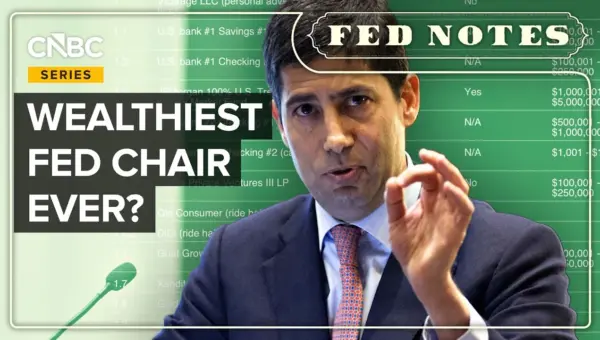
Warsh’s Wealth Could Make Him Richest Fed Chair Ever
Kevin Warsh, a potential nominee for Federal Reserve Chair, possesses significant financial wealth that could make him the richest person to ever hold the post. His views on artificial intelligence suggest a potential push for lower interest rates. However, his vast investments may create complex divestment challenges if appointed.


Congresswoman Buys Bitcoin ETFs Amid Insider Trading Claims
US Congresswoman Sherry Biggs' purchase of Bitcoin ETFs amid insider trading allegations has put crypto in the spotlight. Analysts are bullish on Ethereum, predicting prices around $62,000, driven by tokenization and AI. Bitcoin is also expected to surge, fueled by macroeconomic factors and limited supply.


Fed Can’t Fix Housing Shortage Alone: Local Rules Block Progress
Federal efforts to address the U.S. housing shortage are hampered by state and local regulations, particularly zoning laws. While Washington can cut costs and offer incentives, local rules prevent builders from constructing the estimated 10 million homes needed. This imbalance favors sellers in the current market.