Iran War Sparks Oil Surge, Economic Woes for Trump
The war in Iran has triggered a sharp rise in oil prices, threatening economic stability and posing a significant challenge for the Trump administration. As gas prices surge and a key jobs report shows a slowdown, the White House faces mounting pressure to address domestic concerns. Meanwhile, regional tensions escalate with an intensifying conflict in Lebanon and ongoing investigations into civilian casualties.

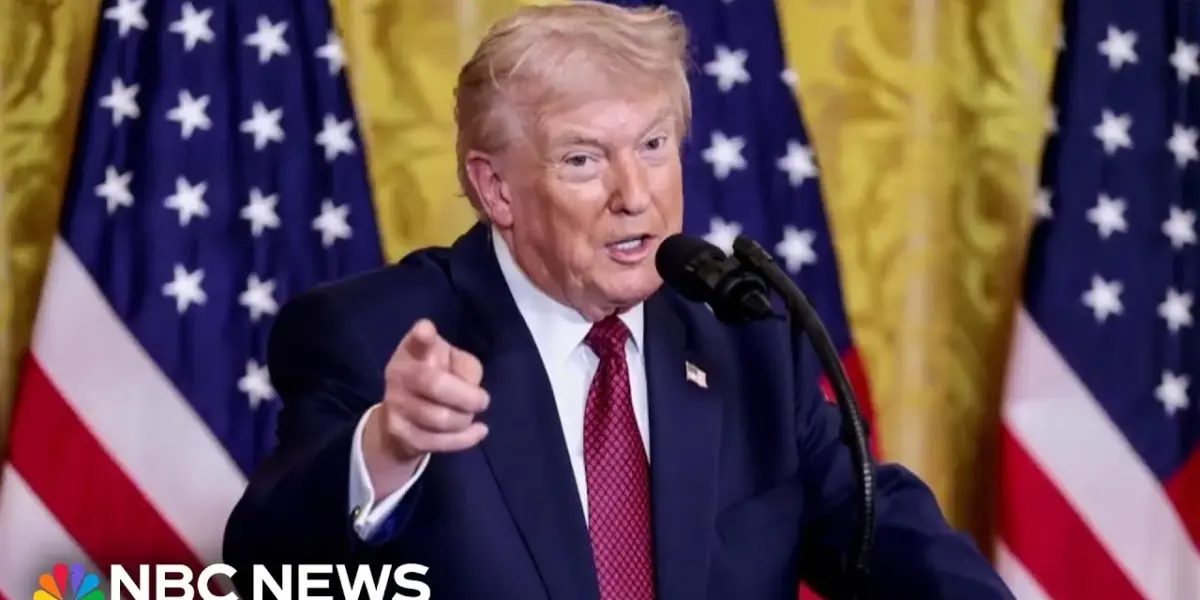
Iran Conflict Escalates, Fueling Oil Price Hikes
The war against Iran, now entering its second week, is intensifying scrutiny on the Trump administration’s military objectives, its claims regarding civilian casualties, and its response to a dramatic surge in energy prices. President Trump’s call for Iran’s “unconditional surrender” via social media has been further clarified by White House Press Secretary Karoline Leavitt. She stated that unconditional surrender would be achieved when Iran no longer poses a threat and the goals of “Operation Epic Fury” are fully realized, regardless of Iran’s own declaration.
This evolving objective comes as the nation grapples with rapidly increasing fuel costs. The average price per gallon of gasoline has risen by $0.34 since the conflict began. U.S. Crude oil prices have seen an unprecedented surge, settling at over $90 per barrel and marking a 35% increase this week alone – the largest weekly gain since the crude oil contract’s inception in March 1983.
Economic Repercussions and White House Response
White House Press Secretary Karoline Leavitt addressed the escalating energy prices, framing the administration’s strategy around short-term and long-term goals. “We have to focus on the short term and the temporary goals of Operation Epic Fury,” Leavitt stated. “To obliterate the Iranian regime will be a very good thing for the energy and oil markets and for oil prices across the globe.” She further elaborated that in the long term, removing a regime that restricts the free flow of energy through the Strait of Hormuz would benefit global markets.
However, NBC News Senior Business Correspondent Christine Romans cautioned that prices tend to rise much faster than they fall. “We’ve seen this many, many times. It’s just the nature of the beast,” Romans explained.
The immediate impact is felt by consumers and small businesses, particularly those reliant on vehicles for their livelihood. This surge in gas prices starkly contrasts with the White House’s previous narrative of having defeated inflation, with gas prices often cited as a key indicator of economic success under the Trump administration.
Civilian Casualties and Investigation
New details have emerged regarding a strike on an elementary school in southern Iran on the first day of the war. Iranian officials report over 160 fatalities, while the Pentagon is investigating whether a U.S. Strike hit the school. According to two U.S. officials speaking to NBC News during closed-door briefings, administration officials informed lawmakers that the U.S. was operating in the vicinity of the school when it was struck.
Broader Economic Concerns and Job Market Slowdown
Christine Romans highlighted the significant impact of fluctuating gas prices on household budgets and consumer psychology. Research from Bank of America suggests that falling gas prices had previously allowed households to offset rising food costs. The disappearance of this benefit due to the current oil price surge could lead consumers to cut back on spending, potentially harming the broader economy.
Adding to economic concerns, the latest jobs report revealed an anemic increase of only 126,000 jobs in February, with previous months’ figures revised downward. This marks a dramatic slowdown from the previous year, when nearly 1.5 million jobs were created.
Romans described the current job market as a “no hire, no fire” environment, with a slight increase in firings noted in February. This slowdown, coupled with tariffs, potential mass deportations, and now rising energy costs, presents a challenging economic landscape.
Administration’s Strategy and Messaging
White House Correspondent Monica Alba reported that the administration is tracking the rising gas prices closely and has held multiple meetings to discuss mitigation plans. However, she noted that there are no immediate solutions to “flip the switch” and alleviate the pressure. President Trump’s acknowledgment of temporary price increases, while pragmatic, could pose a significant liability for the White House, given their consistent emphasis on affordable energy.
Alba also touched upon the administration’s efforts to manage messaging around the conflict. The President has been providing updates on Iran at various events, even those not directly related to the war.
However, his remarks often raise more questions about the endgame and the administration’s stance on regime change. Despite initial contradictory messaging from different officials, the White House is reportedly working to clarify its position, though the President’s own statements continue to introduce competing narratives that require further explanation.
In parallel, the President met with defense executives who have agreed to quadruple production of certain weaponry. The White House maintains this is for potential future conflicts and to replenish stockpiles, while also announcing plans for new facilities. This move signals a proactive stance on military readiness amidst ongoing global tensions.
Regional Escalation and Humanitarian Concerns in Lebanon
Meanwhile, in Beirut, Danielle Hamamdjian reported on the intensifying Israeli assault on Lebanon. A significant evacuation order was issued for entire neighborhoods in the Hezbollah stronghold of Daraya, affecting hundreds of thousands of people.
The rapid nature of these orders, often followed by strikes within hours, has caused widespread panic and displacement. Hamamdjian noted the presence of displaced individuals in makeshift camps and cited UN concerns about potential violations of international humanitarian law regarding forced transfers.
Israel’s stated goal is to disarm Hezbollah. The Lebanese government’s recent ban on Hezbollah’s military activities faces significant enforcement challenges.
With Israel reporting strikes on 500 targets and amassing troops near the border, and Hezbollah urging evacuations in northern Israel, the situation remains highly volatile. Half a million people have been displaced in Lebanon, a nation already struggling with its own internal challenges, raising fears of a prolonged and devastating conflict that could extend beyond the immediate regional theater.
Looking Ahead
As the conflict in Iran continues and its economic ripple effects intensify, attention will remain fixed on the administration’s strategy, its ability to manage rising energy prices, and the ongoing investigation into civilian casualties. Simultaneously, the humanitarian crisis and potential for wider escalation in Lebanon will be closely monitored, highlighting the volatile geopolitical landscape and its profound impact on global stability and energy markets.
Source: Skyrocketing oil prices from Iran war could become ‘huge issue & liability’ for Trump administration (YouTube)

Related Articles

Trump’s Iran Blockade Sparks Market Rally, Offers Economic Hope
The U.S. blockade on Iranian ports has spurred a significant market rally, with stocks reaching new highs and oil prices stabilizing. This economic pressure aims to prevent Iran from developing nuclear weapons and is expected to lead to a swift resolution of the conflict. Investors are optimistic about the resilience of the U.S. economy.


Russian CEOs Criticize Putin’s Grip on Power
Russian business leaders and youth are expressing growing discontent with President Putin's leadership, citing economic woes and a disconnect from reality. The head of a chemical plant, Cherepovets Azot, directly criticized the Kremlin following a Ukrainian drone strike on his facility. This sentiment of pessimism about Russia's future is reportedly widespread among younger generations, who feel stifled by internet restrictions and economic hardship.

Gas Prices May Not Drop Below $3 Until 2027, Warns Trump Official
A Trump administration official warned that gas prices might not fall below $3 a gallon until 2027, citing international conflict and economic factors. Congressman Ted Lieu criticized the administration's economic claims and highlighted concerns over war spending and the legality of potential military actions. The remarks come as Americans grapple with rising costs and ongoing foreign policy challenges.