Iran’s Missile Strikes: A New Escalation in the Middle East?
Iranian ballistic missile strikes on a U.S.-occupied base in Saudi Arabia mark a dangerous escalation. The incident, coupled with reports of attacks on defensive systems and potential international involvement, signals a volatile new phase in Middle East tensions.


Iran’s Missile Strikes: A New Escalation in the Middle East?
The geopolitical landscape in the Middle East is in a state of perpetual flux, and recent events have underscored this reality. On March 6th, reports emerged of a significant escalation: an Iranian ballistic missile striking a base housing U.S. troops in Saudi Arabia, specifically at the Prince Sultan Air Base in Al Kharj. While thankfully resulting in no confirmed deaths and only minor injuries, the incident, captured on video, sent shockwaves, highlighting the speed and destructive potential of ballistic missile technology.
The footage, described as ‘rattling to your core,’ depicts the terrifying velocity of the incoming projectile and its impact mere yards from service members. This event is a clear reminder of the inherent dangers faced by military personnel stationed in volatile regions.
Beyond the Saudi Strike: A Wider Conflict?
The missile strike on the Saudi base was not an isolated incident. Reports, citing sources like Ryan Grim of Drop Site News, indicated that an American Patriot missile battery in the United Arab Emirates may have also been targeted and taken out. This suggests a broader, more coordinated effort by Iran to degrade U.S. and allied defensive capabilities in the region.
Adding to the complexity, Iranian state media claimed a drone strike hit a vessel in the Strait of Hormuz. While the transcript cautions against trusting Iranian media, noting past instances of misinformation, the claim itself points to Iran’s intent to disrupt maritime traffic and project power.
International Alliances and Shifting Tides
The conflict appears to be drawing in other global players. Intelligence suggests that Russia has been providing Iran with targeting data and intelligence support. More concerningly, reports indicate that China may be preparing to join the fray, offering financial assistance and spare parts to Iran.
This potential involvement from major global powers transforms a regional conflict into a potential proxy battle with far-reaching implications. China’s reliance on Iranian oil and its reported pressure on Iran to ensure safe passage through the Strait of Hormuz further complicate the strategic calculus.
Iran’s Internal and Regional Actions
The situation is not solely focused on U.S.-Iran interactions. The transcript also notes Iranian forces reportedly targeting Kurdish positions within Iraq, with footage showing drone strikes and gunfire. This internal and regional posturing by Iran adds another layer of instability to an already fraught environment.
U.S. Response: A Show of Force
In response to these provocations, the United States has not shied away from demonstrating its military might. The transcript details a robust air campaign targeting Iranian facilities.
U.S. Bombers and fighter jets are reported to be striking targets across Iran, including an underground ballistic missile facility in Parvin and sites in Shiraz and Ahvaz. Footage shows massive explosions, with claims of ‘pounding them back into the stone age.’ U.S. Predator drones are also reportedly taking out further missile locations, an operation referred to as ‘Operation Epic Fury.’ The deployment of B1 long-range heavy bombers to England and preparations for their movement to Diego Garcia signal a sustained and escalating U.S. military posture.
Domination in the Air and on the Ground?
The narrative presented is one of American dominance in the air. Footage of what is described as an Israeli pilot filming himself over Tehran is offered as proof of comfort and control in Iranian airspace.
U.S. Attack helicopters are shown engaging Iranian militia targets in Iraq. The U.S. military’s ability to project power through air and helicopter assets is emphasized, with claims of ‘total domination by the Americans.’
Fears of Wider Deployment and Internal Dissent
Amidst the heightened tensions, there are signs of potential U.S. Troop deployments. The abrupt cancellation of a major training exercise for the 82nd Airborne Division at Fort Bragg has fueled speculation that these elite ground combat troops could be sent to the Middle East. While not a guarantee of deployment, this move is being closely monitored.
On the Iranian side, reports suggest internal dissent, with soldiers allegedly defecting and fleeing their posts, and commanders in hiding. Fear of U.S. Airstrikes is reportedly leading soldiers to sleep outside their bases.
Why This Matters
This series of events represents a significant escalation in the ongoing tensions between Iran and the United States, potentially drawing in regional allies and global powers. The direct missile strike on a base housing U.S. troops, coupled with alleged strikes on defensive systems, moves the conflict beyond proxy engagements into more direct confrontations. The involvement of Russia and potential involvement of China transform a regional dispute into a geopolitical flashpoint with global economic and security implications.
The U.S. Response, characterized by a strong air campaign and potential troop deployments, indicates a commitment to asserting dominance and deterring further aggression. The situation’s fluidity and the potential for miscalculation on any side highlight the critical need for de-escalation and diplomatic engagement, even as military posturing intensifies.
Implications, Trends, and Future Outlook
The immediate implications are heightened regional instability and increased risk of wider conflict. The trend suggests a move towards more direct confrontation, challenging the established deterrence dynamics. The future outlook is uncertain, dependent on de-escalation efforts, diplomatic interventions, and the strategic decisions of all involved parties.
The potential for miscalculation remains high, and the economic repercussions, particularly concerning oil supply and trade routes like the Strait of Hormuz, could be severe. The international community faces a critical juncture in managing this volatile situation.
Historical Context and Background
Tensions between Iran and the United States have a long and complex history, dating back to the 1979 Iranian Revolution. Decades of sanctions, proxy conflicts, and diplomatic standoffs have characterized their relationship. U.S. military presence in the Middle East has been a constant factor, often aimed at ensuring regional stability and protecting vital interests, including oil supplies.
Iran, in turn, has sought to assert its regional influence and counter perceived U.S. Threats through its ballistic missile program and support for various proxy groups. Recent events, such as drone attacks on Saudi oil facilities and U.S. military assets, and Iran’s nuclear program, have consistently kept the region on edge. This latest exchange of strikes represents a potentially dangerous new chapter in this protracted adversarial relationship.
Source: Iran HITS U.S. Military With HUGE Missile *INSANE FOOTAGE* (YouTube)

Related Articles


Russian CEOs Criticize Putin’s Grip on Power
Russian business leaders and youth are expressing growing discontent with President Putin's leadership, citing economic woes and a disconnect from reality. The head of a chemical plant, Cherepovets Azot, directly criticized the Kremlin following a Ukrainian drone strike on his facility. This sentiment of pessimism about Russia's future is reportedly widespread among younger generations, who feel stifled by internet restrictions and economic hardship.

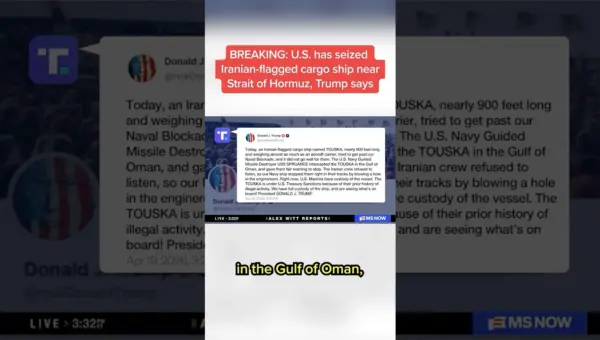
US Navy Seizes Iranian Ship Near Hormuz Strait
The U.S. Navy has seized an Iranian-flagged cargo ship near the critical Strait of Hormuz. Former President Donald Trump announced the interception on Truth Social, stating the vessel damaged its engine room while attempting to pass a blockade. The incident raises concerns about regional stability and global oil supply routes.
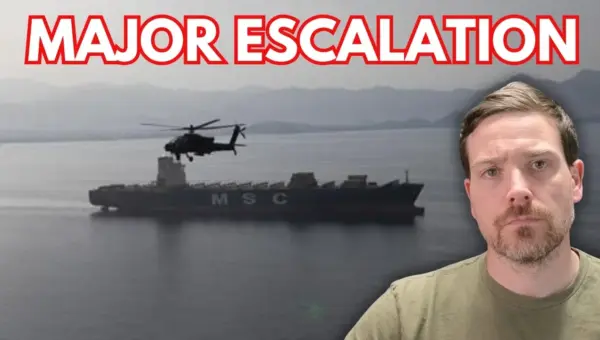
US Navy Seizes Iranian Ship, Igniting Tensions
The US Navy seized an Iranian cargo ship, the Tusca, in the Gulf of Oman, escalating tensions. This action occurred as peace talks seemed possible, but Iran's expected retaliation and the volatile situation in the Strait of Hormuz cast doubt on diplomatic progress.