Gulf States Face Dilemma Over Iran Attacks
Gulf states are facing a critical juncture as Iranian attacks deplete their defensive stockpiles and strain resources. Analysts suggest a potential shift towards direct involvement and coalition forces if the conflict prolongs, but internal risks and diplomatic sensitivities loom large.


Gulf Nations Grapple With Iranian Aggression Amidst Depleting Defenses
DUBAI, UAE – The ongoing missile campaign by Iran has placed the Gulf states in a precarious position, forcing them to confront the limits of their defensive capabilities and reconsider their strategic alliances. A recent press briefing with Emirati officials revealed that while the United Arab Emirates can sustain Iranian attacks for a period, a critical concern is the diminishing stock of crucial interceptor technology and equipment across the region. This depletion, exacerbated by complex and diverse global supply chains, raises serious questions about the long-term viability of current defense strategies, especially in light of the protracted conflict in Ukraine which has already strained Western munitions reserves.
Complex Air Defense Systems Strain Resources
The sophisticated, yet fragmented, nature of air defense systems employed by many Gulf monarchies presents a significant challenge. These systems are often sourced from various international suppliers, meaning that replenishing depleted stocks is not a simple matter of relying on a single production capacity, such as that of the United States. The UAE, for instance, utilizes a mix of defense technologies, including Russian and Israeli systems.
This multi-layered approach, while designed for comprehensive coverage, complicates maintenance and resupply efforts. The ongoing war in Ukraine has further compounded these issues, as a substantial portion of Western munitions has been diverted to support Ukraine’s defense efforts, making it difficult for Gulf nations to procure necessary replacements in a timely manner.
“Many of the Gulf monarchies operate interlayered air defense systems, and those have been sourced from various states. So we’re not just looking at say production capacity from the United States.
In the case of the UAE, for example, there are Russian systems that are used. There are also Israeli systems that are used.”
Strategic Reassessment: Direct Involvement Looms?
Megan Sudcliffe, a risk analyst, emphasizes the urgent need for Gulf states to fundamentally reassess their current strategy, particularly if the conflict with Iran extends beyond a few weeks. The current approach of relying solely on defensive measures may soon become untenable, potentially pushing these nations towards more direct involvement in the conflict.
Sudcliffe suggests that a coalition force comprising key Gulf monarchies – primarily Saudi Arabia, the UAE, and Qatar, given their robust air force capacities – could emerge. Kuwait and Bahrain might also join such a coalition, strengthening regional defense capabilities.
The possibility of Gulf states allowing the United States to conduct strikes against Iran from military bases within their territories, a move previously denied, cannot be ruled out. Such a development would signify a dramatic escalation and a deepening of security cooperation in the face of Iranian aggression.
Economic Fallout and Reputational Damage
The repercussions of the Iran conflict are already being felt acutely across the Gulf region. The economic toll has been substantial, impacting vital sectors such as trade, tourism, and energy. Key infrastructure, including data centers, has been targeted, leading to significant disruptions.
Maritime shipping has largely ground to a halt, and flight suspensions have further isolated the region. Beyond the immediate economic damage, the conflict has tarnished the Gulf’s long-held reputation as a bastion of stability, immune to the wider regional conflicts that have plagued the Middle East.
Internal Risks and Diplomatic Tightrope
However, any move towards direct military engagement with Iran carries significant internal risks for the Gulf countries. Launching attacks against Iran could invite retaliation within their own borders, potentially destabilizing domestic security.
Increased cooperation with the United States, especially in the context of the ongoing war in Gaza, could be perceived by their citizens as aligning with Israel, a move fraught with political peril and likely to face considerable public opposition. The presence of significant Shia communities within some Gulf states, who may oppose military action against Iran, adds another layer of complexity to this delicate balancing act.
The stakes are incredibly high for the Gulf nations. While they currently project an image of calm and publicly advocate for diplomacy and de-escalation, the situation remains fluid. A prolonged conflict or the potential collapse of the Iranian regime, leading to a power vacuum, could compel these states to dramatically alter their approach, moving from a defensive posture to more assertive actions.
Looking Ahead: Diplomacy or Direct Confrontation?
The coming weeks and months will be critical in determining the future trajectory of the Gulf states’ response to Iranian aggression. The international community will be watching closely to see if diplomatic channels can effectively de-escalate the tensions or if the depletion of defensive resources and the escalating economic and security threats will push these nations towards a more direct confrontation with Iran. The delicate balance between regional stability, internal politics, and international alliances will continue to shape the decisions made by leaders across the Gulf.
Source: How long will the Gulf States tolerate the Iranian attacks? | DW News (YouTube)

Related Articles


Markets Surge as Iran Reopens Strait of Hormuz
Markets surged as Iran announced the reopening of the Strait of Hormuz, leading to a significant drop in oil prices. While President Trump hailed the move as a step towards peace, conflicting reports emerge regarding Iran's commitment to suspending its nuclear program. Shipping companies remain cautious about transiting the Strait, citing unresolved safety and insurance concerns.

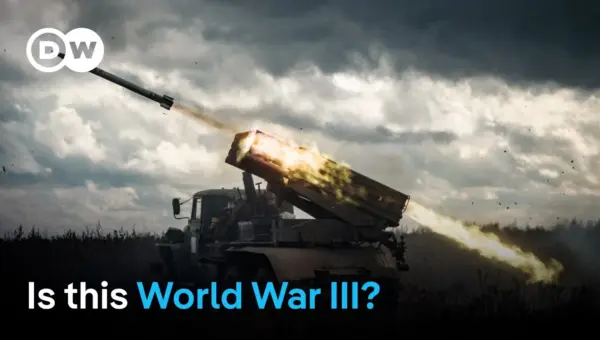
Experts Weigh In: Are Current Global Conflicts a World War?
International affairs experts largely agree that current global conflicts, including those in Ukraine and the Middle East, do not constitute a World War II. Instead, they liken the situation more to a Cold War scenario or a return to 19th-century great power politics. The analysis also highlights the importance of public opinion and democratic aspirations within nations.


Lebanon Ceasefire Holds, But Returnees Face Uncertainty
A U.S.-brokered ceasefire between Israel and Lebanon is holding, allowing some displaced Lebanese to return home. However, returnees face widespread devastation and lingering uncertainty due to the continued Israeli military presence and unresolved issues surrounding Hezbollah. Many fear the current truce is only a temporary pause in the conflict.