US Bombs Iran: Four Theories Drive Conflict
The U.S. military offensive against Iran, dubbed "Operation Epic Fury," has ignited debate over its true motives. Four key theories—involving Israeli strategic interests, countering China, benefiting the military-industrial complex, and establishing a global digital control grid—offer potential explanations beyond official statements. The conflict highlights shifts in geopolitical power, technological warfare, and the future of global finance.

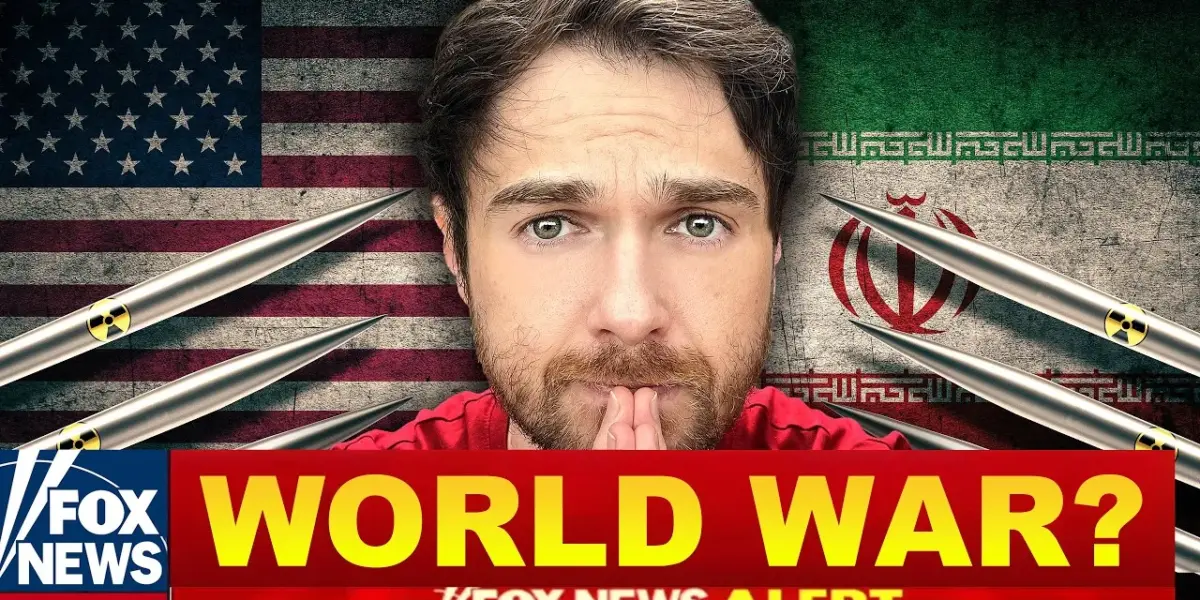
US Launches Operation Epic Fury Against Iran, Sparking Geopolitical Questions
In a dramatic escalation of international tensions, the United States, alongside its partners, has launched “Operation Epic Fury,” a significant military offensive against Iran. The operation, described as one of the largest and most complex offensives, marks a direct military engagement between the U.S. and a nation of 92 million people. This development follows Iran’s agreement to nuclear inspections on February 27th, and a subsequent U.S. Bombing campaign just one day later, raising critical questions about the underlying motives beyond the official narrative.
Official Explanations Under Scrutiny
The stated reasons for the U.S. military action have met with widespread confusion and skepticism. The administration has asserted that the operation is not a regime change war, despite the apparent ousting of the existing regime. While the Iranian nuclear program has been cited as the primary threat, the U.S. Itself claims to have neutralized this threat eight months prior through “Operation Midnight Hammer.” The assertion that Iran posed an imminent threat to the U.S. With the capability to produce nuclear weapons has also been contradicted by intelligence assessments, including those from the Senate Intelligence Committee, which reportedly found no evidence of such a threat.
Unpacking the Geopolitical Drivers: Four Key Theories
Amidst the official ambiguity, several compelling theories have emerged, suggesting a complex web of interests and long-term strategic planning. These theories point to four distinct power players and their potential motivations:
1. Israel’s Strategic Imperative
One prominent theory posits that Israel played a key role in compelling the U.S. To act. Evidence cited includes statements from U.S. Senator Marco Rubio, who indicated prior knowledge of Israeli actions that would precipitate attacks on American forces, leading to a preemptive U.S. Strike. A former CIA officer, John Keryaku, claims Israel presented the U.S. With an ultimatum: either the U.S. Bomb Iran’s nuclear facilities, or Israel would use its own advanced weaponry, potentially including nuclear weapons, to do so.
This alleged threat, if accurate, suggests Israel’s long-standing push for regime change in Iran, as articulated by Prime Minister Benjamin Netanyahu since the mid-1990s, may have reached a critical juncture. The narrative suggests that the U.S. Intervention was a preemptive measure to avert a potentially larger conflict, possibly involving nuclear escalation.
2. Countering China’s Rise
A second theory centers on the U.S. Objective to destabilize China’s economic ascent. This perspective aligns with the “Don Row doctrine,” a concept analogous to the Monroe Doctrine but framed by Donald Trump’s foreign policy approach. By disrupting China’s access to vital resources like cheap oil from Iran and silver from Latin America, the U.S. Aims to gain leverage.
The Strait of Hormuz, a critical chokepoint through which approximately a quarter of the world’s oil supply transits, has been significantly impacted, with traffic reportedly down 70% and insurance suspensions halting oil shipments. This disruption is expected to drive oil prices higher, potentially exceeding $100 per barrel, with a projected 10-30 cent increase in gasoline prices in the short term.
This scenario benefits U.S. Oil corporations and strengthens the U.S. dollar, as oil is priced in dollars, thus increasing global demand for the currency. This theory is supported by predictions made as early as 2013 by Russian politicians, who foresaw a plan to strike Iran to weaken both China and the European Union through soaring oil prices.
3. Benefiting the Military-Industrial and Financial Complexes
A third theory attributes the conflict to the influence of the financial and military-industrial complexes. Analysis of top donors to political campaigns reveals individuals and entities with significant stakes in defense, energy, and finance. Figures like Timothy Mellon (banking and transportation), Elon Musk (aerospace and AI), Miriam Adelson (pro-Israel advocacy), and Kelsey Warren (energy infrastructure) represent a confluence of interests that stand to gain from increased military spending and higher energy prices.
Paul Singer, a prominent hedge fund manager, has substantial investments in defense and energy indices that saw immediate gains following the strikes. This perspective suggests the military operation served as a large-scale product demonstration for advanced weaponry, creating demand for U.S. Defense technology globally and boosting stock values. The conflict, in this view, is a profitable venture for interconnected corporate and financial interests.
4. The Digital Control Grid and Technological Dominance
The most complex theory posits that the conflict is driven by the technological industrial complex’s pursuit of a global digital control grid. A striking development highlighted is the U.S. military’s use of Anthropic’s AI, Claude, in planning the strikes, even as the company refused to grant unrestricted access to its technology. This occurred shortly before an executive order banning federal agencies from using Anthropic’s technology, labeling the U.S. Company a national security risk.
Simultaneously, OpenAI, a competitor, secured a deal with the Pentagon. This suggests a strong incentive for AI companies to align with U.S. military objectives.
The targeting of Amazon Web Services (AWS) data centers in the UAE and Bahrain by Iran during its retaliation is seen as a significant escalation, marking the first time commercial data centers have been physically targeted. This event signifies the collision of digital and physical warfare, potentially ushering in a time of “techno-feudal wars.”
The Grand Theory: A Global Financial Control Grid
Connecting these threads, former Assistant Secretary of Housing under George H.W. Bush, Katherine Austin Fitz, proposes a grand theory centered on the construction of a global financial control grid. This grid comprises three elements: programmable money (digital currency with built-in rules and restrictions), a digital identity system (likely incorporating biometrics), and the necessary physical infrastructure (data centers, satellites, etc.).
Iran’s position outside the Western financial system and its engagement in non-dollar oil trade with China are seen as direct challenges to this emerging grid. This aligns with a 2007 Pentagon memo, revealed by former NATO Supreme Commander General Wesley Clark, which listed seven countries—Iraq, Syria, Lebanon, Libya, Somalia, Sudan, and Iran—targeted for “take down” within five years. Iran was the final country on this list, suggesting a long-term strategic objective.
Market Implications and Investor Considerations
The ongoing conflict and its underlying drivers have significant implications for investors. The potential for sustained higher oil prices presents opportunities for energy sector investments but also inflationary risks for consumers and broader economic headwinds. The emphasis on technological control and AI in warfare suggests a growing importance for companies involved in defense technology, cybersecurity, and AI development.
The push towards programmable money and tokenized assets, as advocated by figures like Larry Fink of BlackRock, indicates a fundamental shift in financial markets. Investors should monitor legislative developments, such as the “Genius Act” and “Clarity Act,” which lay the groundwork for stablecoins and tokenized financial assets, potentially reshaping the future of finance and the role of the U.S. dollar.
The conflict in Iran, viewed through these multiple lenses, appears to be more than a regional dispute. It may represent a critical juncture in global power dynamics, the evolution of warfare, and the establishment of a new global financial architecture.
Source: Iran, The Last Domino In The New World Order (YouTube)

Related Articles
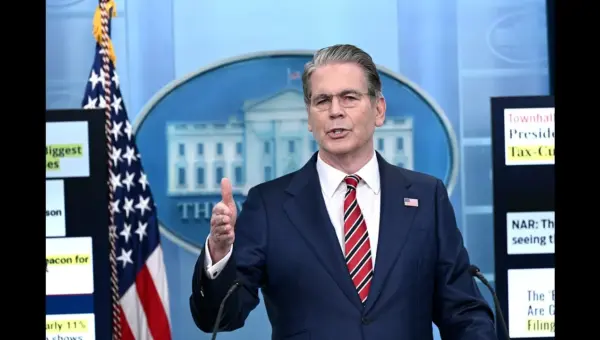
US Threatens China Banks Over Iran Business Deal
The US is warning Chinese banks against doing business with Iran, threatening "secondary sanctions" if Iranian money flows through their accounts. This move is part of the US "maximum pressure" campaign on Tehran. The strategy aims to isolate Iran economically, with China's oil purchases previously serving as a key lifeline.
Japan Ships Warship Through Taiwan Strait, Eyes Global Arms Market
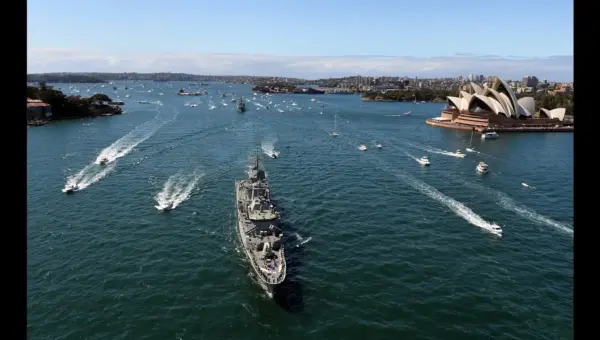
Japan is taking a more assertive defense role, relaxing weapons export rules and sending a warship through the Taiwan Strait. This marks a significant shift from its post-WWII pacifist stance and could reshape regional security dynamics, especially with potential deals like the one with Australia.
Trump Claims Strait Open, But Was It Ever Closed?
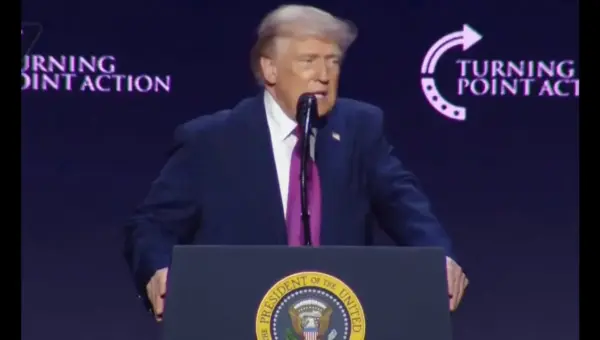
Donald Trump declared the Strait of Hormuz open, but critics question the actual gains given the conflict's cost. Reports from Iran contradict key claims, suggesting the strait may not have been fully closed. This situation raises concerns about accountability and the true impact of foreign policy decisions.