Iran FM: US War Aims Failed, No Ceasefire Talks
Iran's Foreign Minister declared the U.S. war aims have failed and ruled out ceasefire talks, citing past U.S. aggression during negotiations. He asserted Iran's ability to resist as its form of victory and confirmed readiness for a potential U.S. ground invasion.

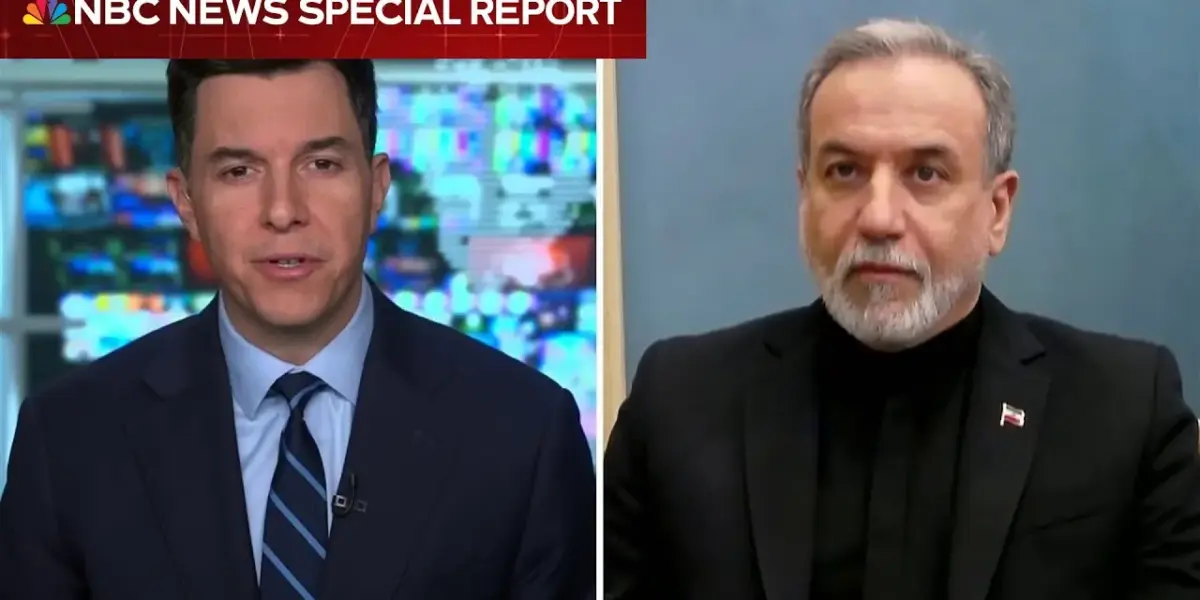
Iran’s Foreign Minister Speaks Out on US Conflict
In an exclusive interview from Tehran, Iran’s Foreign Minister addressed the escalating conflict with the United States, asserting that the U.S. has failed to achieve its primary objectives and ruling out any immediate negotiations or a ceasefire. The interview, conducted moments before the broadcast, delved into Iran’s response to recent attacks, the internal political situation following the death of its Supreme Leader, and the broader implications for regional stability.
Leadership Transition Amidst Conflict
Following the reported death of Iran’s Supreme Leader, questions arose regarding the country’s leadership. The Foreign Minister assured that the Iranian system remains operational, with a council now handling the Supreme Leader’s duties as per the constitution. While acknowledging the process to select a new Supreme Leader is underway, he downplayed rumors about specific front-runners, stating that the Assembly of Experts will make the final decision.
“The system is working very well. We have lost our Supreme Leader, but according to our constitution, there is now a council which takes charge of his duties, and then the cabinet, the ministers, everybody is in position. So the system is working very well, and everybody is in charge.”
Naval Incident and U.S. Military Claims
Addressing the sinking of an Iranian naval training ship in the Indian Ocean, the Foreign Minister condemned the act as a “war crime,” emphasizing that the vessel was unarmed and on a training exercise invited by the Indian Navy. He stated, “Attacking an unarmed, full of, you know, training officers and sailors is, you know, a war crime, I have to say.” He countered U.S. Claims of military superiority and a significant reduction in Iranian missile attacks, asserting that the U.S. has failed to achieve a “clean, rapid victory.” The Minister highlighted that Iran has also targeted U.S. Assets and bases in the region, and its missiles remain operational and precise.
“Winning” Amidst Adversity
When asked about the possibility of Iran winning the war, the Foreign Minister offered a nuanced perspective. “There is no winner in this war,” he stated. “Our win is to be able to resist against…
To stand against the most powerful army, as they claim, together with Israelis… This is our win.” He elaborated that Iran’s ability to resist and prevent attacks on Israel and other destinations, despite facing a formidable military alliance, constitutes their victory.
Targeting and Collateral Damage
The Foreign Minister clarified Iran’s position on its attacks, stating that Iran has not attacked its neighbors or Muslim countries directly. Instead, he asserted, “We have attacked American’s targets and American bases, American installations, which are unfortunately located in the soils of our neighbors.” He explained that warnings were issued to neighboring countries about potential collateral damage, drawing a parallel to the extensive civilian casualties in Gaza, which Israel has termed collateral damage.
“We have attacked American’s targets and American bases, American installations, which are unfortunately located in the soils of our neighbors. So we have made it clear for them… We are only targeting the American speculations and American bases.”
Rejection of Ceasefire and Negotiations
Iran has firmly rejected any calls for a ceasefire or negotiations with the United States at this juncture. The Foreign Minister explained that previous negotiations were twice interrupted by U.S. Attacks, eroding trust.
“We are not asking for a ceasefire. And we don’t see any reason why we should negotiate with the U.S. When we negotiated with them twice, and every time they attacked us at the middle of negotiations.” He confirmed there have been no recent back-channel communications with U.S. officials.
Strait of Hormuz and Potential Threats
Regarding the Strait of Hormuz, a critical chokepoint for global oil trade, the Foreign Minister denied any current intention to close it. He noted that the decrease in shipping traffic is due to concerns from tankers themselves about potential attacks from either side. However, he added, “As the war continues, we will consider every scenario.” He also refuted claims that Iran has threatened oil tankers, attributing the reduced traffic to the vessels’ own security concerns.
Readiness for Ground Invasion
When questioned about the possibility of a U.S. Ground invasion, the Foreign Minister expressed confidence in Iran’s preparedness. “No, we are waiting for them,” he stated, indicating a readiness to confront U.S. Ground troops, which he believes would result in a “big disaster for them.” He emphasized that Iran has learned from past conflicts and has upgraded its military capabilities, including its missile technology, preparing for any eventuality, including a ground invasion.
Allies’ Support
On the role of allies, the Foreign Minister acknowledged political and other forms of support from Russia and China. He confirmed military cooperation with Russia, stating, “Military cooperation between Iran and Russia is not a secret… And that has continued.” He declined to provide specific details of military assistance during wartime but indicated ongoing support.
Regional Reactions and U.S. Military Perspective
International reactions highlighted skepticism regarding Iran’s claims of targeting only military assets. The Prime Minister of Qatar reportedly rejected Iran’s assertions, pointing to attacks on civilian infrastructure like airports. China’s Foreign Minister, while condemning U.S. and Israeli actions, urged Iran to consider the legitimate concerns of neighboring countries.
From a U.S. military perspective, the readiness for ground troops and the implications for regime change and Iran’s nuclear program remain key areas of focus. The potential impact on global commerce due to disruptions in the Strait of Hormuz was also emphasized.
Uncertainty of Conflict’s End
The interview underscored the deep-seated mistrust between Iran and the U.S., making a negotiated solution appear distant. With Iran’s stated goal of survival and continued resistance, and the U.S. military aiming to degrade Iran’s capabilities, the conflict’s trajectory remains uncertain. The possibility of a prolonged and bloodier war, potentially involving U.S. Ground troops, looms, making clarity on U.S. Objectives from President Trump crucial for understanding the path forward.
Source: Special Report: NBC News exclusive interview with Iran’s foreign minister on war with U.S. (YouTube)

Related Articles


Trump’s Erratic Behavior Fuels Global Unease, Domestic Doubts
Donald Trump's recent public statements and actions are causing significant concern among world leaders and raising questions at home. His frequent outbursts on Truth Social, particularly regarding international affairs, suggest a leader under immense pressure. These displays often come across as desperate attempts to project strength while privately facing considerable challenges.


Trump Threatens Iran: “Blow Up Every Power Plant”
President Trump has issued a stark warning to Iran, threatening to "blow up every power plant and bridge" if a deal is not signed amid a naval blockade. This comes as U.S. forces intercepted an Iranian cargo ship, escalating regional tensions. Despite this, a strong earnings outlook for the oil sector provides a contrasting positive economic signal.


Middle East Tensions Rise Amid New Seizure of Iranian Ship
Tensions between the U.S. and Iran escalated with the seizure of an Iranian-flagged ship, complicating ongoing ceasefire negotiations. Meanwhile, Pope Francis's criticism of war has led to a public clash with President Trump, as U.S. polls show low approval ratings for the President amid economic concerns. Elsewhere, a tragic mass shooting in Shreveport, Louisiana, claimed the lives of eight children, while a dramatic weather shift brought unseasonal cold to the East Coast.