Congress Sidesteps War Powers: A Constitutional Crisis Unfolds
The Senate's recent vote against a War Powers Resolution to block military action against Iran has reignited debate over Congress's constitutional authority. While some defend the executive's actions, critics argue it undermines democratic oversight and risks prolonged, undeclared wars.

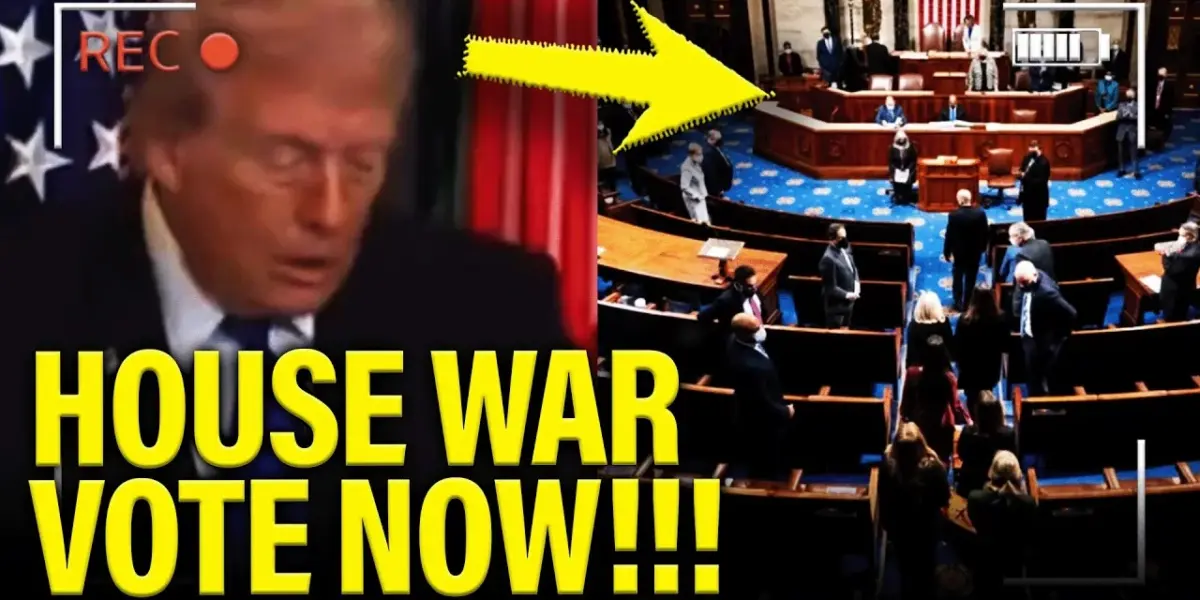
Congress Sidesteps War Powers: A Constitutional Crisis Unfolds
In a move that has ignited fierce debate and raised profound questions about the balance of power in American governance, the United States Senate recently voted against a crucial War Powers Resolution. This resolution aimed to block what critics are calling an “unlawful war” initiated by the executive branch. The vote, which saw 47 in favor and 53 against, underscored a deep partisan divide, with notable exceptions that highlight the complex political landscape surrounding military action.
Senate Vote Reveals Deep Divisions
The Senate’s decision not to advance the War Powers Resolution is a significant development. While the majority of Republicans, often labeled “MAGA Republicans,” voted against it, the coalition also included Democratic Senator John Fetterman of Pennsylvania.
Conversely, Republican Senator Rand Paul joined Democrats in supporting the resolution. This cross-party alignment on both sides of the vote illustrates that the issue transcends simple party affiliation, touching on core constitutional principles and foreign policy stances.
The resolution’s failure in the Senate means the debate now shifts to the House of Representatives, where a vote is expected. Proponents argue that even with the Senate’s rejection, the House vote remains critical to gauge the full extent of congressional sentiment on the ongoing military engagement. The core argument against the engagement centers on its alleged unpopularity and the constitutional mandate that only Congress, not the executive branch, possesses the power to declare war.
Historical Context: A War Powers Quandary
The War Powers Resolution of 1973 was enacted in the shadow of the Vietnam War, intended to reassert congressional authority over the decision to commit U.S. troops to prolonged armed conflict. It stipulates that a president can only introduce U.S. Armed forces into hostilities under specific conditions: a declaration of war, specific statutory authorization, or a national emergency created by an attack upon the United States. The current situation, critics argue, fails to meet any of these criteria.
The debate echoes historical precedents, notably the lead-up to the Iraq War. While the Iraq War began with a significant majority public approval rating (around 70%), the current conflict reportedly started with a much lower approval of 41%.
This stark contrast is being used by opponents to argue that the current military action lacks broad public backing, further emphasizing the need for congressional oversight. The argument that it is “unpatriotic” to oppose a war once it has begun, as articulated by some senators, is a tactic that draws parallels to past justifications for prolonged military engagements.
Arguments Against the War Powers Resolution
Opponents of the resolution, including many MAGA Republicans and some Democrats, argue that blocking the president’s actions would send the wrong message to adversaries like Iran and undermine U.S. forces. Senator Susan Collins, facing reelection, stated that passing the resolution would “send the wrong message to Iran and to our troops” and stressed the importance of “unequivocal support to our service members.” House Speaker Mike Johnson echoed this sentiment, asserting that the resolution would “empower our enemies” and “kneecap our own forces.” He also suggested that the American people support the administration’s actions and would reward them politically.
Some argue that the term “war” itself is being misapplied. Representative Mike Flood, for instance, described the situation as a “significant military operation” rather than a war.
This semantic distinction appears to be a strategy to downplay the gravity of the situation and sidestep the constitutional implications of a declared war. The potential for substantial funding requests, potentially upwards of $50 billion for supplemental assistance, also looms, with critics questioning why such funds cannot be allocated to domestic priorities like healthcare or housing.
Arguments For Congressional Authority
Conversely, a significant bloc of lawmakers, primarily Democrats, along with a few Republicans like Rand Paul and Thomas Massie, are vehemently defending Congress’s constitutional role. They argue that the executive branch is overstepping its bounds and that the lack of a clear mission, defined objectives, or even a consistent rationale for the engagement is deeply concerning. Representative Joaquin Castro highlighted the lack of a clear plan, stating, “This is Donald Trump’s war.
This is Benjamin Netanyahu’s war. Your vote today will determine whether this is your war too.”
Representative Jim McGovern drew parallels to the Iraq War, criticizing the shifting justifications for the military action – from imminent threat to regime change to nuclear weapons – as a form of “gaslighting.” He emphasized that the vote is not about supporting the Iranian regime but about upholding constitutional principles. Thomas Massie pointed out that the conditions for introducing U.S. forces under the War Powers Resolution are not met, as there has been no declaration of war, specific statutory authorization, or a national emergency created by an attack on the U.S. he further questioned the long-term consequences, including the potential for radicalizing new generations of terrorists and exacerbating refugee crises.
The argument that the executive branch has eroded Congress’s war powers over time is a recurring theme. As Representative Jamie Raskin stated, allowing presidents to plunge the nation into war and then declare congressional debate too late “destroys our power to declare war.” He argued that the framers intended for such momentous decisions to be deliberated by the representatives of the people, not by a single individual driven by “deception, conceit, plunder, imperial avarice, fantasy.” The sentiment is that regardless of one’s policy stance on the conflict, the process itself—the debate and vote by Congress—is paramount to preserving the constitutional order.
Why This Matters
The ongoing debate over the War Powers Resolution is not merely an academic exercise in constitutional law; it directly impacts the lives of American service members, the nation’s foreign policy, and the fundamental balance of power within the U.S. government. The executive branch’s increasing reliance on its own authority to engage in military actions, often with ambiguous justifications and without explicit congressional approval, risks creating a perpetual state of undeclared war. This not only stretches military resources and human lives thin but also bypasses the democratic process intended to hold the nation’s most critical decisions accountable to the people’s representatives.
Implications, Trends, and Future Outlook
The trend towards executive overreach in matters of war has been evident for decades, with presidents from both parties expanding the scope of their war-making powers. The current situation highlights the fragility of Congress’s constitutional role.
If Congress continues to cede its war-making authority, future administrations may face fewer constraints, potentially leading to more prolonged and less scrutinized military interventions. The reliance on vague justifications like “imminent threats” or “geopolitical opportunities” rather than clear, constitutionally sound reasoning sets a dangerous precedent.
The future outlook hinges on whether Congress can collectively reassert its constitutional duty. The divisions within both parties suggest that this will be an uphill battle. However, the persistent arguments from lawmakers like Rand Paul, Thomas Massie, Joaquin Castro, and Jamie Raskin demonstrate a commitment to upholding the separation of powers.
The challenge lies in translating this commitment into concrete legislative action that can withstand political pressures and executive maneuvering. The potential for significant financial appropriations for the conflict will also be a crucial battleground, forcing lawmakers to confront the direct costs of military engagement versus domestic needs.
A Constitutional Crossroads
The recent votes in the Senate and the upcoming debate in the House represent a critical juncture for American democracy. The core question is whether Congress will fulfill its constitutional obligation to deliberate and decide on matters of war, or whether it will continue to allow the executive branch to unilaterally commit the nation to potentially protracted and costly military conflicts.
The arguments presented by both sides reveal a deep ideological divide, but at its heart, the debate is about preserving the constitutional framework that has guided the nation for over two centuries. The outcome of these votes will have lasting implications for the future of American foreign policy and the balance of power between the legislative and executive branches.
Source: Trump GOES PSYCHO over House WAR VOTE!! (YouTube)

Related Articles

China’s Stealth Radar Fuels Iran’s Air Defense Threat
Reports suggest China may be supplying Iran with advanced radar systems designed to detect US stealth aircraft. This potential transfer, if confirmed, escalates regional tensions and challenges existing air defense assumptions. The situation unfolds amidst ongoing US naval operations and a recent ceasefire in the region.
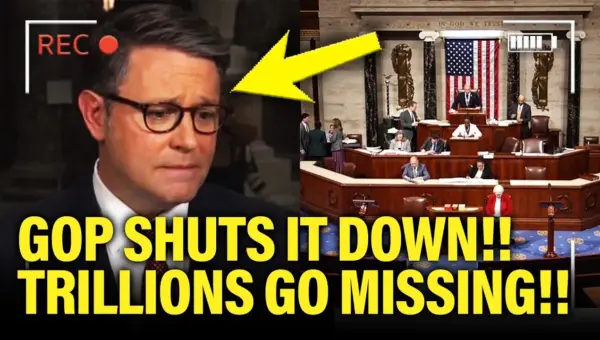
House Speaker Blocks Iran War Vote, Budget Chaos Ensues
House Speaker Mike Johnson blocked a vote on a war powers resolution concerning Iran, drawing criticism for limiting congressional oversight. The debate highlights a lack of transparency in war spending, with officials unable to provide clear cost estimates. This, alongside ongoing budget disputes and concerns over surveillance, signals a challenging period for fiscal responsibility and democratic checks and balances.
Tax Cuts vs. High Prices: Voters Feel the Pinch
Americans are feeling the economic pinch, with rising prices overshadowing tax cuts. While some indicators look good on paper, public sentiment suggests a deep dissatisfaction with the economy. Meanwhile, scandals and perceived ineffectiveness continue to plague Congress, further eroding public trust.