House Speaker Blocks Iran War Vote, Budget Chaos Ensues
House Speaker Mike Johnson blocked a vote on a war powers resolution concerning Iran, drawing criticism for limiting congressional oversight. The debate highlights a lack of transparency in war spending, with officials unable to provide clear cost estimates. This, alongside ongoing budget disputes and concerns over surveillance, signals a challenging period for fiscal responsibility and democratic checks and balances.

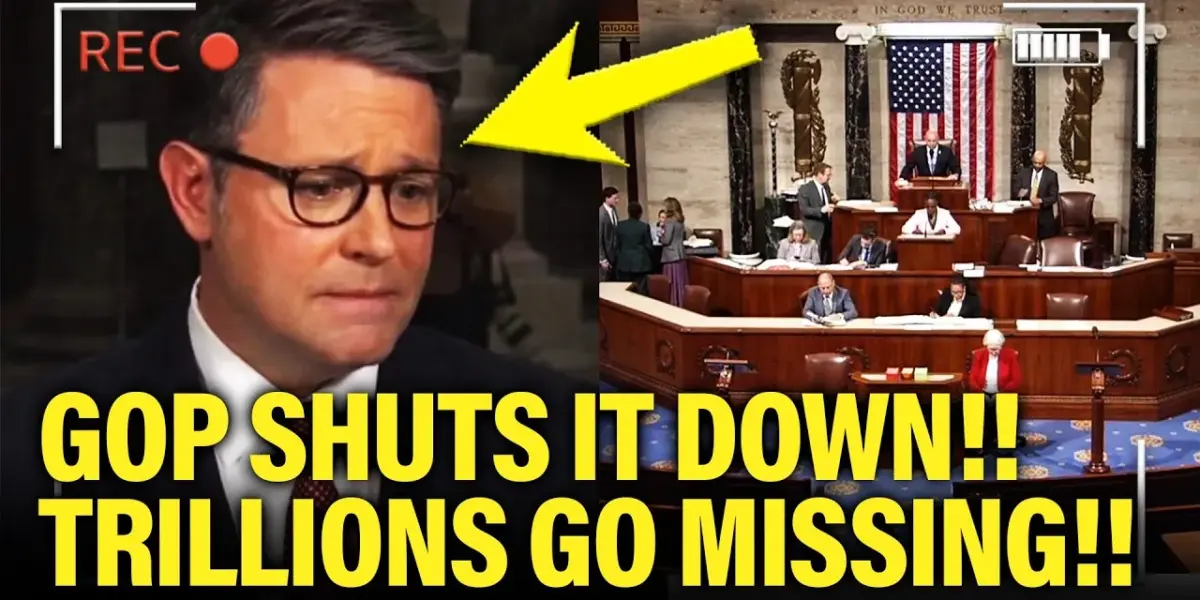
House Speaker Blocks Iran War Vote, Budget Chaos Ensues
House Speaker Mike Johnson recently blocked a vote on a war powers resolution. This resolution aimed to prevent President Trump from using military force against Iran without Congress’s approval.
Democrats largely supported the measure, seeking to reclaim Congress’s constitutional power over declaring war and controlling military funding. Johnson’s decision to shut down the vote has drawn criticism from those who believe Congress should have a say in military actions abroad.
The debate over military action in Iran highlights a larger issue: the lack of transparency regarding war spending. When questioned, the Director of the Office of Management and Budget, Russ Vought, could not provide clear figures on how much money has been spent on operations in Iran. This vagueness extends to proposed future spending, with requests for significant new defense budgets that do not clearly account for ongoing conflicts.
Uncertainty Over War Costs
During testimony, Senator Patty Murray questioned Director Vought about the cost of the war in Iran. Vought was unable to give even an estimated range, stating that the figures are constantly changing. This lack of clear accounting for war expenses is concerning, especially when considering requests for trillions of dollars in future defense spending.
“We don’t have that figures right now,” Vought stated when asked about the war’s cost. “Um, I think in part because it’s fluctuating on a day to day basis.”
This uncertainty about war costs raises questions about accountability. If the executive branch cannot track how much is being spent, it becomes difficult for Congress and the public to understand the true financial burden of military engagements. This is particularly relevant as the administration seeks massive increases in defense budgets.
Budgetary Battles and Government Shutdowns
The transcript also touches upon a partial government shutdown, with differing explanations from both sides. Speaker Johnson blamed Democrats for playing political games and refusing to fund the Department of Homeland Security. He argued that Democrats were unwilling to fund border security and immigration enforcement, issues he deemed critical.
Conversely, the perspective presented suggests Democrats offered funding for these areas but sought concessions on issues like the use of force and the conduct of border patrol agents. The disagreement highlights a broader struggle over funding priorities and the executive branch’s authority. These budgetary disputes can lead to disruptions in government services and uncertainty for federal employees.
Concerns Over Surveillance and Civil Liberties
Adding to the legislative turmoil, a vote to reauthorize Section 702 of the Foreign Intelligence Surveillance Act (FISA) also faced internal party conflict. Speaker Johnson’s push for a five-year extension was met with resistance from within his own party, who viewed the surveillance powers as an invasion of privacy. This internal division led to the failure of the reauthorization vote, causing further disruption in the House.
The debate around FISA Section 702 reflects ongoing tensions between national security needs and individual privacy rights. Critics argue that broad surveillance powers can be misused, while proponents emphasize their importance in preventing threats. The inability to pass a reauthorization highlights the difficulty in finding consensus on these complex issues.
Impact on Service Members and Foreign Aid
Beyond the political maneuvering, the transcript points to the real-world consequences of these funding decisions. Reports indicate that military packages for service members in the Middle East are in limbo due to the Iran war’s impact on postal services. This has led to low morale among troops, with complaints about poor food quality and small portions.
Discussions touched upon cuts to U.S. foreign aid, with concerns raised about the impact on humanitarian efforts. One exchange highlighted the potential consequences of reduced aid, particularly in the context of global health crises. The administration’s budget priorities, including significant defense spending increases alongside cuts elsewhere, are a subject of intense debate.
Why This Matters
The events described in this transcript are significant because they illustrate a breakdown in the checks and balances designed to govern military action and fiscal responsibility. Congress’s constitutional role in authorizing war and controlling the nation’s purse strings appears to be under strain. The inability to get clear answers on war spending, coupled with legislative gridlock, raises concerns about democratic oversight.
This situation impacts taxpayers, service members, and international relations. When the cost of war is unclear and congressional oversight is bypassed, it can lead to unchecked military expansion and financial strain. The focus on large defense budgets while basic needs and even military welfare are questioned suggests a problematic allocation of resources.
Implications and Future Outlook
The blocking of the war powers resolution and the ongoing budget battles suggest a challenging path forward for congressional oversight of foreign policy and national security. The reliance on executive authority for military action and the lack of transparency in spending could set precedents for future conflicts.
Moving forward, the ability of Congress to assert its constitutional powers, particularly regarding war declarations and budget control, will be crucial. The public’s awareness of these issues and demands for accountability will play a role in shaping future policy decisions. The outcome of these debates will influence how the U.S. engages in foreign conflicts and manages its national finances.
Historical Context
The War Powers Resolution of 1973 was enacted after the Vietnam War to limit the president’s ability to commit U.S. armed forces to hostilities without congressional consent. It requires the president to notify Congress within 48 hours of committing armed forces to military action and limits the duration of any deployment without congressional approval. The current debate over the Iran conflict reflects a recurring tension between presidential power and congressional authority that has existed since the resolution’s passage.
The issue of government shutdowns due to budget disagreements is also a recurring feature of American politics. These shutdowns often stem from deep partisan divides over spending priorities, with significant consequences for government operations and public services. The current situation echoes past instances where funding disputes have led to prolonged government closures.
Looking Ahead
The next steps will likely involve continued debate and potential votes on foreign aid, defense spending, and oversight of executive actions. The effectiveness of Congress in asserting its constitutional powers will be tested in these upcoming legislative battles.
Source: MAGA Mike SHUTS DOWN Vote as Trump LOSES TRILLIONS?!!! (YouTube)

Related Articles
Mayor Slams Iran War’s Economic Pain on New Yorkers
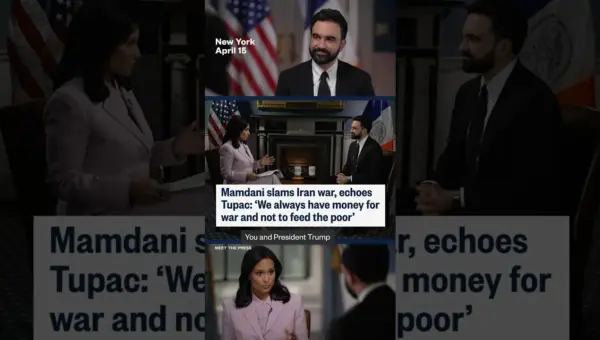
New York City Mayor Eric Adams is criticizing the war in Iran for worsening the city's cost of living crisis. He highlighted the massive government spending on the conflict contrasts sharply with a lack of investment in working-class Americans. Adams echoed Tupac Shakur's sentiment that there's always money for war but not to feed the poor.


Mayor Slams Iran War Costs, Cites Tupac’s Plea for the Poor
New York City's mayor has sharply criticized the economic fallout from the Iran conflict, stating it worsens an existing cost of living crisis. He echoed Tupac Shakur's plea, "We always have money for war and not to feed the poor," questioning billions spent overseas while domestic needs go unmet. The mayor is exploring relief measures for New Yorkers facing high energy costs due to the war.


Record Heat, Severe Storms Slam Millions in US
Millions of Americans are facing record-breaking heat waves, while the Midwest battles severe storms, flooding, and tornadoes. Meanwhile, the war in Iran continues to draw international pressure for an exit strategy, and Wall Street experiences a historic surge despite economic uncertainties. In entertainment, a jury ruled against Live Nation and Ticketmaster for monopolistic practices, and the use of AI in Hollywood sparks controversy with a new film featuring an AI version of Val Kilmer.