Newsom: Trump’s Epstein Files Hold Damning Secrets
California Governor Gavin Newsom alleges that Donald Trump is actively suppressing damaging information within the unreleased Epstein files. Newsom criticizes political maneuvering around the scandal and raises concerns about Trump's foreign policy and election integrity efforts.

Newsom: Trump’s Epstein Files Hold Damning Secrets
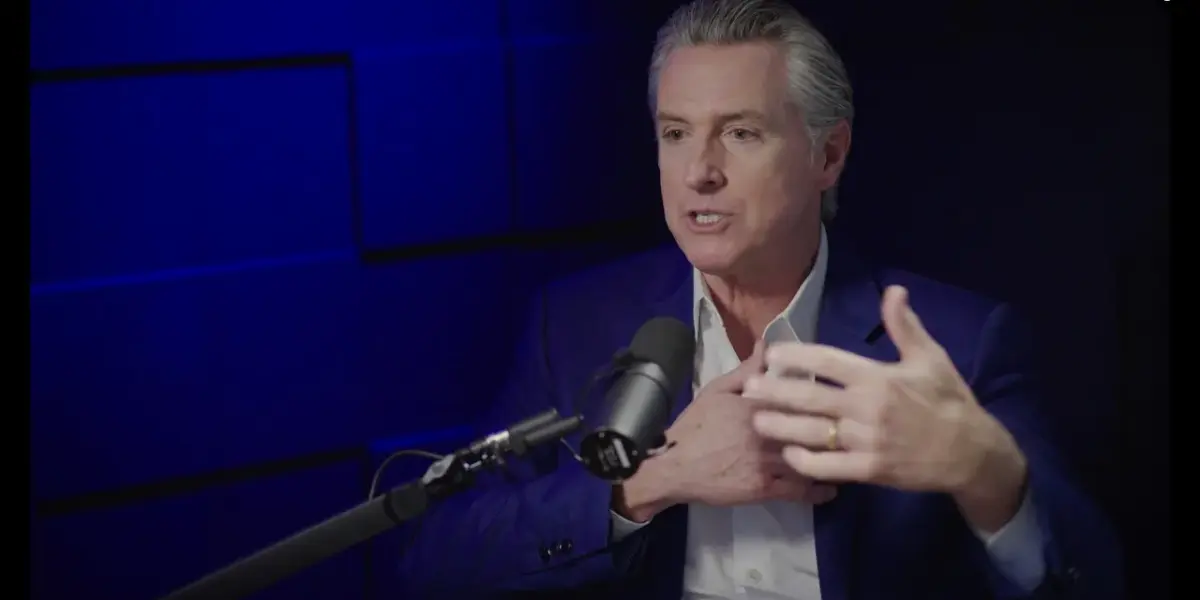
In a recent interview, California Governor Gavin Newsom didn’t hold back when discussing the ongoing fallout from the Jeffrey Epstein scandal and its potential implications for former President Donald Trump. Newsom asserted that Trump has gone to extreme lengths to prevent the release of documents related to the Epstein case, suggesting that these files contain deeply incriminating information about the former president himself.
The conversation, which touched upon everything from extraterrestrial encounters to the complexities of Middle Eastern foreign policy, zeroed in on the Department of Justice’s handling of the Epstein investigation. Newsom was particularly critical of House Oversight Committee Chairman James Comer’s decision to summon the Clintons to testify, arguing that it was a politically motivated move designed to deflect attention from Trump.
Comer’s Oversight: A Political Ploy?
“What’s good for the goose by definition,” Newsom stated, implying that if the Clintons were called to testify, Trump, who appears more frequently in the Epstein files, should face similar scrutiny. Newsom characterized Comer’s actions as a “mistake,” suggesting that the chairman was “doing his bidding” and acting as an “activist in the cause of protecting Trump and Trumpism and the MAGA movement.” He further elaborated that Comer’s focus on the Clintons was an attempt to “embarrass the Clintons” and frame the issue within a partisan political dynamic, thereby shifting the spotlight away from Trump.
Newsom’s analysis suggested that this strategy was not only politically motivated but also poorly executed. “He’s just so bad at it. That’s the difference here,” Newsom remarked, indicating a belief that Comer’s efforts were transparently aimed at protecting Trump and were ultimately ineffective.
The Epstein Files: What’s Trump Hiding?
The core of Newsom’s argument revolved around the suspected contents of the unreleased Epstein files. He posited that Trump’s fervent efforts to suppress these documents stem from their direct implication of him. “By definition, there are things in there that imply that he is part of the problem.
Something big is in those files. Period. Full stop.
It’s not complicated. This is not it’s there’s no other rational conclusion,” Newsom declared.
He elaborated on the idea that Trump’s primary concern is always himself, even when it involves other associates or business partners. “At the end of the day, it’s always about him.
So, there’s something in the files that implicate him in a profound and outsized way because Trump can absorb a lot and figures he can shape shift, change the conversation, shock and awe, move to, you know, advance a different agenda and then move the the media focus elsewhere. But even he recognizes whatever is in there is so immovable in terms of the impact and damage it would do to him that he cannot allow it to be made public.”
Newsom also addressed a statement attributed to Marjorie Taylor Greene, where Trump allegedly claimed his “friends would get hurt” if the files were released. Newsom expressed skepticism about Trump acting altruistically, suggesting that any perceived protection of others would likely be tied to an economic interest or a way to mitigate personal damage.
“He’ll he’ll lay anyone out, he’ll he’ll run anyone over but if there’s an economic benefit of not doing it uh if there’s some residual damage that could incur from it. Uh he won’t,” Newsom explained.
Beyond Epstein: Foreign Policy and Election Integrity
The conversation then shifted to broader geopolitical and domestic concerns. Newsom drew parallels between the Bush administration’s justifications for the Iraq War and what he perceives as Trump’s impulsive foreign policy decisions, particularly in the Middle East. He criticized Trump’s lack of a clear rationale for military actions, contrasting it with even the Bush administration’s attempts to build a coalition and a narrative, however flawed.
A significant portion of the discussion focused on concerns about election integrity and Trump’s alleged attempts to undermine democratic processes. Newsom detailed efforts he believes Trump is making to consolidate power and potentially interfere with future elections, citing a Washington Post report about a memo detailing “extraordinary presidential powers over voting.” Newsom stated, “He tries to exercise these emergency powers so he can have more authoritarian opportunities to assert himself without any oversight and without any rational engagement with the co-equal branch of government.”
Newsom outlined his office’s proactive measures, including litigation and leveraging “moral authority,” to counter these perceived threats. He emphasized the urgency of the situation, framing the upcoming elections as critical for the survival of the republic and democracy.
Media Consolidation and Industry Concerns
The interview also touched upon the proposed merger between Paramount and Warner Brothers Discovery, raising concerns about media consolidation and its potential impact on news coverage. Newsom expressed apprehension about the Ellison family, described as pro-Trump, potentially gaining more control over major news outlets like CNN. He noted a “chill” already felt within news organizations and worried about this consolidation leading to further suppression of free speech and biased reporting.
On a local level, Newsom discussed the challenges facing the entertainment industry in Los Angeles. While acknowledging the importance of state tax credits, he stressed the need for streamlining local permitting processes and advocating for scripts that are “placebased” to bring productions back to the region. He highlighted the bureaucratic hurdles and jurisdictional complexities that hinder the industry’s recovery.
Why This Matters
Governor Newsom’s remarks provide a stark assessment of the current political landscape, particularly concerning Donald Trump’s alleged involvement in the Epstein scandal and his broader political conduct. The assertion that Trump is actively suppressing information that could be profoundly damaging to his reputation and legal standing is a significant claim. It suggests a level of desperation and self-preservation that Newsom believes is central to Trump’s character and actions.
The discussion about foreign policy impulsivity and election integrity raises critical questions about the stability of democratic institutions and the nation’s role in global affairs. Newsom’s critique of Trump’s approach to both international conflict and domestic governance paints a picture of a leader whose actions are driven by personal ambition rather than established norms or the public good. The potential for media consolidation under politically aligned ownership adds another layer of concern, suggesting a future where the flow of information could be further manipulated.
Implications, Trends, and Future Outlook
Newsom’s commentary highlights a growing trend of political polarization where investigations and oversight are viewed through a partisan lens. The Epstein case, once a matter of serious legal and social concern, has become entangled in political maneuvering.
The future outlook suggests continued legal battles over the release of documents and potential further testimonies. Trump’s alleged efforts to control information and narrative will likely be a recurring theme in political discourse and legal proceedings.
On the foreign policy front, the interview points to a potential for continued instability and conflict if a more cautious and coalition-based approach is not adopted. The concern about election interference, if realized, could have profound implications for the legitimacy of future elections and the public’s faith in the democratic process. The media consolidation issue also points towards a future where access to objective information may become even more challenging, reinforcing the need for critical media consumption and robust regulatory oversight.
Historical Context
The Jeffrey Epstein scandal itself is rooted in a history of alleged sex trafficking and exploitation involving powerful individuals. The delayed and, according to critics, inadequate investigations into these networks have long been a source of public frustration. The current focus on the DOJ’s actions and the release of associated documents is part of a broader reckoning with the failures to hold powerful individuals accountable in the past.
Similarly, the discussion on foreign policy draws parallels to historical instances where justifications for war have been questioned, such as the lead-up to the Iraq War. The concerns about executive overreach in domestic affairs echo historical debates about presidential power, particularly in times of perceived national crisis or election uncertainty.
The interview, while focusing on current events, taps into these deep-seated anxieties about accountability, the abuse of power, and the integrity of democratic systems. Newsom’s statements serve as a stark warning about the potential consequences of unchecked executive ambition and the erosion of institutional norms.
Source: WHOA: Newsom drops Epstein BOMB on Trump (YouTube)

Related Articles
Trump Demands Iran Nuclear Ban: ‘No Deal’ Without It
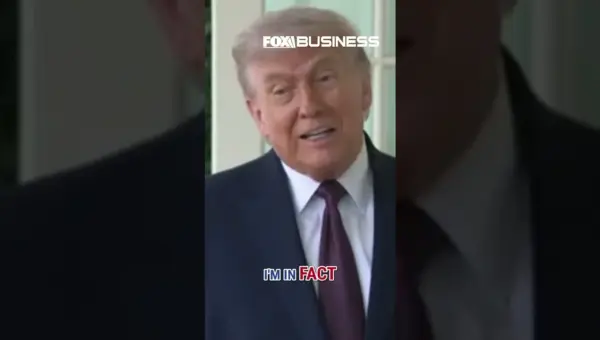
Former President Donald Trump has declared that any deal with Iran must include a ban on nuclear weapons. He stated unequivocally that without this agreement, no deal will be made. Trump expressed high confidence that Iran will eventually agree to this condition.
Pope Francis Responds to Trump’s Scathing Criticism
Pope Francis has responded to former President Donald Trump's criticisms regarding his stance on crime and foreign policy. Speaking while traveling, the Pope stated, 'I am a peacemaker, not a politician,' emphasizing his spiritual mission over political engagement. He also addressed Trump's claim that his election was influenced by the former president.
Pope Challenges Trump on Iran War, Urges Peace
Pope Leo XIV has publicly urged Americans to contact their representatives and demand peace, directly challenging President Trump's stance on Iran. Father Bryan Massingale of Fordham University explained the Catholic Church's long-standing opposition to 'wars of choice.' This intervention highlights the Vatican's significant moral influence on international relations.