Rubio’s Iran Strike Spin: A Shifting Narrative Under Scrutiny
Senator Marco Rubio's statements on potential U.S. involvement in an Israeli strike on Iran reveal a shifting justification narrative. Initially emphasizing Israel's actions as the trigger, the focus appears to broaden to protecting American forces from anticipated Iranian retaliation. This highlights the complex calculus of preemptive action in a volatile region.

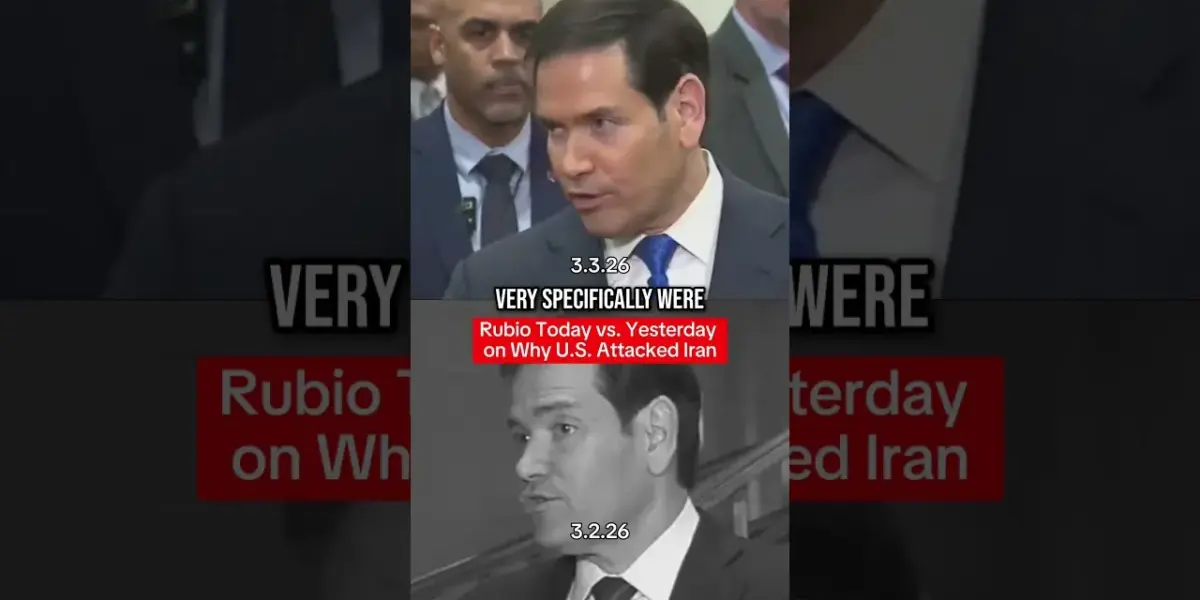
Rubio’s Iran Strike Spin: A Shifting Narrative Under Scrutiny
In the complex and often volatile landscape of international relations, the justifications for military action are scrutinized with a fine-tooth comb. Senator Marco Rubio’s recent statements regarding a potential Israeli strike on Iran and the subsequent U.S. Involvement have come under particular examination, revealing a dynamic and perhaps evolving narrative. The core of the issue lies in the perceived shift in justification, moving from an emphasis on Israel’s impending action to a broader rationale involving the protection of American forces.
The Initial Premise: Israel’s Impending Action
According to the provided transcript, Senator Rubio’s initial stance, as he articulated it, was that Israel was poised to strike Iran. This impending Israeli action, in his view, necessitated U.S. Involvement. The implication was that the United States needed to act preemptively, not necessarily because Iran posed a direct, immediate threat to American interests in the absence of Israeli action, but because Israel’s move would inevitably draw a response that would endanger U.S. Personnel.
This line of reasoning suggests a strategy of managing escalations and mitigating potential blowback. The idea was that if Israel were to initiate a strike, Iran would retaliate, and this retaliation would likely target American forces stationed in the region.
Therefore, to prevent higher casualties among U.S. troops, a preemptive strike by the U.S. was deemed necessary. This approach frames U.S. Involvement as a defensive measure, aimed at safeguarding its own citizens and assets in the face of an anticipated regional conflict.
The President’s Stance and the Shift in Justification
However, the transcript indicates a subtle, yet significant, pivot in the narrative, particularly when juxtaposed with President Biden’s statements. While Rubio initially emphasized Israel’s anticipated action as the trigger for U.S. Involvement, the President’s remarks, as referenced, appear to broaden the scope. The exchange suggests that the President’s decision to act was framed around Iran’s potential actions and the threat they posed to American forces, irrespective of an immediate Israeli strike.
The transcript captures a moment where Senator Rubio is directly challenged: “Yesterday you told us that Israel was going to strike Iran and that that’s why we needed to get involved. Today the president said that Iran was going to get…” This highlights the perceived discrepancy. Rubio’s defense, “Your statement is false.
So that’s not what I was asked very specifically,” attempts to recalibrate the narrative. He then reiterates his point, stating, “We knew that there was going to be an Israeli action.
We knew that that would precipitate an attack against American forces. And we knew that if we didn’t preemptively go after them before they launched those attacks, we would suffer higher casualties and perhaps even hire those killed.”
This clarification, while attempting to maintain consistency, highlights the delicate balancing act of justifying military intervention. The emphasis shifts from a direct reaction to Israel’s actions to a more proactive stance focused on averting a broader conflict that would inevitably involve American casualties. The underlying logic remains that U.S. forces are inherently at risk in this volatile region, and preemptive action is the most effective way to minimize those risks.
Historical Context and Precedent
The debate over preemptive strikes and the justification for military intervention is not new. Throughout modern history, nations have grappled with the dilemma of acting before a threat fully materializes versus waiting for concrete evidence of aggression. The concept of preemptive self-defense, particularly in the context of asymmetric warfare and the proliferation of advanced weaponry, has become a central tenet of national security doctrines for many countries, including the United States.
The situation involving Iran is particularly fraught due to its complex geopolitical standing, its nuclear program, and its regional influence. The long-standing tensions between Iran and Israel, coupled with the U.S. military presence in the Middle East, create a powder keg scenario where any miscalculation can have devastating consequences. Previous instances of U.S. military engagement in the region, often justified on grounds of national security and the protection of allies, provide a backdrop against which current justifications are assessed.
Why This Matters
The careful articulation and potential evolution of justifications for military action are critical for several reasons. Firstly, they directly impact public opinion and congressional support for any engagement. Transparency and consistency in explaining the rationale behind deploying troops or launching strikes are essential for maintaining trust and legitimacy.
Secondly, the justification for military action sets precedents for future engagements. A clear and defensible rationale can strengthen a nation’s ability to act in its perceived best interests, while a muddled or inconsistent one can weaken its standing and create diplomatic challenges.
Thirdly, in a region as combustible as the Middle East, the precise wording and framing of threats can influence regional dynamics, potentially de-escalating or escalating tensions with other actors.
Implications, Trends, and Future Outlook
The ongoing discourse surrounding potential strikes on Iran highlights a broader trend in modern warfare: the increasing reliance on intelligence and the difficult calculus of preemptive action. As threats become more complex and potentially faster-moving, the pressure to act before definitive proof of an imminent attack emerges grows. This places policymakers in a challenging position, balancing the risks of inaction against the risks of overreaction.
The trend towards preemptive strikes, if it continues, raises questions about international law, the definition of aggression, and the role of multilateral bodies like the United Nations. It also highlights the importance of robust diplomatic channels and de-escalation strategies, even in the face of significant perceived threats.
Looking ahead, the situation in the Middle East remains a critical flashpoint. The interplay between regional powers, the ongoing nuclear negotiations, and the presence of international forces will continue to shape the security landscape. The ability of leaders to clearly and consistently articulate the justifications for their actions, and to withstand scrutiny, will be paramount in navigating these turbulent waters.
Senator Rubio’s efforts to clarify his position, while perhaps seen by some as a defense of his original statement and by others as a strategic adjustment, serve as a microcosm of the broader challenges in communicating national security policy. The constant need to adapt and refine the narrative in response to evolving circumstances and public questioning is an inherent part of the complex art of foreign policy and defense.
Source: Rubio Tries Rewriting His Iran Strike Justification About Israel (YouTube)

Related Articles
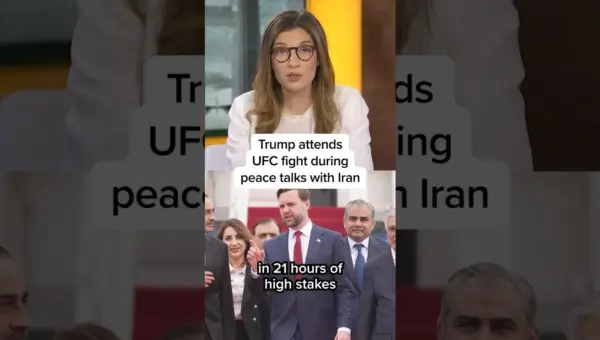
Trump Attends UFC Fight Amidst Iran Peace Talks
While Vice President JD Vance engaged in critical peace talks with Iran, President Trump attended a major UFC 'Light Heavyweight Championship' fight in Miami. This choice has drawn attention due to its timing during significant diplomatic efforts. The contrast highlights the ongoing scrutiny of political leaders' priorities and public appearances.
US Blocks Strait of Hormuz, Sparking Global Concern
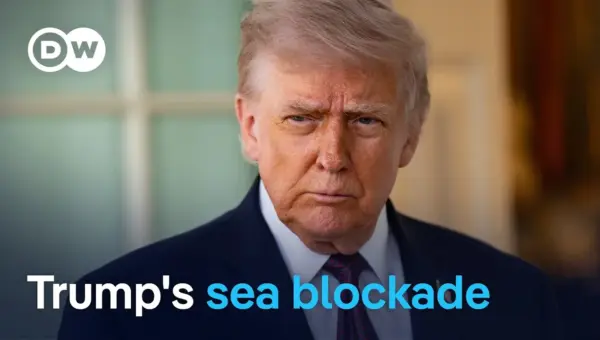
The United States has begun blocking ships in the Strait of Hormuz, a crucial global oil transit route. This move follows a previous six-week blockade by Iran and is seen as a pressure tactic by the Trump administration. Analysts express concern over potential escalation and global economic fallout.


Germany Faces Energy Crisis Amid Iran Tensions
Germany is implementing a temporary 17-cent per liter fuel tax cut to combat rising energy costs amid Middle East tensions. The government is also emphasizing continued diplomatic engagement, particularly within the European Union, following the breakdown of recent U.S.-Iran talks. This dual approach aims to address immediate economic pressures while pursuing long-term stability.