Iran Conflict Explodes: Trump’s War Backfires, Citizens Stranded
The Middle East is engulfed in conflict as Donald Trump's invasion of Iran backfires, leading to urgent evacuation orders for Americans. Reports detail escalating attacks, U.S. casualties, and a confusing array of justifications for the war, leaving citizens feeling abandoned.

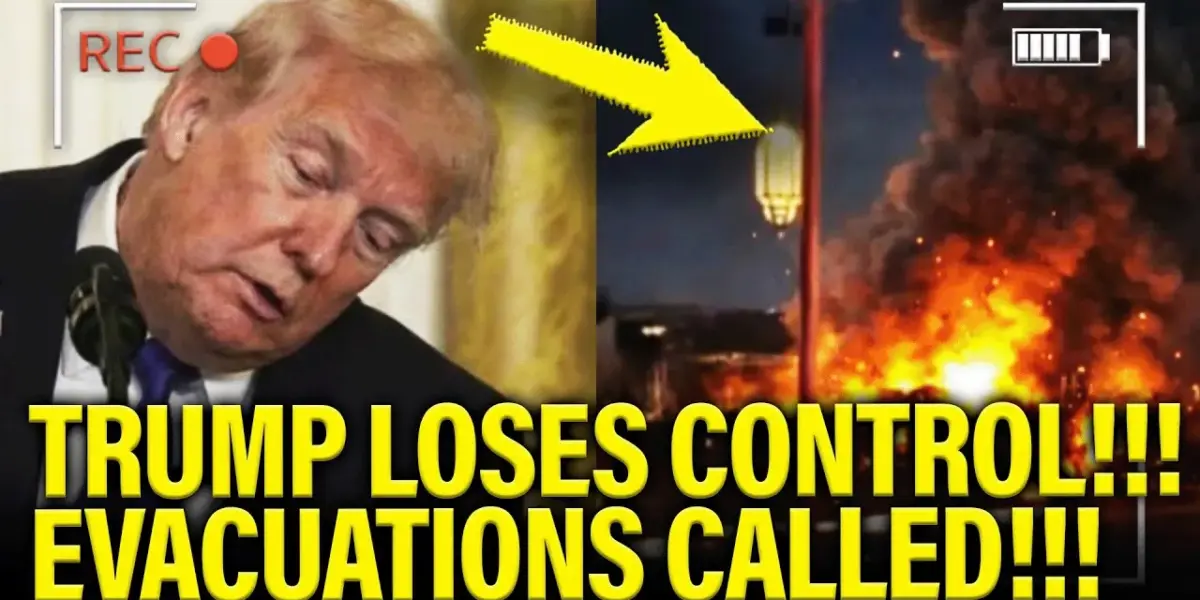
Middle East Erupts as Trump’s Iran Invasion Spirals Out of Control
The Middle East is currently a cauldron of escalating conflict, with reports indicating that Donald Trump’s recent invasion of Iran has backfired dramatically. The situation has deteriorated to a point where the Trump administration has issued urgent evacuation orders for American citizens across the region, leaving many feeling abandoned and exposed.
Evacuation Orders and State Department Weakness
In a stark display of the unfolding crisis, the U.S. State Department has posted advisories urging Americans to “Depart now via commercial means due to serious safety risks,” listing virtually every country in the Middle East. This directive comes despite the fact that airports in many of these nations are reportedly under attack from Iran, a consequence that many had warned would follow any U.S. Military engagement.
Critics point to the Trump administration’s alleged “gutting” of the State Department, suggesting a lack of personnel to physically assist citizens in their departure. This has led to a perception that Americans are stranded, with their only recourse being to navigate dangerous, compromised commercial travel routes.
Escalating Attacks and Casualties
The transcript details a rapidly worsening military situation. Multiple American service members have been killed, with the numbers reportedly increasing. Wounded soldiers are also on the rise.
Air raid sirens are a constant feature across the region, as Iran allegedly targets airports, commercial centers, and sites of U.S. Interest. Reports confirm ballistic missile attacks launched by Iran on Israel, Bahrain, Kuwait, Qatar, Saudi Arabia, and the United Arab Emirates. Explosions have been heard in Riyadh’s diplomatic quarter following an alleged Iranian drone strike on the U.S. Embassy.
The Kuwaiti army has also reported dealing with barrages of Iranian missiles and drones in its airspace. This widespread aerial assault highlights the significant escalation of hostilities.
Justifications and Conflicting Narratives
In the midst of this chaos, former President Donald Trump, in a statement to NewsNation, suggested that retaliation for the attacks would be forthcoming and that “boots on the ground” might not be necessary. He characterized the ongoing attacks and casualties as simply “part of war.”
Meanwhile, Secretary of State Marco Rubio offered a controversial justification for the initial U.S. Strike on Iran. He stated that the action was taken because Israel had indicated it was planning to strike Iran, and the U.S. Believed that if Iran were attacked by Israel, it would immediately retaliate against U.S. Interests.
Rubio argued that waiting to be hit first would result in greater U.S. Casualties. This preemptive strike rationale, based on the perceived threat of an Israeli action precipitating an Iranian response against the U.S., has drawn sharp criticism for its complex and arguably reactive logic.
Republican Speaker of the House Mike Johnson echoed this sentiment, calling the decision “common sense” and reiterating the idea that the U.S. Had to act first to prevent a larger Iranian attack following an Israeli strike.
Shifting Objectives and Diplomatic Absurdities
Further adding to the confusion surrounding the conflict, statements from various administration figures reveal a potential shift in declared objectives. Initially framed around preventing Iran’s uranium enrichment, the narrative appears to have broadened. Senator JD Vance suggested that while in a “perfect world” a friendly regime in Iran would be preferable, the primary objective remains ensuring Iran does not build a nuclear bomb, implying that regime change is secondary or incidental.
In stark contrast to the gravity of the military situation, surreal pronouncements have emerged. Melania Trump reportedly presided over a United Nations Security Council meeting, discussing education and its link to peace, an event highlighted by supporters as a significant diplomatic achievement. Meanwhile, commentators like Dana Perino have suggested that the world would be safer with Kamala Harris out of office, implying her potential negotiation tactics would be detrimental.
The disconnect between the escalating violence and the public statements from some political figures is striking. For instance, former Trump ambassador to the UN, Mike Walls, praised Melania Trump’s UN Security Council role as a sign of being in “great hands.” Similarly, Mark Wayne Mullen claimed that within days, Iran’s ability to conduct strikes had been “almost eliminated” and that their leadership had been taken out.
Public Sentiment and Perceived Abandonment
Amidst the unfolding crisis, there is a palpable sense of abandonment among American citizens in the region. Major General Randy Manor, reportedly stranded in the UAE, expressed dismay that while the UK government was arranging transport for its citizens, Americans felt left behind. He noted the State Department personnel are in “survival mode” due to budget cuts, further exacerbating the difficulty for ordinary travelers caught in a combat zone.
Trump’s Social Media Activity Amidst Crisis
In a striking juxtaposition to the unfolding geopolitical emergency, Donald Trump’s social media activity has drawn attention. He reportedly accepted an invitation to be the honoree at the White House Correspondents’ Association dinner, framing it as a recognition of his status as “the GOAT.” He also posted comments dismissing criticism from “radical left Democrats” and reposted an article suggesting he is better at purging the “deep state” than Richard Nixon. This focus on personal accolades and political grievances stands in stark contrast to the dire situation faced by Americans in the Middle East and the escalating international conflict.
Why This Matters
This situation highlights a critical breakdown in foreign policy execution and communication. The rapid escalation of conflict, coupled with seemingly shifting objectives and justifications, raises serious questions about the strategic foresight and competence of the administration. The alleged weakening of the State Department directly impacts the ability to protect American citizens abroad, leading to a crisis of confidence.
The public discourse, characterized by partisan attacks and seemingly disconnected pronouncements, detracts from the gravity of the unfolding events and the need for clear, unified leadership during times of international crisis. The perceived abandonment of citizens in a war zone is a profound failure of governance.
Implications, Trends, and Future Outlook
The current events suggest a dangerous trend towards more direct and potentially protracted conflicts in the Middle East. The reliance on preemptive strikes based on complex threat assessments, particularly when involving allied actions, carries immense risk. The erosion of diplomatic capacity, as suggested by the alleged budget cuts to the State Department, will likely hinder future crisis management and de-escalation efforts.
The future outlook points towards continued volatility, with potential for wider regional destabilization. The effectiveness of U.S. Foreign policy will be tested not only by its military actions but by its ability to protect its citizens and maintain credible diplomatic channels.
Historical Context and Background
The U.S. Has a long and complex history of military involvement in the Middle East, dating back to the late 20th century. Previous interventions and diplomatic engagements have often been characterized by unintended consequences and regional blowback. The current situation echoes past instances where initial military actions have led to unforeseen escalations, prolonged conflicts, and humanitarian crises.
The narrative around preemptive action and the justification for war has been a recurring theme in U.S. Foreign policy, often debated in terms of national security versus diplomatic solutions and the risks of overreach. The alleged weakening of diplomatic institutions is a departure from historical norms where a robust State Department was seen as crucial for navigating complex international relations.
Source: Trump LOSES CONTROL of WAR as EVACUATIONS CALLED!!! (YouTube)

Related Articles

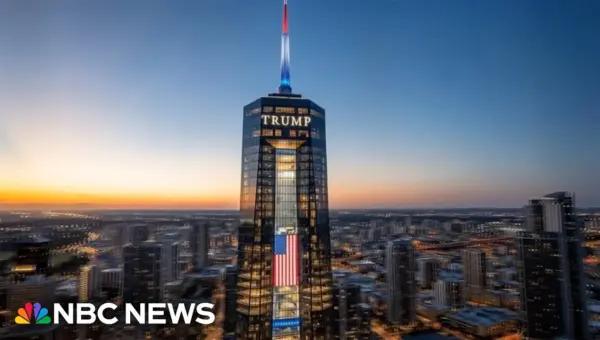
Trump Library Design Sparks Miami Debate: Grand Vision or Gross Obstruction?
A proposed design for the Donald J. Trump Presidential Library in Miami has ignited debate, with critics calling the architecture "gross" and an "obstruction." The project also faces opposition over a potential land donation from Miami-Dade College, which supporters argue will bring educational benefits, while detractors call it a "travesty." Political backing exists, but community leaders are questioning the land deal's fairness and the library's true purpose.
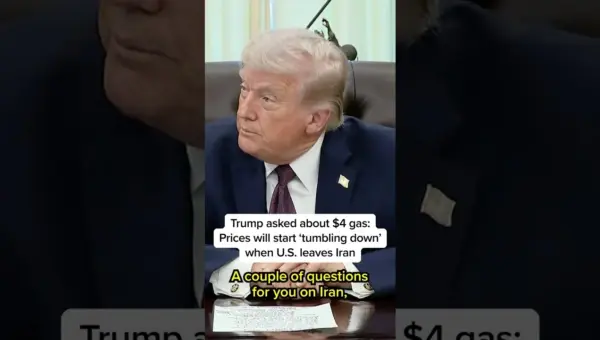
Trump: Iran Exit Will Trigger Fast Gas Price Drop
Former President Donald Trump believes that withdrawing U.S. involvement from Iran will cause gas prices to fall rapidly. He stated that this action would ease pressure on global energy markets, impacting fuel costs for Americans. The comments come as gas prices have risen above $4 per gallon due to supply disruptions.
Trump Weighs Birthright Citizenship, Mail-In Voting EO
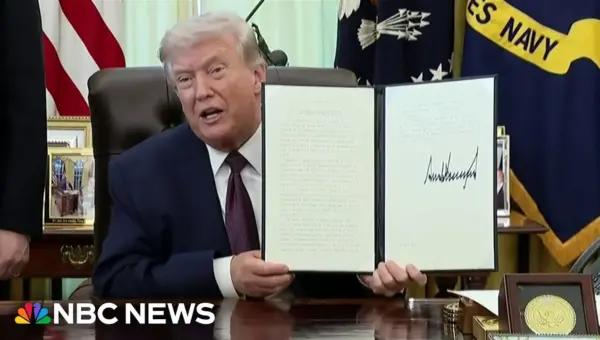
President Trump signaled his intent to attend Supreme Court arguments on birthright citizenship, a move considered highly unusual for a sitting president. Simultaneously, he signed an executive order aiming to alter mail-in ballot procedures through the Postal Service, an action expected to face legal challenges. The order targets voter verification for mail-in ballots, reflecting ongoing concerns about election integrity.