Dem Rep: Trump Ignores Congress on Iran War
Democratic Congressman Gregory Meeks criticizes President Trump's unilateral approach to the military conflict in Iran, demanding transparency and adherence to congressional oversight. Meeks questions the administration's unclear objectives and draws parallels to past failed military interventions.


Congressman Meeks Demands Answers on Iran Military Action
NEW YORK – As the United States engages in military operations against Iran, a leading Democratic lawmaker is voicing strong criticism, asserting that President Trump is acting unilaterally and failing to provide Congress with crucial details about the ongoing conflict. Congressman Gregory Meeks of New York, the ranking member of the House Foreign Affairs Committee, who attended a recent briefing on the matter, expressed deep concerns regarding the administration’s strategy, transparency, and adherence to constitutional war powers.
Lack of Clarity on Objectives and Strategy
Following a classified briefing, Congressman Meeks stated that key questions remain unanswered about the duration of the military engagement, the potential deployment of troops on the ground, and the broad objectives. “What was the need? Was there an immediate need, a threat to the United States?
I need to note that,” Meeks emphasized. He questioned the underlying reasons for the intervention, asking, “Are we there for regime change? Are we there because of nuclear weapons?
Are we there because of ballistic weapons? Are we there for democracy, for the people of Iran?”
Meeks highlighted the vagueness surrounding the president’s stated goal of continuing the operation “until his goals are accomplished.” He lamented, “I don’t know clearly what those goals are and what that means. And that should be a plan. In fact, you should have had that plan before we go in because, in my mind, if you don’t plan, if you fail to plan in the beginning, then you plan to fail.”
“He thinks he can do whatever he wants to do without coming to Congress and working with us and giving us those answers. And so we’re going to demand those answers.”
Challenging the President’s Case for War
In response to President Trump’s public statements outlining U.S. Objectives – including destroying Iran’s missile capabilities, annihilating its navy, and preventing it from obtaining nuclear weapons – Congressman Meeks dismissed the president’s claims as insufficient. “He’s not making a case at all,” Meeks stated. He drew parallels to past conflicts, referencing the Iraq War where initial pronouncements of success were followed by prolonged instability and significant loss of life and resources.
“What happens next? You know, what happens if it’s complete chaos on the ground? You know, we’ve seen before, and I was in Congress with the war in Iraq, where there was mission accomplished on the first couple of days.
And then many Americans later died at the cost of their lives and money from the American people, and the region still has not stabilized as a result of it,” Meeks explained. He pressed for clarity on what the current administration is doing differently to avoid similar pitfalls.
Concerns Over Executive Overreach
A central point of contention for Congressman Meeks is President Trump’s apparent reluctance to engage with Congress and his assertion of broad executive authority. When pressed about deploying troops, Meeks noted that the president “kind of dodged that question, saying, well, I will do what I want to do.” This, according to Meeks, reflects a belief that “he can do whatever he wants to do without coming to Congress and working with us and giving us those answers.”
Meeks stressed his intention to demand these answers during upcoming meetings. “I’m going to demand them today at the meeting that we have.
And I’m sure members, when we have the full House meeting THE PRESIDENT, I WANT TO MEET WITH THE PRESIDENT ON TUESDAY. MANY OF MY COLLEAGUES WILL BE DOING THE SAME,” he stated.
Historical Precedents for Congressional Consultation
The congressman pushed back against the administration’s justification for withholding details, citing the statement from Secretary Hegseth that revealing plans would be a “fallacy.” Meeks argued that transparency is not only possible but constitutionally mandated, citing historical examples.
“Look, we did that before. As I said, the Iraq war. What we did was George W.
Bush did come to the American people. He came to Congress, secretaries of state. We had hearings within and on the Foreign Affairs Committee.
I had access to some classified information in a skiff. I had access to the Pentagon,” Meeks recalled. He also referenced the situation in Afghanistan, where he was ultimately convinced by the administration’s case, leading him to vote in favor of intervention after extensive congressional engagement.
Meeks concluded, “So this president cannot act in and individual bases, creating wars around the world without coming to Congress.” He accused the administration of breaking its own promises regarding the avoidance of “endless wars” and suggested a shift in focus from defense to offense, quipping that the renaming of the Defense Department to the “War Department” would be more apt given the administration’s apparent strategy.
Looking Ahead
As tensions remain high, the focus will be on whether President Trump will heed Congressman Meeks’s call for greater transparency and congressional consultation. The coming days and weeks will likely see further demands from lawmakers for a clear articulation of the war’s objectives, exit strategy, and potential consequences, as well as scrutiny over the constitutional boundaries of presidential war-making authority.
Source: Trump 'thinks he can do whatever he wants' without coming to Congress: Dem Rep. (YouTube)

Related Articles

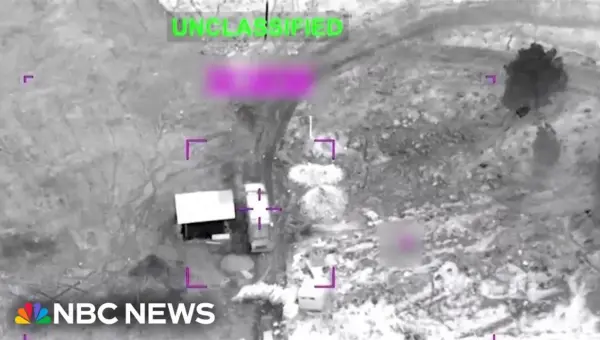
Trump Sees War Successes in Video Montages, Misses Iran’s Threat
President Trump's daily military briefings reportedly include video montages of successful U.S. strikes against Iran. However, officials are concerned this focus on American victories may prevent him from seeing the full picture of Iran's capabilities and potential threats.

DHS Shutdown Hurts National Security, Lawmakers Hear
A House hearing revealed the severe impacts of the Department of Homeland Security funding lapse, with agency leaders detailing workforce hardships and operational risks. Republicans blamed Senate Democrats for the shutdown, while Democrats pointed to former President Trump, as witnesses described missed paychecks, increased airport wait times, and growing cybersecurity threats.

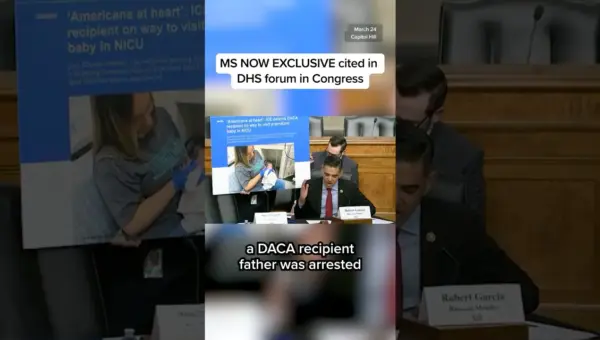
ICE Detains DACA Dad; Congress Cites MS NOW Report
MS NOW's exclusive report on an ICE detention of a DACA recipient heading to see his premature baby was cited in Congress. Representative Robert Garcia used the story to highlight alleged DHS abuses, stating such cases should 'outrage every single American.' The incident raises questions about immigration enforcement priorities.