Why Do Basketball Shoes Squeak? Science Reveals Surprising Answer
Scientists have discovered that the squeak of basketball shoes is caused by tiny gaps forming between the sole and the floor. These gaps travel at the speed of sound, kicking the air to create the noise. This research also revealed unexpected links to lightning and earthquake mechanics.

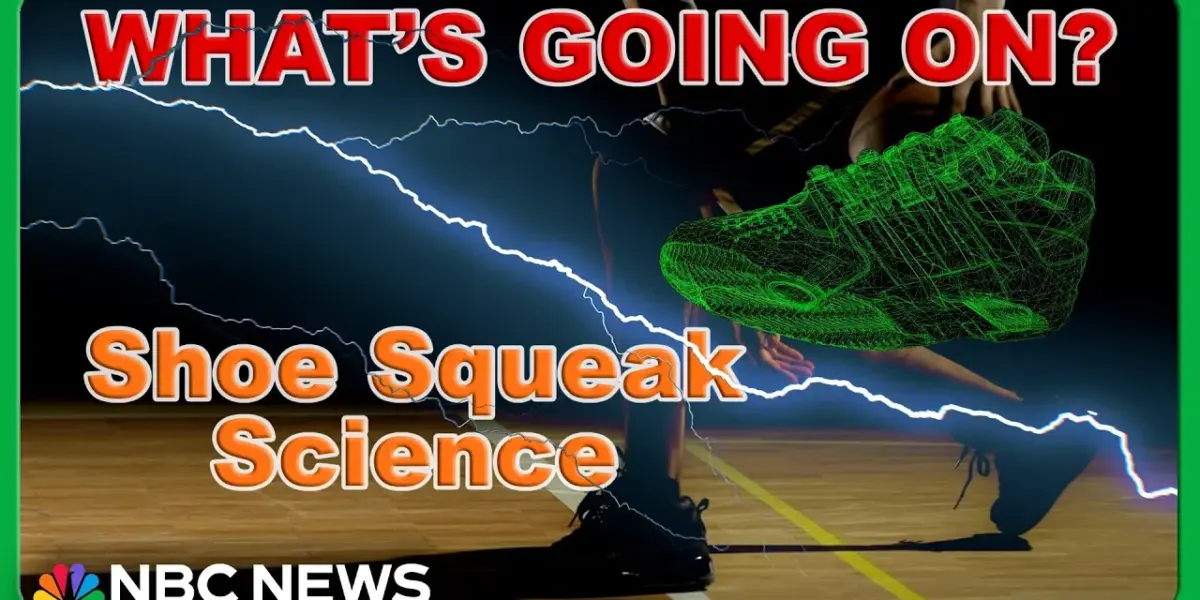
Shoe Squeaks Linked to Lightning and Earthquakes
Basketball players know the sound well: the sharp squeak of rubber soles gripping the court. For years, the common explanation for this noise was simple: the surfaces were sticking and slipping, creating vibrations, much like a squeaky door hinge. However, scientists at Harvard University decided to investigate further, questioning this long-held assumption through rigorous experimentation.
Their research revealed a far more complex phenomenon than previously understood. The familiar squeak isn’t just about sticking and slipping. It involves the formation and rapid movement of tiny gaps between the shoe and the floor.
High-Speed Cameras Uncover Hidden Gaps
To understand the true cause of shoe squeaks, the researchers set up an experiment. They filmed a large piece of plastic rubbing against rubber blocks using a high-speed camera. This allowed them to observe the interaction at an incredibly fast pace.
What they discovered surprised them. Instead of a continuous stick-slip action, tiny gaps formed between the rubber and the plastic surfaces. These gaps then traveled to the edge of the rubber block at the speed of sound, repeating this process thousands of times every second.
The Sound of Gaps and Ridges
The sound we hear as a squeak is actually caused by these rapidly moving gaps. When a gap reaches the edge of the rubber block, it pushes the air, creating a sound wave. This rapid pulsing of air kicks is what generates the noise.
The experiment also showed how surface texture affects the sound. When the researchers used flat rubber blocks, the sound was rough and less distinct.
However, when they used blocks with a ridged surface, a clear squeak emerged. These ridges helped guide the gaps into a pattern, focusing the sound into a more distinct, almost musical note.
Unexpected Discoveries: Lightning and Earthquakes
Beyond the squeaks, the high-speed camera captured even more astonishing events. The friction generated during the experiment sometimes caused tiny bolts of lightning to flash between the surfaces. This electrical discharge was an unexpected byproduct of the intense rubbing.
Perhaps the most significant finding was the similarity between the pulsing behavior of the gaps and the way earthquakes occur. The researchers noted that the way the surfaces stuck, slipped, and formed these traveling gaps mirrored the physical processes involved in seismic activity.
New Insights into Earthquake Science
This unexpected connection has opened up new possibilities for studying earthquakes. The scientists believe their experimental setup could provide a novel way to observe and understand the complex mechanics of seismic events. By studying the controlled friction and gap formation in their lab, they hope to gain deeper insights into the forces that cause the Earth to shake.
The research highlights the importance of questioning seemingly simple phenomena. What started as a curiosity about shoe squeaks led to discoveries with potential applications in understanding natural disasters. It shows how asking unusual or obvious questions can lead to groundbreaking knowledge about our world.
The Power of Curiosity
The Harvard scientists’ work is a powerful reminder that curiosity is a vital tool for discovery. By not accepting simple answers and instead conducting experiments, they uncovered a hidden world of physics happening beneath our feet, or in this case, on our shoes.
This journey from a common sound to potential earthquake insights highlights the value of scientific inquiry. It encourages us to look closer at the everyday occurrences around us and ask, “What’s really going on?”
What’s Next?
The next steps for the researchers involve further refining their experimental setup. They aim to create even more precise models of friction-induced vibrations. This could lead to better understandings of everything from material science to geological events.
Source: What's Going On… With All Those Shoe Squeaks? (YouTube)

Related Articles


Sneaker Squeaks: Science Reveals ‘Shoe Quakes’ Behind Court Sounds
The common squeaking sound of sneakers on basketball courts has a surprising scientific explanation: 'shoe quakes.' Researchers have found that these sounds are caused by 'slip pulses,' which are like tiny earthquakes happening underfoot as the shoe slides. This discovery reveals complex dynamics in everyday materials.


Romney, Leapour Discuss US Democracy’s Future
Senator Mitt Romney and Professor Jill Lepore discussed the state of American democracy at a Harvard event, examining shifts in the Republican party, the impact of technology, and challenges like polarization and debt. Romney highlighted changing party demographics and the need for effective leadership to address pressing national issues.


Iran Talks Collapse; US Imposes Strait of Hormuz Blockade
Peace talks with Iran have collapsed, leading the U.S. to blockade the Strait of Hormuz. President Trump demands complete compliance from Iran on nuclear weapons. Meanwhile, Congress tackles homeland security funding and election integrity measures, while a lawsuit against Harvard highlights concerns over anti-Semitism on elite campuses.