Trump’s Economy: Vegas Gamble or Real Recovery?
President Trump's economic message faces headwinds as polls show most Americans feel the economy is struggling, despite stock market highs. A "K-shaped" economy and global conflicts like the Iran war add to the challenges. Meanwhile, debates rage over accountability in Congress and shifting US public opinion on foreign policy.

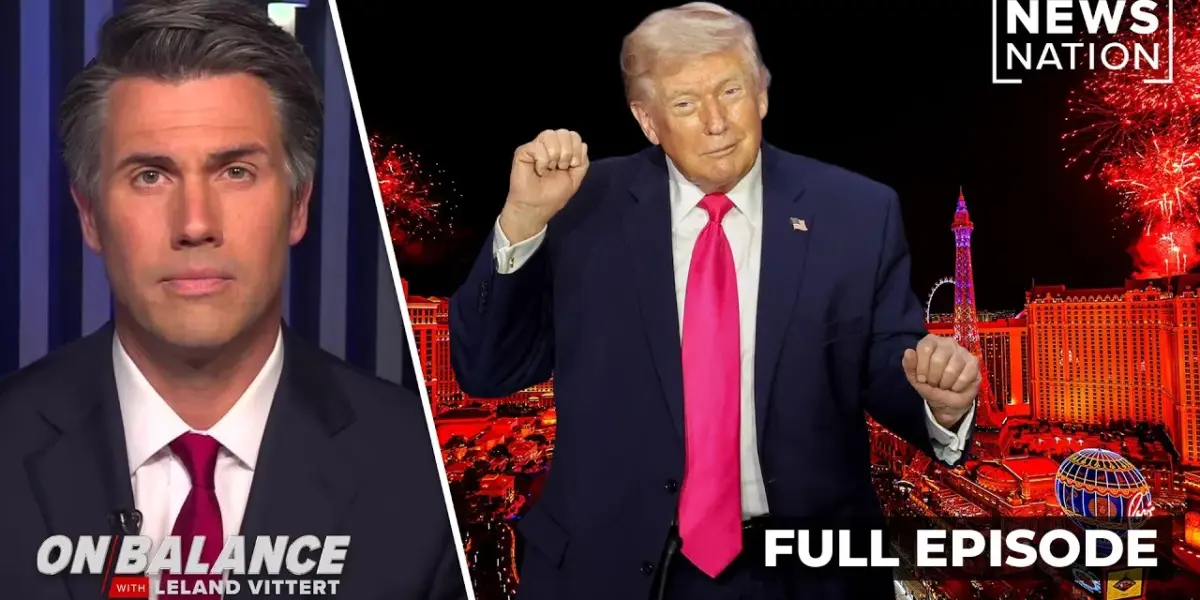
Trump’s Economic Pitch Hits Vegas, But Is the House Winning?
President Trump is taking his economic message to Las Vegas, hoping to capture some of the city’s famous luck. However, recent polls show many Americans are not feeling the economic boom.
While the stock market has reached new highs, a significant majority of people feel the economy is struggling. This disconnect between Wall Street and Main Street is a major challenge for any politician trying to sell an economic success story.
A year ago, the feeling was that America was an embarrassment on the world stage. Trump’s supporters claim that has changed, pointing to a strong economy in his first term. Many wealthy individuals and those invested in the stock market are indeed doing better than ever.
Yet, a recent poll reveals that 70% of Americans believe the economy is in fair or poor shape, with only 25% rating it as excellent or good. This suggests that while some are thriving, a much larger group feels left behind.
The Clock is Ticking on Economic Promises
The idea that economic turnaround was needed by April has been a talking point for some time. Bill O’Reilly previously stated that if the economy remained weak and prices didn’t fall by April 2026, Democrats would win the midterms, potentially ending Trump’s presidency.
It is now April, and many still find the economy shaky. In fact, a new poll shows 65% of Americans blame President Trump for high prices, especially at the gas pump.
While manufacturing numbers are up and promised investments are beginning, time is a critical factor. The rise of artificial intelligence is creating new economic pressures, similar to how offshoring impacted manufacturing jobs in the 1980s. The Wall Street Journal has even questioned if the era of massive layoffs has arrived.
Trump’s current focus on eliminating taxes on tips, a policy he’s pitching in Las Vegas, has had a rocky start. An incident where he tipped a Door Dash driver $100, which then backfired in public relations, highlights the challenges he faces.
Vegas: A Risky Bet for Trump’s Economic Message
Las Vegas, the chosen venue for Trump’s economic pitch, is facing its own economic headwinds. Visitor numbers dropped 7.5% in 2025, the largest decline outside of the pandemic.
This decline makes the city a gamble for a political message that needs a sure win. The old saying that the House always wins might be a worrying omen for Trump’s campaign, as he needs the economy to deliver tangible benefits to voters soon.
The discussion with former Trump official Caroline Sunshine and host Scott Shelendy highlights the unique position Trump holds. He has a rare ability to weather political storms.
However, the current economic climate presents challenges not seen in his first term, including global conflicts that affect everyday costs like gas prices. Trump faces a choice: resolve conflicts quickly to lower energy costs or make significant economic changes to offset the impact.
The K-Shaped Economy: A Divide Americans Feel
The economy is described as “K-shaped,” meaning some people are doing exceptionally well, while many others are struggling. This division is a key issue.
The top 10% of Americans own a large majority of the stock market, while half of Americans own nothing and may even have debt. While mass deportations have been suggested to raise wages, the dream of homeownership is becoming harder to achieve, with the average first-time buyer now 40 years old.
There’s a call for legislation to prevent large companies from buying up homes and to reinstate policies like banning stock trading by members of Congress. If foreign policy continues to be a focus, its economic effects must be managed.
The alternative is to build domestic wins that balance these external pressures. However, with a divided Congress, passing significant domestic legislation is difficult.
Messaging Matters: Connecting with Voters’ Wallets
The focus on tax cuts, like the elimination of taxes on tips in Las Vegas, aims to provide tangible relief. Trump highlights that this policy benefits tipped workers like waiters, dealers, and bartenders, giving them larger tax refunds. The goal is to make people feel the positive impact directly in their pockets.
Scott Shelendy emphasizes that the positive economic news needs to be felt immediately by voters. He notes that the stock market is looking past current issues like the Iran war and high gas prices, anticipating a better future economy. This is why record highs are being hit.
However, the struggle is to connect this positive outlook with the everyday experience of the bottom 80% of earners who are facing difficulties. Republicans are seen as struggling to effectively communicate their economic message to the country.
The Iran War and Gas Prices: A Lingering Economic Shadow
The war in Iran and its impact on gas prices are significant concerns. Some argue that even if the war ended tomorrow, gas prices would not immediately drop.
The administration has faced criticism for telling Americans to endure hardship for the sake of democracy, a message that has historically not resonated well with voters. The lesson learned from the Biden administration is that telling people to simply “suck it up” doesn’t work.
Instead of deflecting, focusing on issues like tax fraud in blue states or unreturned funds could be a more effective strategy. Telling Americans to hold on longer has never been a winning political message.
The success of this approach is questionable, as seen in past election outcomes. The current economic predicament requires a more direct and relatable message to voters.
China’s Role in Iran: A Hidden Hand in Global Economics
President Trump has stated he is close to a deal with Iran, a claim met with skepticism. The idea that Iran would give up its nuclear program is doubted, as it is seen as central to the regime’s existence.
However, if a deal is to happen, China is believed to be the key player. China and Iran share a long history and a Marxist ideology, viewing the United States as a common enemy.
China’s economy is being hurt by rising oil and diesel prices, which increase the cost of its exports. Turmoil in the world also means fewer people buying goods from far away.
This economic pressure might be motivating China to push for a resolution between Iran and the United States. The US blockade of Iranian ships is seen as effective, not just in hurting Iran but also in pressuring other countries that trade with Iran to encourage a deal.
The Strait of Hormuz: A Persistent Threat
Despite economic pressures, the threat posed by Iran in the Strait of Hormuz remains. Companies and tanker captains are hesitant to navigate the strait due to uncertainty and risk.
Until others successfully transit, many will wait and see. This hesitation could lead to shortages, like Europe potentially running out of jet fuel during the summer travel season.
China’s leader, Xi Jinping, does not face the same electoral pressures as President Trump. This gives China leverage.
It is possible that Xi will demand a price from Trump for helping to end the war and secure a foreign policy win. However, if the war continues into May, Trump’s planned visit to China might be canceled due to the optics of meeting with a potential adversary during wartime.
Deterrence and Deception: Navigating US-China Relations
The relationship between the US and China requires careful consideration. Deterrence relies on strength, capability, and the adversary’s perception of these factors.
While cooperation on mutual interests is possible, one must always consider potential threats, such as China’s intentions towards Taiwan. The US should ensure China doubts its ability to succeed in such actions.
It is also crucial to understand Iran’s capabilities in the Strait of Hormuz. Small countries have shown that even with limited resources like drones, they can inflict significant damage.
Convincing Iran that allowing ships to flow freely is in its best interest is key to maintaining global trade routes. The common saying that “the Chinese are lying when their lips are moving” highlights the need for caution and strategic thinking in dealing with China.
Cleaning Up Congress: Allegations and Accountability
Congresswoman Lauren Boebert has spoken out about alleged sexual predators within Congress, stating she is prepared to name names. This follows recent scandals involving members like Eric Swalwell and Tony Gonzalez, who have since left their positions. The problem is compounded by taxpayer-funded settlements and an ethics committee that is seen as protecting rather than punishing wrongdoers.
Boebert has called for accountability, noting that when she learned of Tony Gonzalez’s alleged affair with a staffer, which preceded the staffer’s death, she immediately called for his resignation. She believes that while Republicans have tried to take action against their own members, backroom deals have prevented true accountability. She distinguishes her actions from broader Republican efforts, emphasizing her personal push for transparency and the exposure of congressional slush funds.
Due Process vs. Public Trust: The Ethics Debate
A point of contention has been the differing approaches to accountability. While Boebert supported the presumption of innocence for George Santos, who was accused but not convicted of crimes, she now advocates for swift action in cases of alleged sexual assault or harassment. This shift raises questions about whether due process is being applied consistently.
The case of Representative McCormack, who faces expulsion after being found guilty of 25 charges including theft of taxpayer money, is cited as an example of the ethics committee process. However, the cases of Eric Swalwell and Tony Gonzalez, who resigned, are seen as avoiding accountability, with the added criticism of receiving taxpayer-funded benefits after leaving. Boebert is working to prevent such golden parachutes for those who leave under a cloud of scandal.
The “Me Too” Movement and “Witch Hunts”: A Fine Line
Concerns about a “witch hunt” where individuals are judged guilty by accusation alone are being raised. Boebert points out that Democrats were also prepared to expel Eric Swalwell, suggesting political motivations may have played a role in his resignation. This highlights the complex dynamics of accountability and public perception in Washington.
She believes Swalwell’s admission of a “lapse in judgment” is insufficient, especially given serious allegations of drugging and rape. These accusations have not been outright denied, and Boebert suggests Swalwell may face legal troubles beyond resignation. The ongoing debate highlights the difficulty in balancing the need for accountability with the principles of due process and fair treatment for all accused individuals.
Texas Senate Race: Donors Bet on Flipping the Lone Star State
In Texas, Democratic mega-donors are investing heavily in an attempt to turn the state blue, a long-held “pipe dream.” Despite Texas being a solidly red state, millions are being poured into campaigns like that of state representative James Talerico, who is shattering fundraising records. This strategy mirrors past attempts, such as Beto O’Rourke’s record-breaking fundraising in 2018, which ultimately did not secure him a Senate seat.
Political donations are viewed as bets on a candidate and their policies. Democratic donors are reportedly betting on President Trump’s ego to play a role in the upcoming Texas Senate runoff between Attorney General Ken Paxton and Senator John Cornyn. Trump’s potential refusal to endorse Cornin, whom he views skeptically, could cost Republicans a reliably red seat if Paxton wins the runoff and then loses the general election.
Shifting Sands: US Sympathy for Israel Declines
A significant shift is occurring in American public opinion regarding Israel. Forty Democratic senators recently voted to cut off aid to Israel, and calling Gaza a “genocide” has become a necessary stance for Democratic presidential candidates. US sympathy towards Israelis has dropped dramatically in the last decade, from 62% in 2016 to just 36% now.
This rapid turn in public opinion is unprecedented. The debate over military support, such as bulldozers used to protect soldiers, highlights the growing division. With a ceasefire in Gaza, the focus on the conflict and its implications for US foreign policy continues to evolve, reflecting a changing landscape of political and public sentiment.
Source: Tax Day in Sin City; China's Iran Game; Cleaning up Congress | On Balance Full Show 4/16 (YouTube)

Related Articles

Pentagon Plays Congress: UAP Video Blackout Continues
The Pentagon has missed a deadline to release classified UAP videos to Congress, fueling accusations of deliberate obstruction. Key lawmakers are calling this a constitutional crisis, questioning the government's transparency.


Trump’s Iran Claims Crumble Under Scrutiny
Recent claims by Donald Trump about a deal with Iran have been met with direct contradictions from Iranian officials and observations of the Strait of Hormuz. Suspicions of market manipulation have also arisen due to large oil trades preceding Trump's announcement.

Ukraine Conflict: Early Signs of Russian Influence
Early signs of Russian influence in Ukraine became apparent before the full-scale conflict, with Russian flags appearing on public transport in some cities. Tensions escalated following the 2013 Euromaidan Revolution, leading to confrontations between pro-Ukrainian activists and opposing groups. A violent incident in spring 2014, where activists raising a Ukrainian flag were shot at, forced pro-Ukrainian groups to operate underground.