Musk’s ‘Terafab’ Plan Fuels SpaceX IPO Hype
SpaceX is preparing for a massive IPO with a $1.75 trillion valuation, fueled partly by Elon Musk's ambitious 'Terafab' semiconductor venture. Despite generating $18.7 billion in revenue in 2025, the company reported a $5 billion net loss. The Terafab plan, aiming to produce advanced AI chips, faces significant technical and financial hurdles in the complex semiconductor industry.

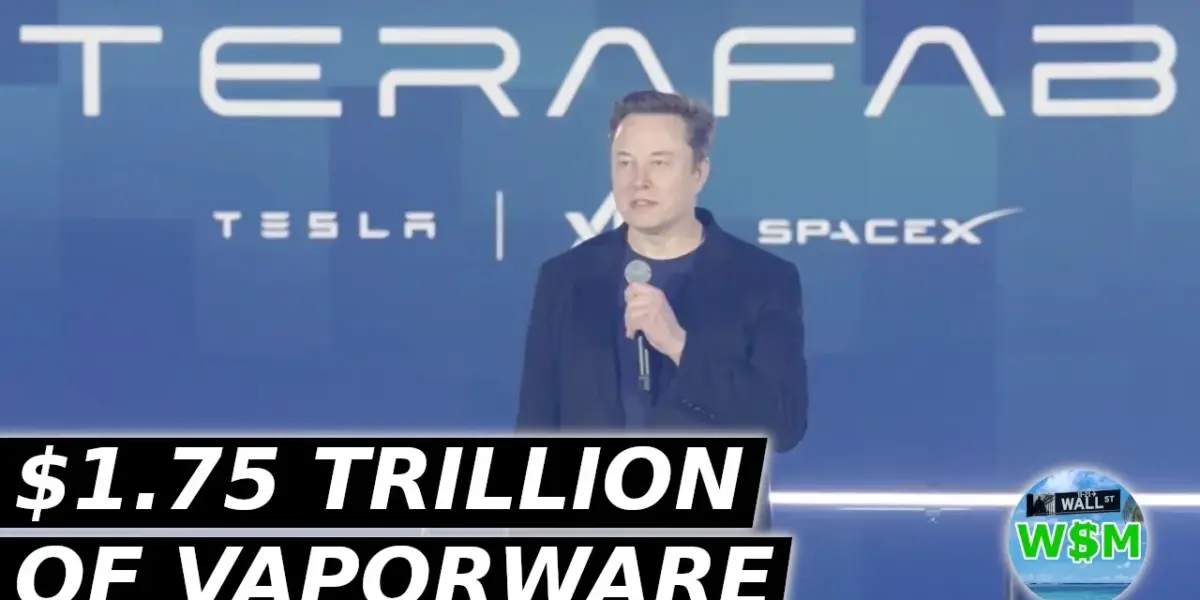
SpaceX Aims for $1.75 Trillion Valuation Amidst Ambitious ‘Terafab’ Announcement
SpaceX has confidentially filed for an Initial Public Offering (IPO), aiming for a staggering $1.75 trillion valuation and seeking to raise $75 billion. This planned IPO, expected in June 2026 to coincide with Elon Musk’s birthday, would be the largest in history.
SpaceX, a company that revolutionized commercial space travel with its reusable rockets, currently dominates the satellite launch market, accounting for approximately 80% of all launches in the United States in 2025. This upcoming IPO offers everyday investors a chance to participate in the company’s innovative ventures.
However, recent financial disclosures paint a less stellar picture than the company’s public image suggests. In 2025, SpaceX reported $18.7 billion in revenue but incurred a significant net loss of $5 billion. These figures are pro forma, meaning they combine the financials of SpaceX and the recently acquired AI company XAI.
While SpaceX itself might have seen a modest profit, XAI’s losses are believed to have driven the overall deficit. Revenue sources for 2025 included $11.4 billion from Starlink, $4.1 billion from rocket launches, and $3.2 billion from XAI, which encompasses the Grok chatbot and the social media platform formerly known as Twitter.
Starlink and Launch Services: Pillars of SpaceX’s Revenue
SpaceX conducted 165 commercial launches in 2025, primarily using its Falcon 9 rockets, with about 75% of these missions dedicated to deploying Starlink satellites. Despite holding an 80% market share in the commercial satellite launch sector, these services generated only $4.1 billion.
The limited size of this market was a key factor in SpaceX’s decision to develop Starlink, its satellite internet service. By launching its own satellites, SpaceX ensures consistent demand for its launch capabilities, especially when external customer orders are low.
Starlink service involves an initial hardware cost of $300 to $600 for a terminal, followed by monthly fees ranging from $50 to $165. While Starlink provides a vital internet connection for users in remote areas, military operations, and regions lacking terrestrial broadband, its overall market potential is constrained.
The majority of the global population without reliable internet access cannot afford the service. In developed countries, traditional broadband internet typically offers better value, speed, and reliability.
The ‘Terafab’ Vision: A Leap into Semiconductor Manufacturing
Elon Musk has announced an ambitious new venture called ‘Terafab,’ a joint project between Tesla and SpaceX. This initiative aims to create the largest semiconductor manufacturing enterprise ever conceived, producing chips for AI supercomputers.
These supercomputers would then be launched by SpaceX as orbital AI data centers to power XAI’s Grok chatbot. This plan represents a significant departure from SpaceX’s core business and enters the highly complex and capital-intensive world of semiconductor fabrication.
The Terafab’s initial focus will be on an advanced technology fab near Tesla’s Gigafactory in Austin, Texas. This facility plans to produce three types of chips: the A15 for Tesla’s self-driving cars, the A16 for Optimus humanoid robots (neither of which are currently in full production), and the D3 supercomputer chip for XAI’s AI workloads.
While major tech companies like Google and Amazon design their own specialized chips, none have ventured into manufacturing them directly, instead relying on established contract manufacturers like TSMC. This is due to the extreme technical challenges and immense costs associated with high-end chip production.
Challenges and Skepticism Surrounding Terafab
The semiconductor manufacturing industry is exceptionally demanding, requiring immense precision and billions of dollars in investment for cutting-edge equipment, such as ASML’s EUV lithography systems costing hundreds of millions each. Even established giants like Intel have faced difficulties in competing at the highest end of chip manufacturing.
Tesla and SpaceX, with no prior experience in this field, face a steep learning curve. The announcement of a partnership with Intel, which itself struggles with advanced chip production, raises questions about the feasibility of Intel guiding Tesla in this complex domain.
Musk’s description of the Terafab’s capabilities, including the ability to produce both logic and memory chips, as well as lithography masks, within a single building, has drawn criticism from industry experts. The manufacturing processes for logic and memory chips are distinct and require separate, highly controlled environments to avoid contamination.
Musk’s concept of a rapid, recursive loop for chip design and manufacturing is seen as counterproductive to the process stability needed for high-yield production in the semiconductor industry. The sheer scale of Musk’s vision, including 1 terawatt of AI data centers in space, far exceeds current global AI chip manufacturing capacity (20 gigawatts per year), raising concerns about the practicality and economic viability of the Terafab project.
Market Impact and Investor Considerations
The Terafab announcement appears to be an attempt to strengthen SpaceX’s valuation ahead of its IPO by presenting a futuristic, high-growth vision. However, the plan introduces significant execution risks and financial uncertainties.
Investors may need to carefully consider the immense challenges of entering the semiconductor manufacturing sector, a field dominated by companies with decades of experience and massive capital investment. The reliance on unproven technologies and ambitious, potentially unachievable, goals could pose a substantial risk.
SpaceX’s core business of satellite launches and Starlink faces market limitations that may not support its projected $1.75 trillion valuation. The pivot towards speculative ventures like orbital data centers and the Terafab suggests a strategy to bridge the gap between current performance and ambitious financial targets. While Musk has a history of turning ambitious visions into reality, the Terafab plan, with its significant technical hurdles and questionable economic feasibility, may be viewed by some as more of a speculative narrative than a concrete industrial plan, designed to capture investor imagination rather than reflect immediate operational capabilities.
Source: "Terafab", Musk's Biggest Scam Yet (YouTube)

Related Articles
Musk Faces French Probe: X’s Content Under Fire
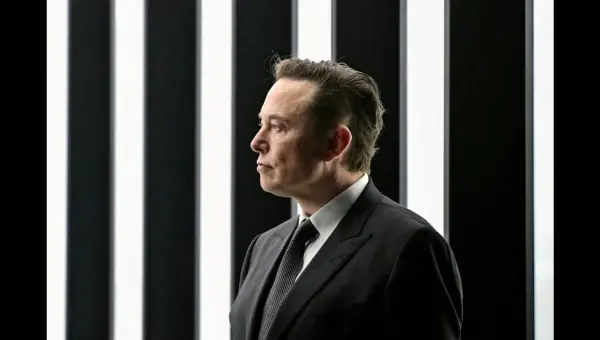
Elon Musk has been summoned to Paris for interviews as French investigators examine alleged misconduct on his platform X. The probe includes claims involving illegal content and deep fakes, with former X CEO Linda Yaccarino also invited to participate. This action highlights a global trend of governments seeking greater accountability from social media giants.

Musk’s Security Bill Tops $3 Million Annually
Elon Musk's personal security expenses have surged past $3 million annually, covering a detail of 20 armed guards. This significant increase followed a serious security incident near Tesla headquarters, escalating from an initial team of two. The guards provide constant protection across all aspects of Musk's life.


Kara Swisher Calls Dogecoin a ‘Failure,’ Criticizes Musk
Tech journalist Kara Swisher has labeled Elon Musk's promotion of the cryptocurrency Dogecoin a "failure" that "wrecked things." Speaking on a podcast, Swisher criticized the damaging narrative around government and highlighted the speculative nature of crypto projects influenced by social media.