Judge Slams Pentagon for Autocratic Press Ban Tactics
A federal judge has sharply criticized the Pentagon for revoking press credentials, calling the action "autocratic." The judge ordered the reinstatement of passes, but the Department of Defense reportedly expanded restrictions instead. This defiance raises questions about accountability and the future of press freedom.

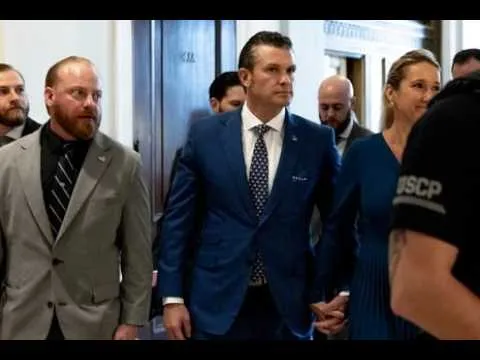
Judge Slams Pentagon for Autocratic Press Ban Tactics
A federal judge has strongly rebuked the Department of Defense and Pete Hegseth for revoking press credentials of New York Times reporters. The judge ruled this action unconstitutional, stating it violated the First Amendment’s guarantee of a free press.
This decision came after Hegseth, reportedly unhappy with reporting on the war with Iran and unflattering photos of himself, pulled the press passes. The court found that denying access to some reporters also denies the American public access to important news.
Judge Fried man, a federal district judge in Washington D.C., ordered the Pentagon to reverse its new policy and reinstate the old one. This old policy would allow reporters to do their jobs without fear of reprisal for their reporting. The judge’s ruling was a clear victory for press freedom and a setback for those seeking to control the narrative from within the government.
Pentagon’s Response Sparks Judicial Fury
Instead of complying with the judge’s order, the Pentagon appears to have escalated its actions. The court noted that the Department of Defense responded to the order to restore press passes by cutting off access for all journalists. This move was seen as a direct defiance of the court’s instructions and a disregard for constitutional principles.
“The response flouts the court’s explicit directives and disregards the constitutional principles at the heart of this court’s opinion.”
This broad action, extending the press pass restrictions to all journalists, was described by the judge as an attempt to achieve an unconstitutional result. He compared the Pentagon’s actions to those of an autocracy, a stark accusation against a government agency.
Autocracy vs. Democracy: A Judge’s Warning
Judge Fried man’s language was exceptionally strong, highlighting the core of the First Amendment. He stated that protecting free speech and press is fundamental to American government. The judge emphasized that the government cannot block free discussion or hinder the freedoms necessary for that discussion to work.
By issuing a new policy that restricted access, the Department of Defense was attempting to achieve an unconstitutional outcome. The judge warned that suppressing political speech is a hallmark of an autocracy, not a democracy. He directly asserted that Pete Hegseth and the Department of Defense were acting like an autocracy, not a democracy, especially in a time of war.
Accountability and the Courts’ Role
The question now is whether these strong words will lead to strong actions. Legal analysts suggest that strongly worded opinions are not enough if there is no accountability. The courts have the power to enforce their orders through contempt proceedings, which can include fines or even jail time for government officials who intentionally violate court orders.
The concern is that without real consequences, such as holding officials accountable in court, these actions will continue. The judiciary needs to ensure that executive branch officials comply with lawful court orders, as they are a co-equal branch of government.
Why This Matters
This case is critical because it directly addresses the government’s ability to control information and punish journalists for unfavorable reporting. The First Amendment protects the press’s right to report on government actions without fear of retribution. When the government attempts to silence critical voices by revoking access, it undermines the public’s right to know and the health of a democratic society.
The judge’s comparison to autocracy is a serious warning. It suggests that actions taken to suppress reporting are not just minor bureaucratic disputes but fundamental challenges to democratic principles. The outcome of this case will set a precedent for how the government can interact with the press, especially during times of conflict or political tension.
Historical Context and Future Outlook
Throughout American history, there have been instances of tension between the government and the press. However, the First Amendment has consistently served as a bulwark against government overreach. Landmark Supreme Court cases have affirmed the press’s vital role in a democracy, protecting its right to publish information and criticize government actions.
The current situation raises concerns about whether these protections are being tested. The judge’s strong language indicates a potential shift in how courts view executive actions that appear to stifle dissent. The next steps will likely involve whether the courts are willing to use their full powers, including contempt, to enforce their rulings and ensure compliance.
Challenges to Enforcement
One significant challenge in enforcing court orders against the executive branch is the lack of an independent enforcement arm for the judiciary. While federal marshals can enforce orders, they are part of the executive branch. This creates a dynamic where the executive branch must essentially police itself, which can be difficult when defiance is intentional.
Another factor discussed is the potential fear among judges of retaliation from an administration willing to attack critics. Judges, like all individuals, have families and personal lives, and public attacks or threats can create a chilling effect. This concern, coupled with the practical difficulties of enforcing orders against powerful executive agencies, presents a complex situation for ensuring accountability.
The legal system relies on a presumption of regularity, meaning courts usually assume government actions are lawful. However, recent cases suggest that this presumption is being challenged when evidence shows deliberate misrepresentation or defiance. The judiciary’s ability to act decisively will be key to upholding the rule of law.
The case highlights the ongoing struggle to balance national security or governmental interests with the public’s right to information. The upcoming actions of the court and the Department of Defense will be closely watched, as they will reveal how robust the protections for a free press truly are in the face of governmental pressure.
Source: BREAKING: Fed up judge drops BOMB on Pete Hegseth (YouTube)

Related Articles


Auto Giants Answer War’s Call: A New Industrial Era?
America's auto giants are reportedly being asked by the Pentagon to help speed up weapons production. This move, reminiscent of World War II efforts, aims to boost the supply of critical parts and strengthen national security. The strategy involves integrating commercial manufacturing to fill gaps and ensure readiness in a complex global landscape.


Detroit’s War Machine: Automakers Rejoin Arms Race
The U.S. Pentagon is in talks with major automakers like General Motors and Ford about shifting production to weapons and munitions. This move echoes World War II-era mobilization and aims to replenish dwindling stockpiles amid global conflicts.


Hegseth Quotes ‘Pulp Fiction’ as Bible Verse at Pentagon
Pentagon Secretary Pete Hegseth has faced widespread criticism for quoting lines from 'Pulp Fiction' as if they were Bible verses during a prayer service. Religious leaders and commentators have condemned the act as "idiotic" and disrespectful, highlighting the diverse nature of the U.S. military and raising concerns about the public use of faith.