Iran’s Red Sea Threat: A Geopolitical Tightrope
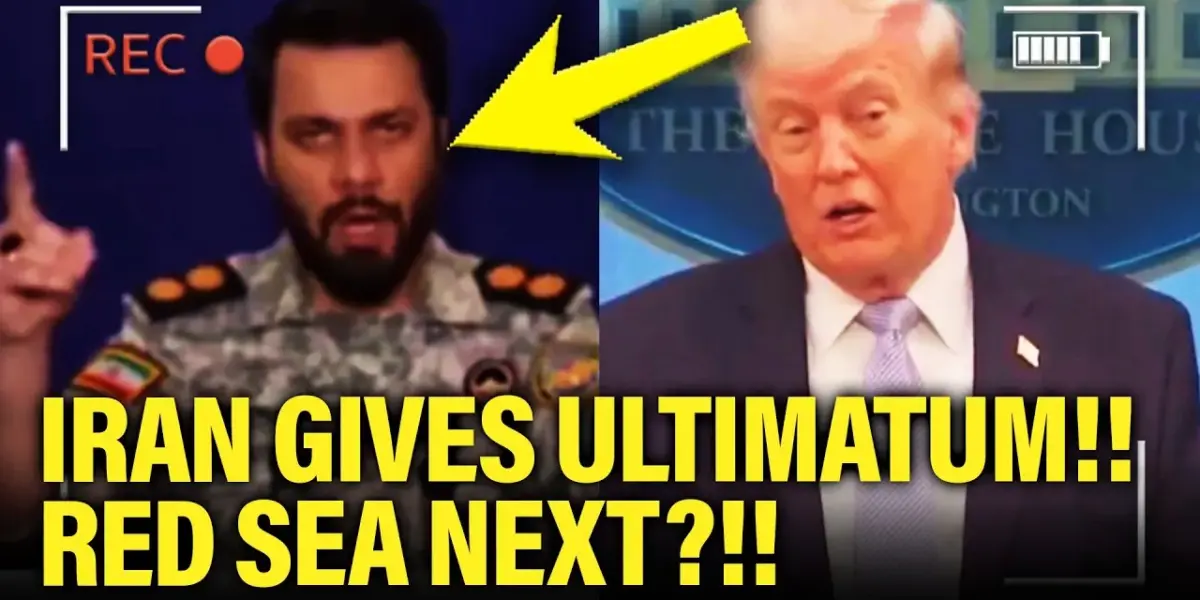
Iran has issued a stark ultimatum, threatening to block the Bab el-Mandeb Strait in the Red Sea if its demands are not met. This escalation comes amid strained U.S. military resources, low morale among troops, and ongoing geopolitical negotiations with uncertain outcomes. The potential disruption to global shipping raises concerns of economic instability and a potential food crisis.

Iran’s Red Sea Threat: A Geopolitical Tightrope
Tensions are escalating as Iran issues a stark ultimatum: agree to a 10-point negotiating framework and end the Persian Gulf blockade, or face consequences. Iranian social media, closely linked to Parliament Speaker MB Galabaf, has signaled that steps to block the Bab el-Mandeb Strait in the Red Sea will begin soon. This move could severely disrupt global shipping and trade, impacting vital sea lanes.
Professor Mandi, who recently met with the Iranian delegation, shared a warning from the “borderless warriors,” identified as the Houthis of Yemen. These forces, previously demonstrating their ability to disrupt Red Sea traffic, are now threatening vessels passing through the Bab el-Mandeb Strait. Iran has, until now, held back from ordering the Houthis to take such action, similar to its control over the Strait of Hormuz.
Escalating Tensions and Diplomatic Stalemate
This potential blockade comes after what Iran views as continued threats and escalations from the Trump administration, including the blockade of the Persian Gulf. Despite Iranian tankers managing to pass through, Iran feels pushed to retaliate. The situation is further complicated by Iran’s public statements regarding potential missile strikes against Arab neighbors if the United States does not secure a ceasefire in Lebanon.
A fragile ceasefire in Lebanon is currently in place, though reports indicate ongoing Israeli strikes against Hezbollah targets, with a significant number of civilian casualties. The exact impact and adherence to this ceasefire remain unclear. Parliament Speaker Galabaf has emphasized Hezbollah’s role in achieving it, vowing continued unity and caution, while also thanking Pakistan for its mediating efforts.
A History of Broken Promises and Near Misses
Iran has revealed that it repeatedly prepared to launch missile strikes during efforts to secure the Lebanon ceasefire. Senior Iranian military sources stated that launch operations were halted each time in response to diplomatic promises of a ceasefire, promises that were allegedly broken by Israel. This cycle of broken commitments has led Iran to issue a decisive final deadline.
The sources suggest that Iran’s decisive ultimatum, combined with Hezbollah’s ground resistance, ultimately forced the ceasefire. Donald Trump announced a 10-day ceasefire, but the Iranian Parliament Speaker later expressed Iran’s unwavering support for its Lebanese allies. These developments highlight a deep distrust and a volatile diplomatic environment.
Strained Resources and Military Readiness
Meanwhile, the United States is reportedly warning European allies about potential delays in weapon deliveries. This is due to depleted U.S. military stockpiles, a consequence of ongoing operations and a need to prioritize domestic needs. The Pentagon’s focus on its own resources suggests a strain on its ability to supply allies.
Adding to the concerns, the USS George H.W. Bush aircraft carrier group has rerouted around Africa, avoiding the Red Sea due to fears of Houthi attacks. This decision highlights the perceived threat from Iranian proxy groups and their capabilities.
Morale and Supply Issues within the US Military
Reports from U.S. military personnel aboard ships like the USS Tripoli and USS Abraham Lincoln reveal significant issues with low morale and inadequate food supplies. Sailors are experiencing small portions, poor food quality, and rationing due to extended operations and strained supply lines. Families are unable to send food packages, exacerbating the problem.
These conditions are raising serious questions about the readiness and well-being of U.S. troops, especially those deployed in high-risk areas near Iran. The situation is being compared unfavorably to the management of former business ventures, highlighting a perceived neglect of basic needs for service members.
Economic Repercussions: Oil Prices and Global Markets
The geopolitical tensions are also impacting global energy markets. Despite futures prices for WTI and Brent crude showing figures around $92-$95 per barrel, actual delivered prices in places like Singapore and Sri Lanka are significantly higher, reaching $210 and $286 per barrel, respectively. This disparity indicates underlying supply pressures.
Current gas prices, ranging from $4 to $6 per gallon, are considered low relative to the global supply shock. Some analyses suggest that, based on current market conditions and disruptions, oil prices could realistically be much higher, between $10 to $15 per gallon, and crude oil barrels in the $300 range.
The Road to a Deal: Uncertainty and Delays
Despite statements suggesting Iran is ready for a deal, Gulf state and European nations estimate that any agreement between the U.S. and Iran is at least six months away. Significant technical details regarding Iran’s uranium enrichment need to be resolved. There is a clear lack of confidence in an imminent resolution.
The planned meeting in Pakistan, initially discussed for Thursday, has not yet occurred, and no new date has been set for U.S.-Iran talks. Pakistan is actively working to keep diplomatic channels open, but the path forward remains uncertain. The current ceasefire is set to expire on April 22nd, adding another layer of urgency.
Key Negotiating Points and Regional Diplomacy
The first round of talks in Pakistan, involving discussions on Iran’s nuclear program, the Strait of Hormuz, Iran’s ballistic missiles, and security guarantees for Iran and its regional allies, yielded no breakthrough or breakdown. Iran has clearly stated its demands, which include the potential for charging fees for passage through the Strait of Hormuz and ensuring permanent security.
Iran has insisted that negotiations will only take place in Islamabad, expressing trust in Pakistan. However, there are concerns that U.S. envoys, like Kushner and Witkoff, may lack the necessary expertise to effectively negotiate with Iran’s experienced delegation, potentially worsening the situation.
A Global Call for Stability
Leaders from Gulf and European countries are urging both the U.S. and Iran to extend the current ceasefire. They are also pressing for the immediate opening of the Strait of Hormuz, warning of a potential global food crisis if significant changes don’t occur soon. Europe is also facing potential shortages of jet fuel.
Adding to the complexity, Israel’s security cabinet was reportedly unaware of the announced ceasefire, and Hezbollah has not officially agreed to it. The situation remains highly fluid, with leaders expressing concern over the potential resumption of fighting if a deal is not reached.
Why This Matters
The escalating tensions between Iran and the United States, mediated through proxies and regional diplomacy, have profound implications for global stability. The potential closure of the Bab el-Mandeb Strait could cripple international trade, leading to significant economic disruptions, higher energy costs, and a global food crisis. The strain on U.S. military resources and personnel morale also raises questions about American global influence and readiness.
Implications and Future Outlook
The current situation highlights the delicate balance of power in the Middle East and the complex web of alliances and rivalries. The reliance on proxies like the Houthis demonstrates a shift in how conflicts are waged, with significant consequences for civilian populations. The effectiveness of current diplomatic efforts is being tested, with a clear need for sustained and skilled negotiation to prevent further escalation.
The involvement of regional powers like Pakistan and Turkey in seeking stability suggests a growing desire for independent security frameworks. The future outlook depends heavily on whether diplomatic channels can be effectively utilized to de-escalate tensions, address core grievances, and establish lasting peace, rather than relying on brinkmanship and ultimatums. The upcoming expiration of the ceasefire on April 22nd marks a critical juncture.
Source: Trump PANICS over Iran FINAL ULTIMATUM!!! (YouTube)

Related Articles


China’s Island Dreams Sink in South China Sea
China has restarted its controversial project of building artificial islands in the South China Sea, but past attempts failed due to unstable sandy foundations. These efforts represent a significant waste of resources and a strategic setback for China's regional ambitions.


Russia Admits Economic Woes Amidst Election Push
Russia's leadership has acknowledged significant economic challenges, with GDP declining for two consecutive months. President Putin has called for detailed reports on the economic situation. This comes as deputies are being sent to regions to engage with citizens ahead of elections.

Detroit’s War Machine: Automakers Rejoin Arms Race
The U.S. Pentagon is in talks with major automakers like General Motors and Ford about shifting production to weapons and munitions. This move echoes World War II-era mobilization and aims to replenish dwindling stockpiles amid global conflicts.